

Taylor denies plans to allocate seats with One Nation
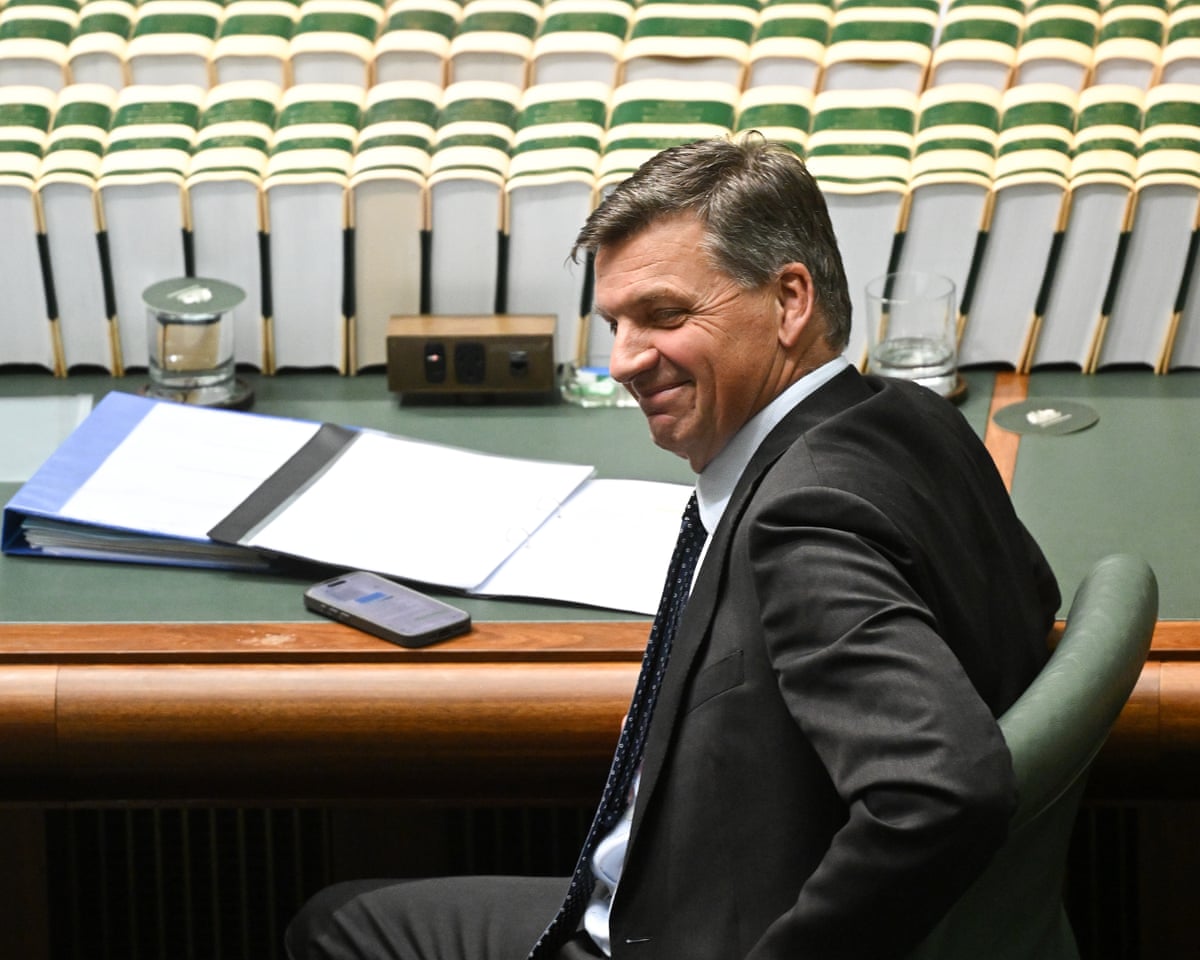
The opposition leader, Angus Taylor, has dismissed reports suggesting plans to divide electoral seats between the Coalition and One Nation amid the latter's rising support.
Taylor addressed ABC News Breakfast in response to morning newspaper reports:
“No, there’s no plan to carve up seats. We won’t be doing that … What we will be doing is focusing on a Labor government that’s taking this country in the wrong direction with higher taxes, with less houses, with immigration that has not been in line with our housing supply and with an energy system that is broken.
And that will be our focus. It won’t be carving up seats.”
Foreign Minister Wong emphasizes pursuit of negotiated Middle East ceasefire
Foreign Affairs Minister Penny Wong stated that Australia continues to advocate for a negotiated resolution to the ongoing conflict in the Middle East.
While attending meetings with European counterparts, Wong told Radio National:
“We’ve said for some time it’s obviously a fragile ceasefire, but we’ve also said that what Australia wants is a negotiated end to the war. That’s what we’re calling for, and that’s what we will continue to press for. …
We’re not a central player in the Middle East, as we have said. What we can do is add our voice to others who are calling for a negotiated end to the conflict. It’s obviously one of the things we discuss today with the United Kingdom.”
Parents invited to share views on social media ban amid cyberbullying concerns
The discussion about the social media ban and cyberbullying arises as the UK government considers implementing a similar policy.
Parents are encouraged to provide feedback on the effectiveness of the ban.
According to the latest report from eSafety Commissioner Julie Inman Grant in March, there has been no significant reduction in reports of online harm such as cyberbullying and image-based abuse among under-16s.
Bianca Quetti, a mother of teenage children, expressed support for the ban.
“My kids were 16 already when it came in … I’m not sure what other parents are thinking, but I would presume most would like it.
I mean, there’s probably a way around it, I’m sure they’ve all got a way around it. I think it’s not a bad thing.”
Her 16-year-old daughter, Taylah, who narrowly missed the ban, commented on the content young people are exposed to online but noted limited changes in social media accounts at her school that should have been affected by the ban.
“I don’t know if it’s really working that much … most of their accounts didn’t even get banned, so they’re still allowed on there,” she told AAP.

Early effects of child social media ban remain uncertain
A non-profit organisation operating a helpline for young people reports little evidence of a decline in cyberbullying or image-based abuse six months after the ban on social media use for those under 16 was implemented, according to Australian Associated Press.
Experts caution that the absence of a clear decrease in online harm does not necessarily indicate failure, as Australia is among the first countries to enforce such restrictions.
Call volumes to the helpline have remained largely unchanged since the ban's introduction, according to Yourtown, which operates Kids Helpline. Tony FitzGerald, virtual services manager, told AAP that it is premature to assess significant impact.
“From speaking to young people, particularly in that 13-16 age group the experience for them has been very inconsistent.
Some of them have had social media cut-off, whereas [some] have not had any impact in terms of their access to those platforms. It’s been a bit messy for that group.”
Despite the ban, young people are migrating to other platforms such as WhatsApp, which are not covered by the social media restrictions, to communicate.
“We’ve seen young people come to us who would say they’re being cyberbullied on messaging apps,” FitzGerald said.
“There’s a whole range of other platforms that are out there that are not subject to the social media minimum age restrictions that young people still are interacting on and they’re still experiencing harm.”
Federal government allocates $100 million for arthritis research
The federal government announced an additional $100 million investment over ten years dedicated to advanced arthritis research, a condition affecting approximately 7 million Australians.

Prime Minister Anthony Albanese and Health Minister Mark Butler are set to launch a new arthritis and musculoskeletal conditions research mission under the Medical Research Future Fund.
The initiative aims to unite leading researchers, healthcare professionals, industry stakeholders, and patients to enhance prevention, diagnosis, and treatment of arthritis.
“For millions of Australians, living with arthritis isn’t just an ache or pain, it affects their ability to work, to stay active and to enjoy everyday life,
My government is investing in medical research because it is an investment that changes lives and strengthens our nation’s health.”
TGA intensifies crackdown on illegal peptides
The Therapeutic Goods Administration (TGA) has announced enhanced measures targeting illegal peptides, describing these unregulated substances as a “growing threat” following increased imports and online marketing.
The regulator highlighted that peptides, which are not approved for human use, are being unlawfully advertised and supplied in Australia, posing risks to consumer safety.
Other current priority areas for the TGA include melatonin, medicinal cannabis, and weight loss medications.
TGA Chief Professor Anthony Lawler stated:
“As the availability of unapproved peptide products has increased, so too has evidence of potential risk to consumers.”
The TGA’s intensified response will involve product seizures, infringement notices, import interventions, and legal penalties against unlawful peptides.
This announcement follows a joint operation in April involving the TGA, Australian Border Force, and Victoria Police, which resulted in the seizure of illegal steroids and peptides.
Despite the lack of approval for human use, social media influencers have promoted injectable peptides as a “glow up potion” purported to address issues ranging from back pain to chronic urinary tract infections.
For further details, see Natasha May’s coverage.
Good morning, and welcome to our live news blog. I’m Martin Farrer with the top overnight stories, followed by Nick Visser with the main updates.
A non-profit organisation operating a helpline for young people reports minimal change in cyberbullying and image-based abuse incidents six months after the under-16 social media ban. More information to follow.
The Therapeutic Goods Administration (TGA) has declared a crackdown on illegal peptides, identifying them as a “growing threat” due to increased imports and online advertising. Additional details are forthcoming.
The federal government has committed $100 million to advance medical research into arthritis, aiming to improve prevention, diagnosis, and treatment.


