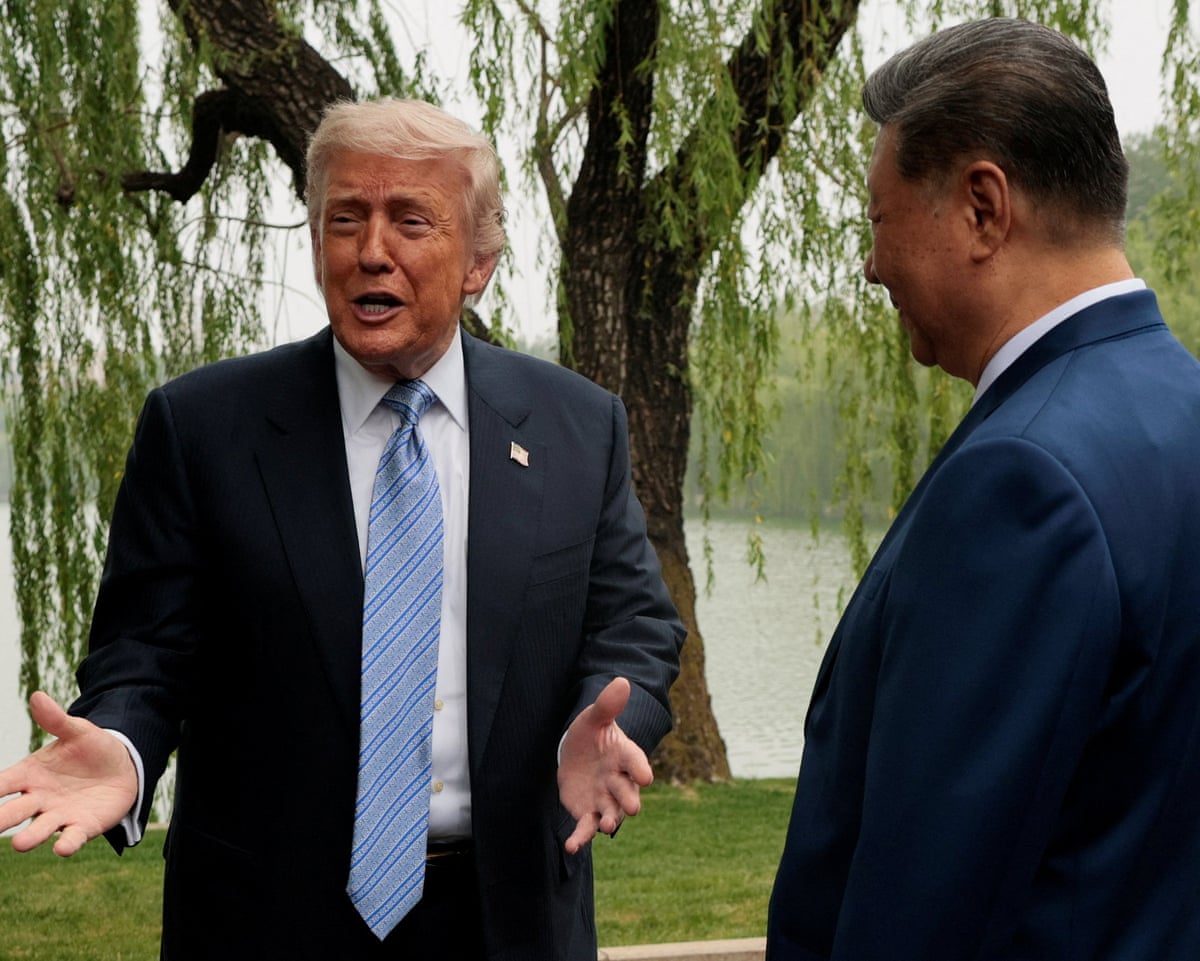
Trump says 'a lot of different problems' settled with Xi
Donald Trump described his visit as “incredible” and stated,
“I think a lot of good has come of it.”
The US president emphasized,
“We’ve made some fantastic trade deals for both countries.”
He added,
“We’ve settled a lot of different problems that other people wouldn’t have been able to solve.”
Trump characterized his relationship with Xi Jinping as
“a very strong one.”
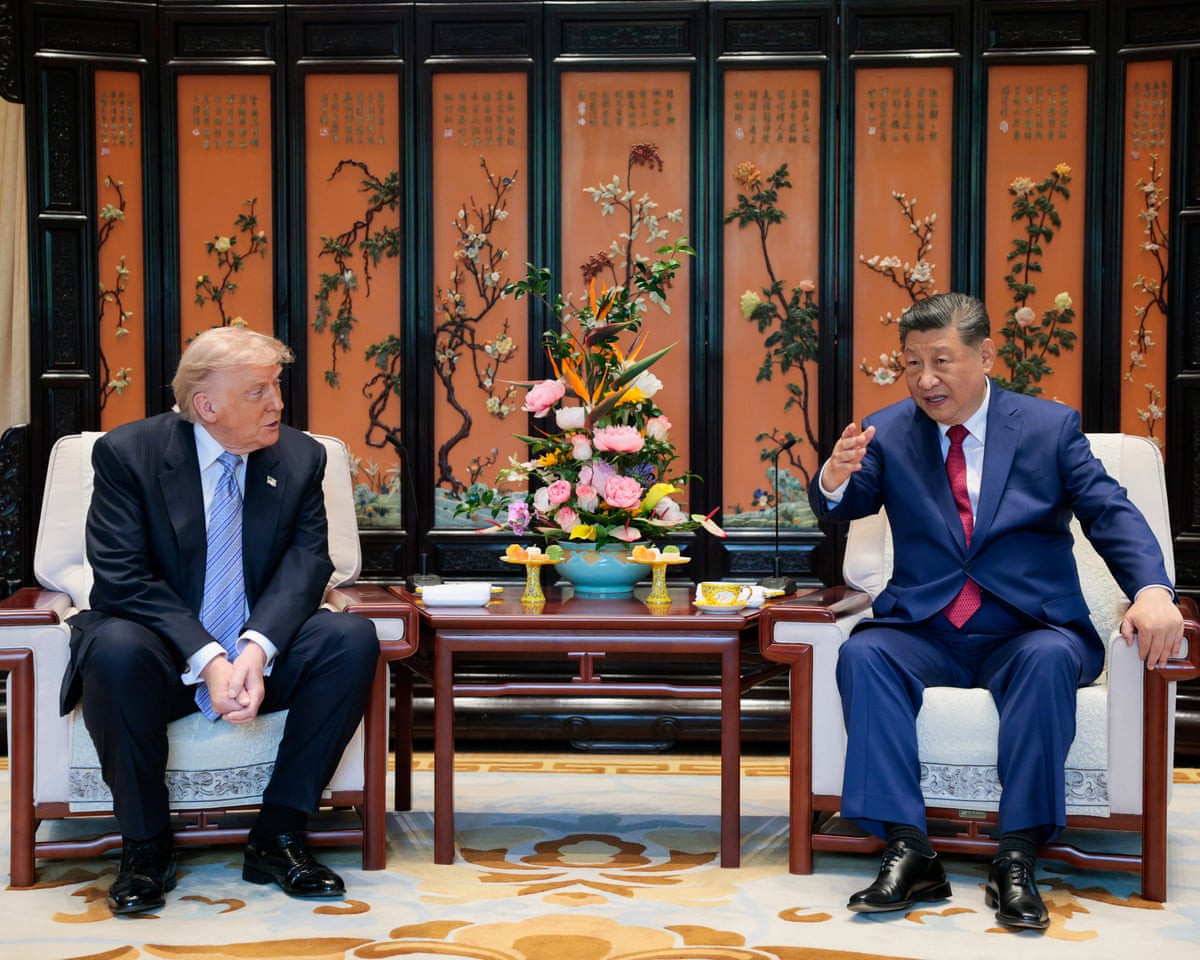
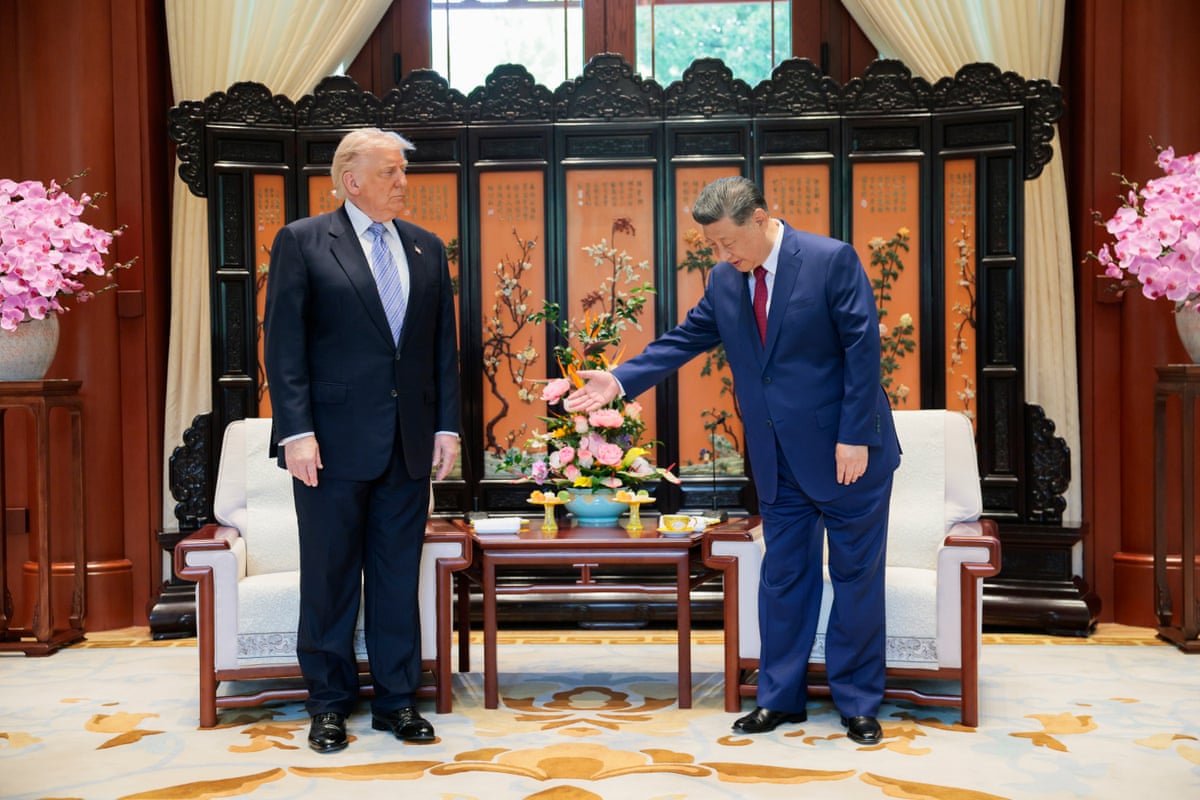
While seated beside Xi in Beijing’s Zhongnanhai leadership compound, Trump also commented:
“We did discuss Iran. We feel very similar about [how] we want it to end. We don’t want them to have a nuclear weapon. We want the strait open.”
He further stated,
“We want them to get it ended because it’s a crazy thing there.”
For those joining the coverage late, here is a summary of the day’s events as Donald Trump and Xi Jinping concluded the second and final day of their summit. It was 2pm in Beijing at the time.
Trump reiterated that
“a lot of good”resulted from his visit and that
“we’ve settled a lot of different problems that other people wouldn’t have been able to solve.”He also noted the trade agreements made during the talks at the Zhongnanhai leadership compound.
Regarding Iran, Trump said,
“We did discuss Iran. We feel very similar about [how] we want it to end. We don’t want them to have a nuclear weapon. We want the strait open.”
US Secretary of State Marco Rubio affirmed that US policy on Taiwan
“had not changed”and remains consistent across administrations, as he told NBC News.
The White House confirmed that Trump and Xi agreed on the importance of keeping the Strait of Hormuz open during their discussions. Trump separately expressed diminishing patience with Iran amid reports of a ship incident near the United Arab Emirates, stating to Fox News,
“I am not going to be much more patient. They should make a deal.”
Trump also remarked that the pursuit of Iran’s enriched uranium was largely for political optics following Israel’s demands, saying to Fox News,
“I just feel better if I got it, actually, but it’s – I think, it’s more for public relations than it is for anything else.”
US Trade Representative Jamieson Greer told reporters that the US viewed China as being
“very pragmatic”regarding its involvement with Iran and expressed confidence that Beijing would limit material support for Tehran.
Greer also mentioned an anticipated agreement involving double-digit billions of dollars in agricultural sales to China following the summit. When asked by Bloomberg about the potential extension of the year-long trade truce expiring in October, he responded,
“We’ll see about that ... there’s certainly a willingness on both sides that – if this continues to work out well for each country – to continue that…”
US Secretary of State Marco Rubio also indicated that the US is awaiting a positive response from China concerning appeals for the release of jailed media tycoon Jimmy Lai and others, as reported by NBC.
Asian stock markets mostly declined on Friday as investors awaited developments from the Trump-Xi summit and the ongoing conflict involving Iran.
Tokyo’s Nikkei 225 fell 1.2% after earlier gains. South Korea’s Kospi dropped 3.2%, Hong Kong’s Hang Seng decreased by 0.9%, the Shanghai Composite index edged up 0.1%, and Australia’s S+P/ASX 200 dipped 0.1%.
Taiwan’s Taiex traded 0.5% lower, while India’s Sensex was up 0.1%.
Despite optimism regarding US-China relations, some analysts advise caution in interpreting any deals, according to the Associated Press.
China economists Leahy Fahy and Julian Evans-Pritchard of Capital Economics wrote in a note,
“Headline deals should be looked at with a healthy degree of scepticism.”
They noted that several projects and investments promised during Trump’s previous China visit in 2017 did not materialize, as tensions between Washington and Beijing escalated in subsequent years.
Oil prices rose early on Friday amid stalled US-Iran talks regarding the conflict, with Brent crude, the international benchmark, increasing 1.3% to $107.06 per barrel.
How Trump is spending last hours of the summit
Donald Trump spent his final hours in Beijing at Xi Jinping’s private residence, a restricted site near the Forbidden City rarely accessible to foreigners or locals.
The US president was scheduled to have lunch there with Xi before departing Beijing in the early afternoon, less than 48 hours after his arrival.
Near Trump’s hotel, crowds gathered to observe the presidential motorcade were thinner on Friday morning compared to Thursday evening. The heavy police presence discouraged loitering, and many locals expressed frustration over repeated road closures.
When asked about their views on Trump, many Beijingers described him as
“unpredictable.”
One observer commented,
“What he says isn’t necessarily what it means.”
As Trump and Xi conducted their final talks in Beijing, the White House released the list of participants for the meetings.
Trump was accompanied by David Purdue, US ambassador to China; Secretary of State Marco Rubio; Treasury Secretary Scott Bessent; Defense Secretary Pete Hegseth; and US Trade Representative Jamieson Greer.
Xi was joined by Xie Feng, China’s ambassador to the US; Cai Qi, director of the Communist Party of China’s central committee; Foreign Affairs Minister Wang Yi; Deputy Foreign Affairs Minister Ma Zhaoxu; and He Lifeng, Vice Premier of the State Council.
According to the Associated Press, Trump exhibited unusual restraint during the two days of meetings by refraining from answering media questions.
Typically, Trump frequently engages with reporters in the US, often daily. However, Xi, like most senior Chinese leaders, avoids press conferences.
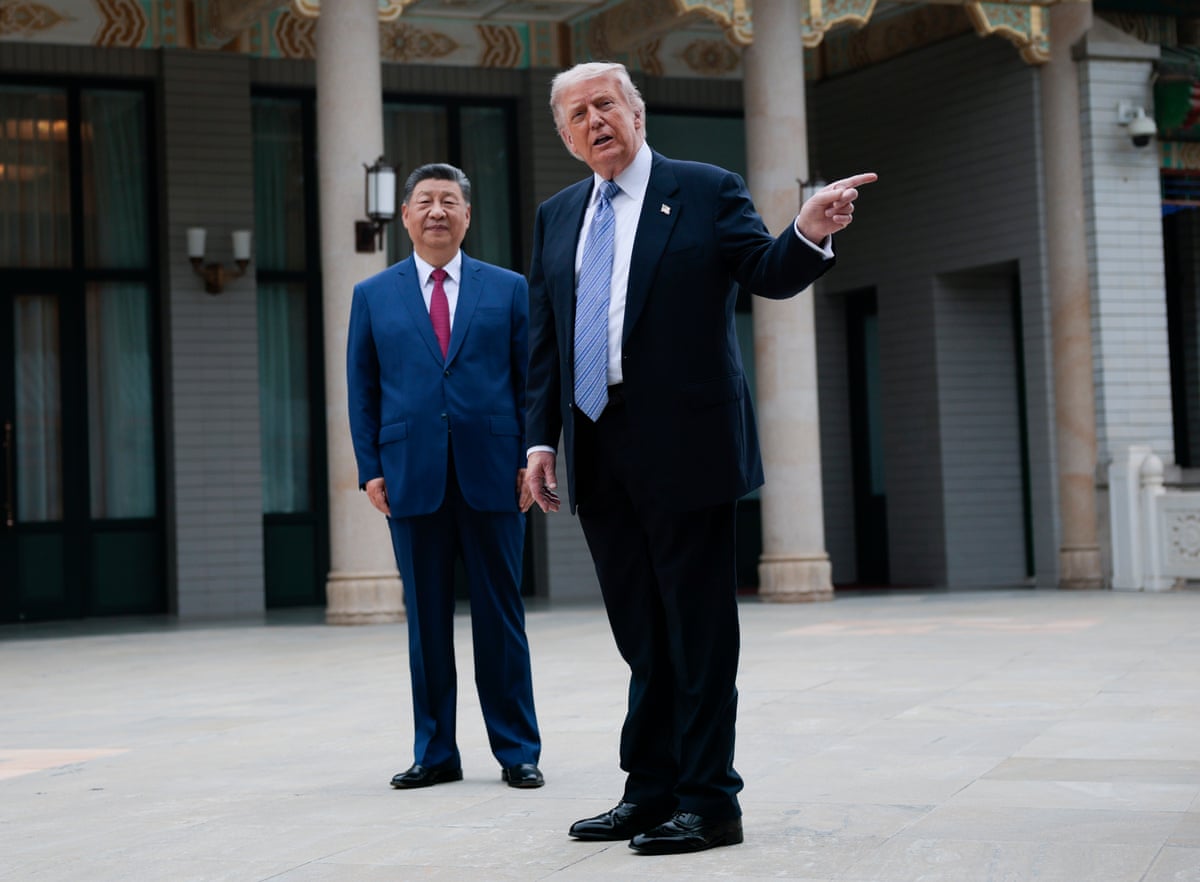
In a possible gesture of deference to Xi, Trump declined to respond to reporters’ questions during their tour of the Temple of Heaven on Thursday and again on Friday while walking with Xi at Zhongnanhai.
Trump says he 'won't be much more patient' with Iran
Returning to Trump’s earlier remarks on Iran, the US president stated that his patience with Iran was waning following discussions with Xi on Thursday.
This statement coincided with reports of a ship incident near the United Arab Emirates.
The White House confirmed that Trump and Xi agreed on the necessity of keeping the Strait of Hormuz open during their summit talks.
Trump told Fox News’ Hannity program in an interview,
“I am not going to be much more patient. They should make a deal.”
Recent incidents in the Strait of Hormuz include an attack on an Indian cargo vessel transporting livestock from Africa to the UAE, which sank on Wednesday off the coast of Oman.
India condemned the attack and reported that all 14 crew members were rescued by the Omani coast guard.
Vanguard, a British maritime security advisory firm, indicated that the vessel was likely struck by a missile or drone, causing an explosion.
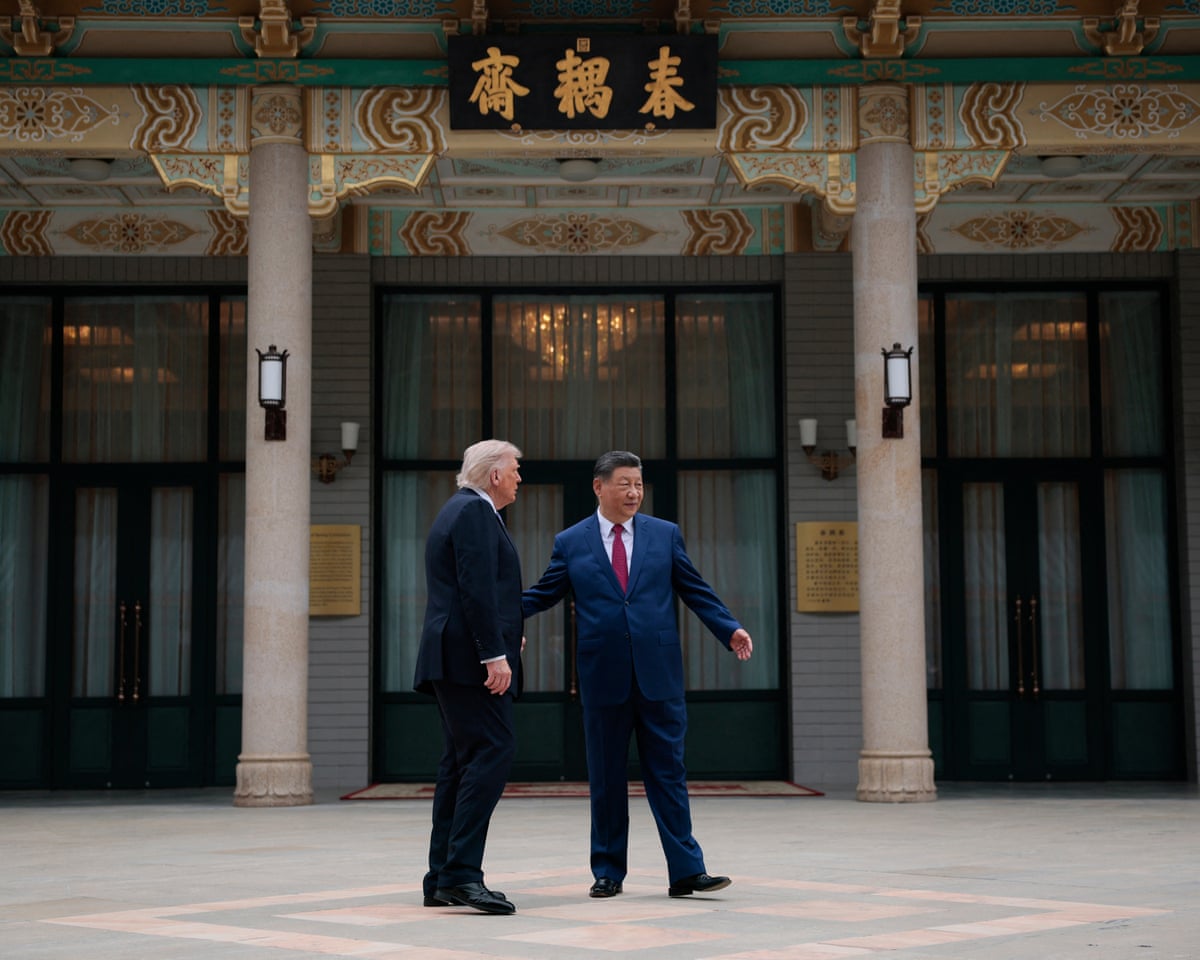
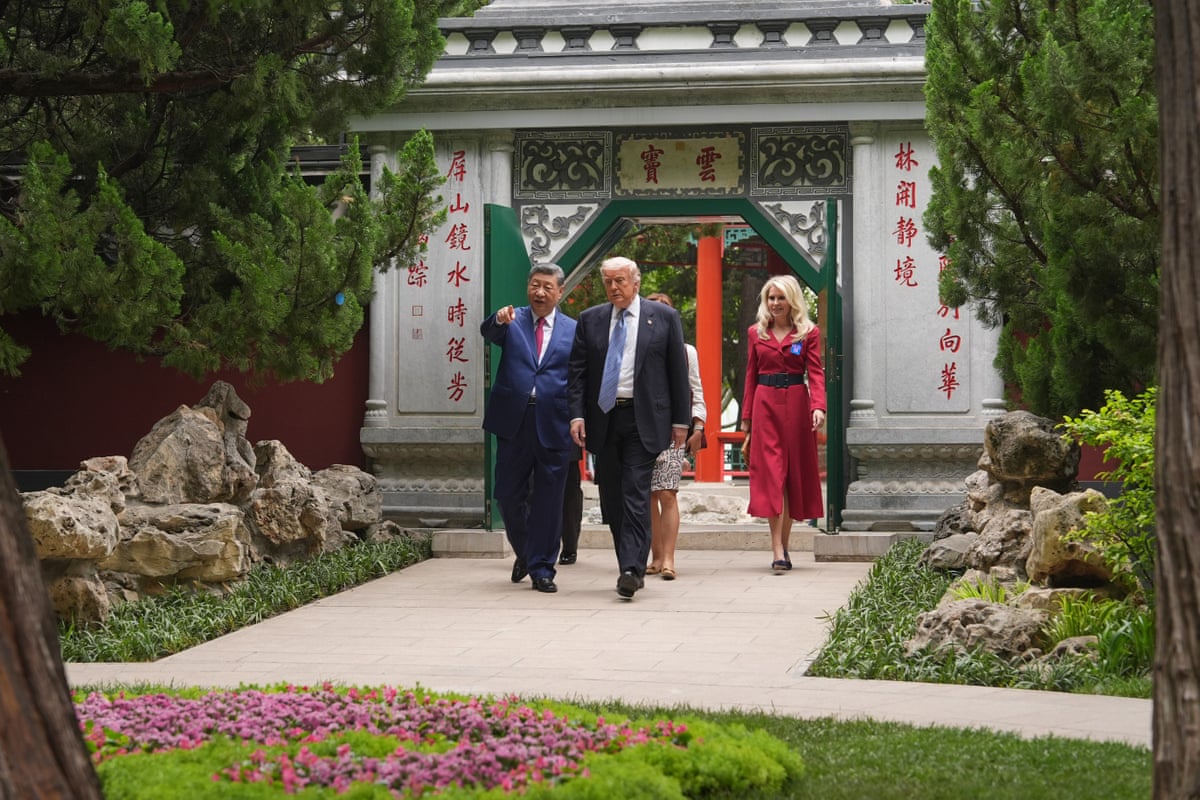
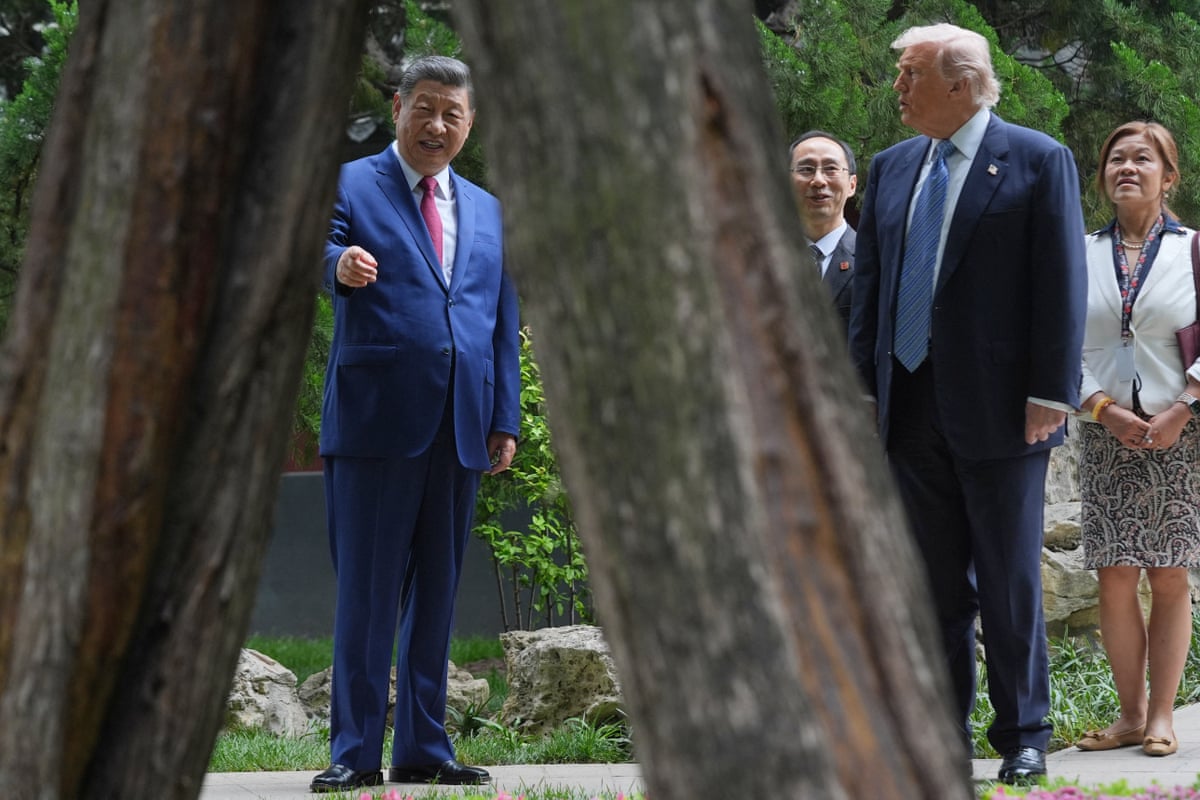
Before their joint session, Trump and Xi spent approximately ten minutes walking in the gardens of the Zhongnanhai compound.
Trump reportedly remarked,
“These are the most beautiful roses anyone has ever seen,”as they passed green columns and archways.
Xi later stated he would send rose seeds to Trump
“as a gift.”
Trump says getting Iran's enriched uranium 'more for public relations'
Prior to the final meetings of the Beijing summit, Trump suggested that the effort to seize Iran’s enriched uranium was primarily for political optics, following Israel’s demands.
He told Fox News host Sean Hannity from China,
“I just feel better if I got it, actually, but it’s – I think, it’s more for public relations than it is for anything else.”
Trump added,
“The other thing we could do is bomb it again. But I, just, I would feel better getting it, and we will get it.”
Israeli Prime Minister Benjamin Netanyahu, who alongside Trump ordered attacks on Iran beginning on 28 February, stated in a recent interview that the conflict was
“not over”because the sensitive nuclear material
“has to be taken out”of the country, according to Agence France-Presse.
Iran has not disclosed the location of its highly enriched uranium, which some experts believe may be buried deep underground, complicating efforts to seize it without precise intelligence.
In a Friday interview referencing his administration’s achievements, Trump said they included
“the military decimation of Iran (to be continued!)”.
Xi and Trump meet at Chinese leadership compound
Donald Trump reportedly arrived at Beijing’s Zhongnanhai complex, the Chinese leadership compound, for a meeting with Xi Jinping.
The two leaders were scheduled to pose together in the gardens of the walled compound adjacent to Beijing’s Forbidden City, followed by a working tea and a closed-door lunch.
Their two-day summit was set to conclude afterward, with Trump departing for Washington on Friday afternoon.
US Trade Representative Jamieson Greer noted that rare earth exports from China to the US were improving, although Beijing remained slow to approve some shipments.
Greer told Bloomberg TV that China was still delaying certain export licenses, requiring US officials to intervene on behalf of affected companies.
He stated,
“I would give them a passing grade on this. We’ve certainly seen the rare earths come back up to better levels. Sometimes it’s slow. There are times when we have to go and make our point.”
China introduced rare earth export controls in April 2025 in response to Trump’s tariffs. Despite a deal last October in which the White House said Beijing agreed to allow shipments to flow freely, some restrictions remain.
For context, rare earth elements are critical for various technologies and have been a focal point in diplomatic and trade discussions.
When asked on Bloomberg TV about the potential extension of the one-year trade truce expiring in October, Greer responded,
“We’ll see about that ... there’s certainly a willingness on both sides that – if this continues to work out well for each country – to continue that, and to extend this ability to make sure we’re getting rare earths, that we’re selling the types of things we should be selling to China, and we’re trying to manage differences rather than escalate them.”