

Promise and Delay
Just seven days after initiating the coup against Aung San Suu Kyi's elected government on 1 February 2021, General Min Aung Hlaing pledged to hold elections and restore civilian rule within a year. It has taken five years for this promise to be nominally fulfilled.
Today, the newly-elected parliament is set to select Min Aung Hlaing as the next president. He has already resigned as commander of the armed forces, as mandated by the constitution before assuming the presidency.
However, this transition represents civilian rule in name only.
Parliament and Military Control
The parliament, convening for the first time since the coup, is dominated by loyalists of Min Aung Hlaing. The armed forces hold a guaranteed 25% of the seats, and the military-backed Union Solidarity and Development Party (USDP) secured nearly 80% of the remaining seats in an election widely criticized for being heavily skewed in its favor. This outcome was effectively predetermined, resembling a coronation more than a democratic election.
Military personnel are also expected to dominate the forthcoming government. Min Aung Hlaing has appointed General Ye Win Oo, a hardliner known for brutality and a staunch ally, as the new commander-in-chief of the armed forces.
Additionally, Min Aung Hlaing has established a new consultative council that will hold supreme authority over both civilian and military affairs, ensuring his influence remains strong despite stepping down from uniformed service.
Activist Perspectives
For young activists such as Kyaw Win (a pseudonym), hope for change has vanished. Arrested as a student for participating in a flash mob protest against the coup in 2022, he endured a week of torture before imprisonment and was only recently released.
"They beat me on my back with an iron rod. They burned me with cigarettes, and slashed my thigh with a knife. Then they stripped my underwear and sexually assaulted me. They interrogated me, but it was never clear what they wanted me to say."
Kyaw Win maintains his commitment to the revolution but feels powerless within Myanmar and plans to seek employment abroad.
Consequences of the Coup
The five years following Min Aung Hlaing's coup have been disastrous for Myanmar.
He appears to have gravely underestimated the public outrage triggered by his seizure of power just as the parliament was about to confirm another term for Aung San Suu Kyi and her National League for Democracy, following their decisive victory in the November 2020 election.
His decision to employ lethal force against nationwide mass protests ignited a civil war that has resulted in thousands of deaths, millions displaced, and a devastated economy.
The military regime has lost control over vast regions to armed resistance groups. In response, it has deployed air power against opposition-held villages, conducting indiscriminate attacks that have destroyed schools, homes, and hospitals.
This approach aligns with a longstanding military tactic in Myanmar known as "the four cuts," aimed at devastating communities supporting insurgent groups. With assistance from China and Russia, the junta has recently regained some territory lost over the past two years.
As Min Aung Hlaing presided over the annual grand military parade in Nay Pyi Taw for the last time as armed forces commander, observers noted the absence of any reflection or regret regarding the coup’s consequences.
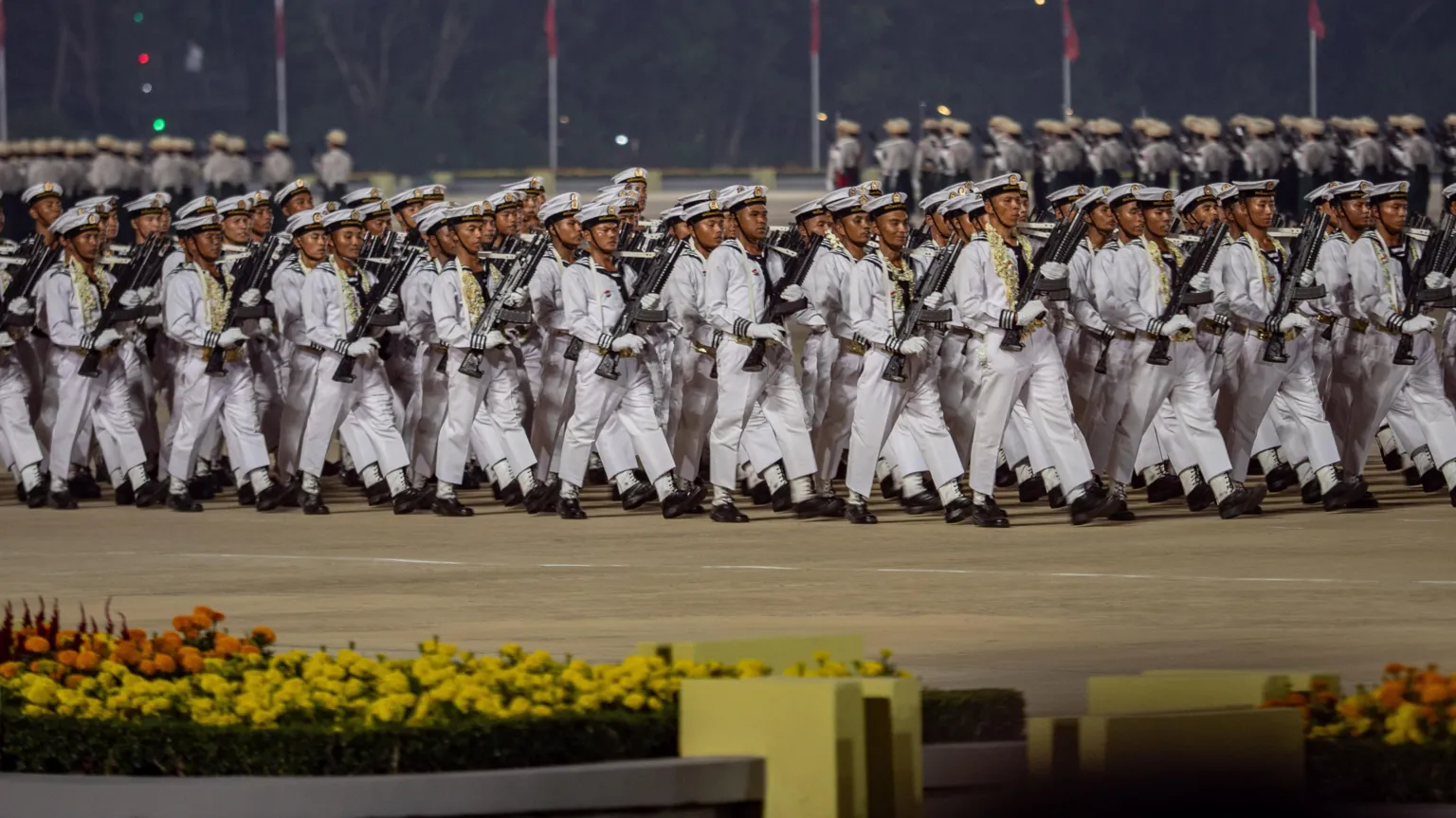
Instead, his speech reiterated familiar justifications for military intervention, asserting the soldiers’ constitutional mandate for "constructive engagement in national politics" and claiming they upheld multi-party democracy.

He described opponents of military rule as "armed terrorist factions," supported by "foreign aggressors and self-serving political opportunists." There was no indication that Min Aung Hlaing, now in civilian attire, intends to govern Myanmar differently than during his military tenure.
Outlook and Analysis
"The conflict in Myanmar will remain largely unchanged," stated Su Mon, senior analyst at ACLED, an organization monitoring armed conflicts.
"The new commander-in-chief, General Ye Win Oo, is a loyalist whose family has a close relationship with that of Min Aung Hlaing. He is likely to follow in his footsteps, first and foremost to regain control of lost territory. Resistance groups still control around 90 towns. This means more air and drone strikes on civilians in resistance-controlled areas, more scorched earth campaigns."
The National Unity Government (NUG), representing the ousted administration and operating from resistance-held border areas near Thailand, continues to reject the legitimacy of the new government, parliament, and recent election.
Despite challenges in asserting authority over numerous armed groups across Myanmar, the NUG remains committed to fighting the military’s political dominance and enacting a new federal constitution.
"This is not the time to compromise," said spokesman Nay Phone Latt. "If the military cannot accept our objectives, our revolution will go on. We have to go on. If we give up now, the next generation, our people, will suffer more and more."
Economic Impact and Public Sentiment
Min Aung Hlaing's coup has inflicted severe damage on Myanmar’s economy.
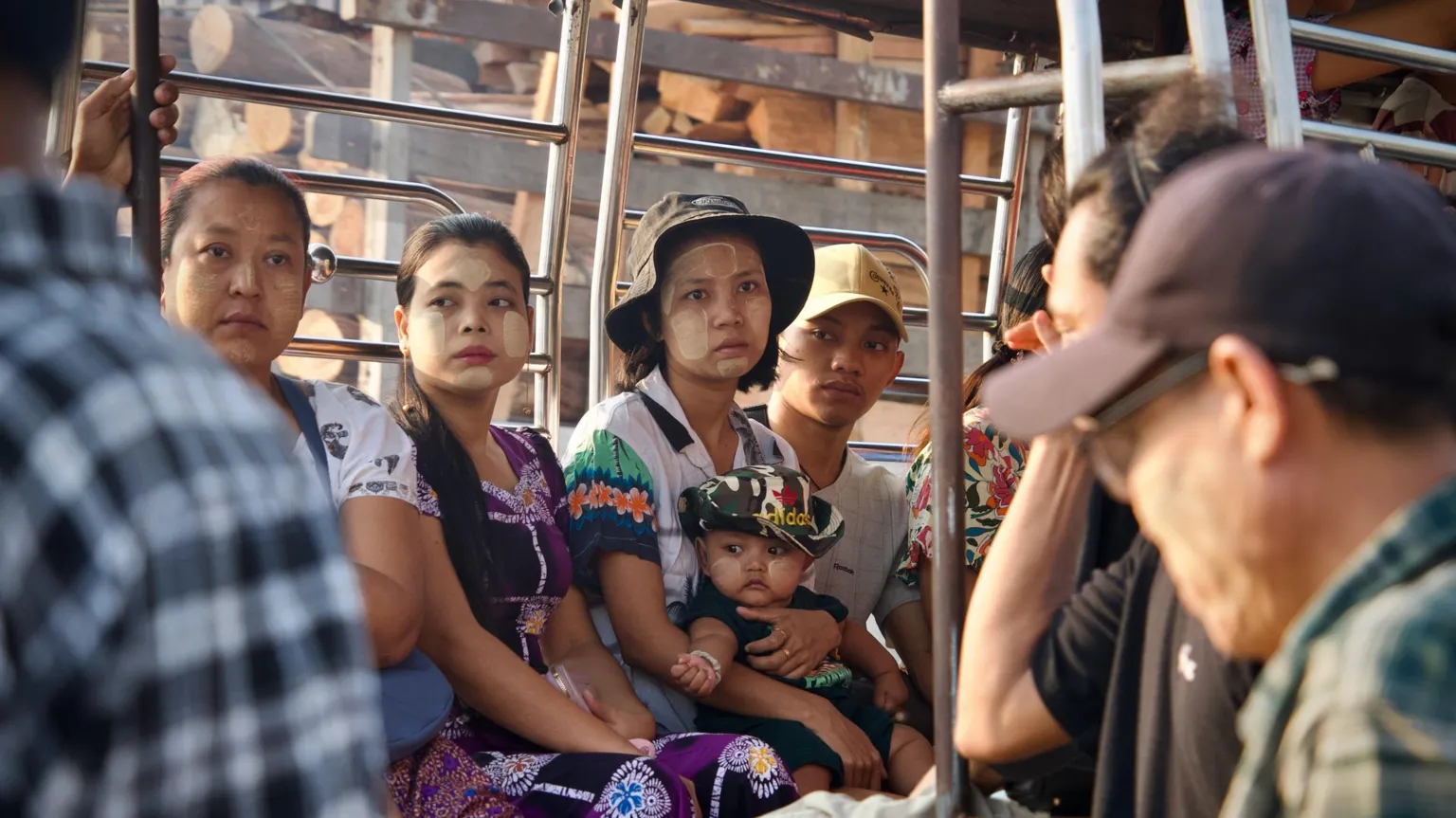
The United Nations estimates that over 16 million people require life-saving assistance. Nearly four million individuals have been displaced due to the conflict. Inflation has soared, drastically reducing living standards.
These hardships are exacerbated by fuel shortages linked to the Middle East war. Myanmar imports 90% of its oil and petroleum products, primarily from neighboring countries now limiting exports. Petrol and diesel are rationed, with prices rising sharply, already significantly higher than in neighboring Thailand.
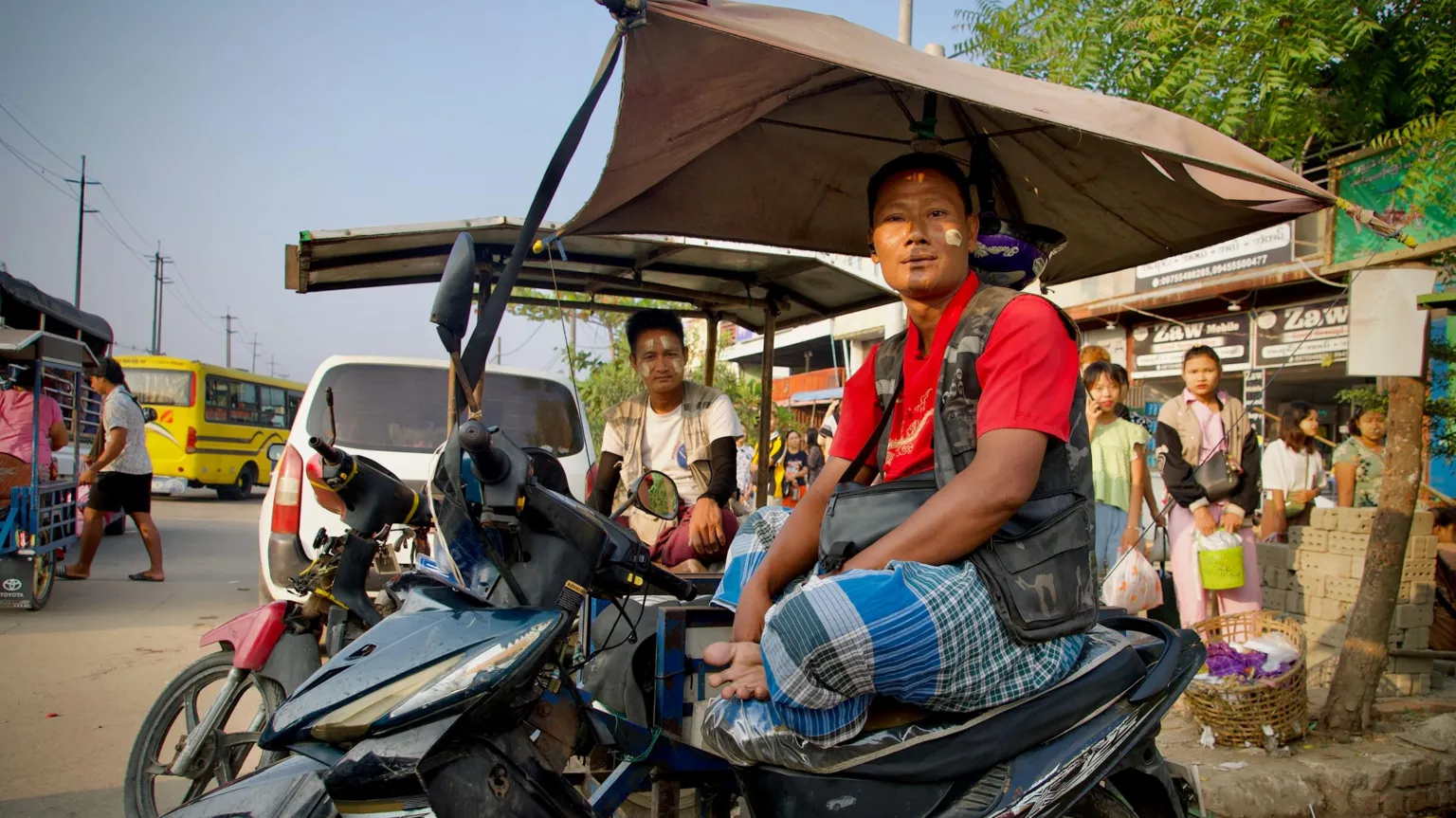
"The difference between now and 10 years ago is like night and day," said Tin Oo, a motorbike taxi driver in Yangon's industrial district of Hlaing Tharyar.
"We cannot earn enough even to cover our rent and food."
He expressed skepticism about the new government’s concern for ordinary citizens.
"They won't care about us. We will still have to depend on ourselves. These days if you try to make a simple honest living, it is difficult to survive, but if you are dishonest, you can become rich."
The fuel shortage particularly affects businesses reliant on generators, as Yangon’s electricity grid provides only a few hours of power daily in most areas.
Calls for Dialogue
Amid this bleak impasse, veteran political activist Mya Aye, who has spent many years in military prisons, has recently advocated for compromise between the military and its opponents as the only viable path forward.
He has established a new council aiming to unite those who share his views, calling for dialogue and the release of all political prisoners. While he has some prominent political figures supporting him, he claims to be in confidential talks with many others.
"This election is not the solution," he said. "It is a game played by Min Aung Hlaing on his people. Nor can we progress with the current constitution. But the public is tired of the situation. If we cannot find a way out, the country will collapse. In fact it is already in a state of collapse."
Mya Aye argues that the release of jailed democracy leader Aung San Suu Kyi could play a crucial role in achieving an acceptable compromise, despite her age of 80.
There is speculation that Min Aung Hlaing may release her this year, now that he has attained the presidency, a goal that significantly motivated his coup.
Nevertheless, if a peaceful resolution exists, it is a narrow path that Myanmar’s military rulers currently appear unwilling to pursue.


