India's Largest Census Begins
Does your house have a concrete roof or a thatched one? What is your main cereal? Do you have internet access or just a basic mobile phone? And how many married couples live under your roof?
These are among the 33 questions that more than a billion Indians will be asked as the country launches the world's largest census on Wednesday, marking the first population count in over 15 years.
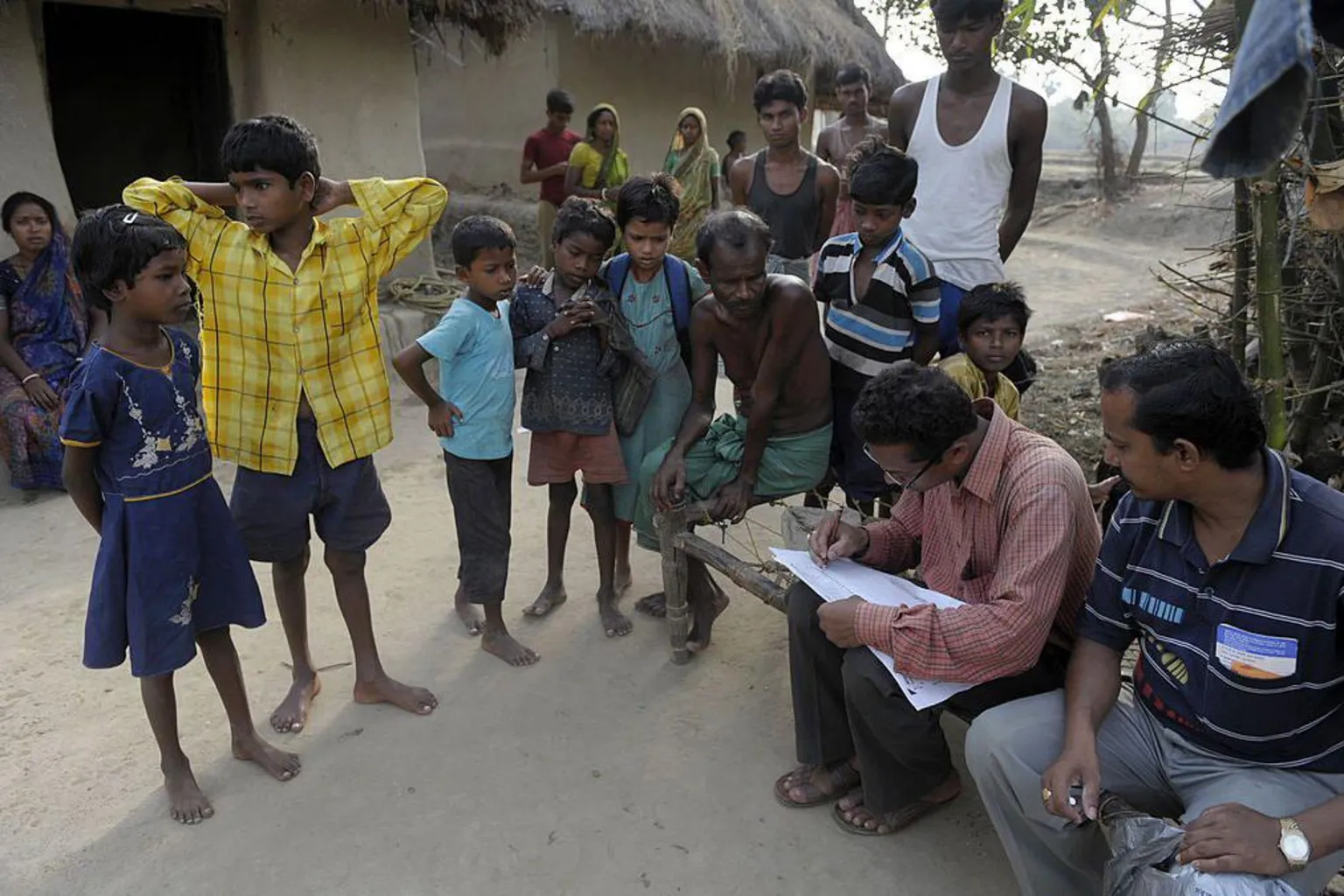
The two-phase exercise, described as the world's most ambitious of its kind, will involve more than three million officials spending a year counting every person in India.
India's 16th census—the eighth since independence in 1947—will also include caste data and is considered crucial for policy formulation, welfare delivery, and political representation in the world's most populous country.
With over 1.4 billion people, India surpassed China in 2023, according to the United Nations Population Fund.
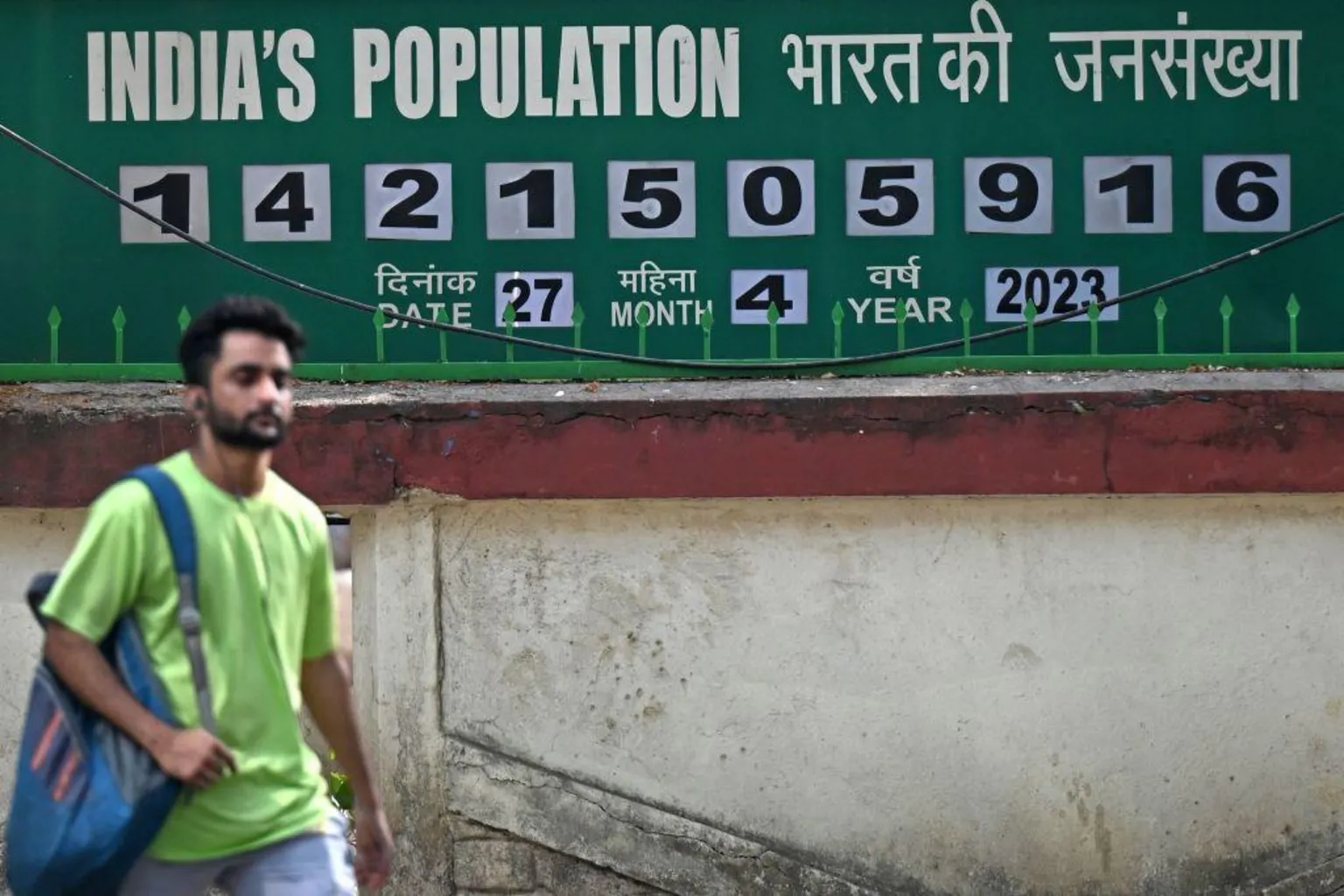
Despite this, declining fertility rates and a median age of 28 mean India remains one of the world's youngest countries, with nearly 70% of its population in the working-age group.
The last census was conducted in 2011, with the 2021 round delayed due to the pandemic and subsequently postponed further because of administrative and electoral scheduling—the first time the decennial exercise missed its scheduled timeline.
Scope and Methodology
The census will cover 36 states and federally-administered territories, more than 7,000 sub-districts, over 9,700 towns, and nearly 640,000 villages. Fieldwork will be carried out by enumerators and supervisors, typically schoolteachers, government staff, and local officials.
For the first time, the census will be conducted digitally, with enumerators using mobile applications to collect and upload data.
Authorities have introduced self-enumeration, allowing residents to submit their details online via a portal available in 16 languages, which generates a unique ID for verification by census workers.
There will be two phases of physical door-to-door surveys.
The first phase, known as the House Listing and Housing Census, will gather information on housing conditions, amenities, and household assets.
The second phase—population enumeration—is scheduled for February 2027 and will collect detailed data on demographics, education, migration, and fertility.
This phase will also include caste enumeration, a politically sensitive topic that has been debated extensively.
The initial rollout will begin in selected regions, including the Andaman and Nicobar Islands, Delhi, Goa, Karnataka, Mizoram, and Odisha.
In these areas, self-enumeration will run from 1 to 15 April, followed by the house listing and housing survey between 16 April and 15 May.
Historical Evolution of the Census
From its origins as a rudimentary headcount under colonial rule, India's census questionnaire has steadily expanded in scope, reflecting the state's changing priorities.

The first attempt in 1872 contained 17 questions and was essentially a house register—recording who lived where, along with basic markers such as age, religion, caste, and occupation.
By 1881, when the first synchronous nationwide census was conducted, the template had stabilized around identity (name, gender, marital status), social markers (caste, religion, language), and rudimentary education and disability categories.
Over the next decades, questions on language, literacy, and occupation were refined, adding secondary work and dependency details.
English proficiency—a colonial preoccupation—was one of 16 questions in the 1901 census.
A shift began with the 1941 census, when its 22-question schedule moved from "who you are" to also "how you live." Fertility, employment status, economic dependency, migration, and job search entered the frame, signaling a growing administrative focus on economic behavior.
After independence, this focus widened further: the 1951 and 1961 rounds incorporated nationality, displacement (in the shadow of Partition), land ownership, and more work categories.
From the 1970s onwards, the census adopted a distinctly socio-economic lens. Migration histories, duration of residence, fertility patterns, and detailed employment classifications became standard.
In more recent decades, especially in 2001 and 2011, the census has tracked the modernizing economy: commuting patterns, marginal versus main work, education attendance, and increasingly detailed disability and fertility data.
That evolving lens is now extending to how households themselves are defined. In the latest census, a couple in a live-in relationship can be recorded as married if they consider their "relationship as a stable union"—signaling a quiet shift towards recognizing changing social realities.
Concerns and Implications
As the scope of data collection has widened, so too have concerns about how such information might be used.
Some analysts note that recent efforts to build databases—including the National Population Register (NPR)—and intensive revisions of electoral rolls have heightened public anxieties around official counting, often linking it to questions of citizenship and inclusion.
"Although the census has nothing to do with citizenship, this can create anxiety, prompting some families to over-report or list absent migrant members during the census to avoid any perceived exclusion," says KS James, an Indian demographer at Princeton University.
Beyond these concerns, there is a more fundamental problem: India has been making policy without a recent population baseline.
In the absence of a fresh census, it has relied on sample surveys—from consumption expenditure to labor force data—with the statistics ministry working to keep them broadly representative.
For economists like Ashwini Deshpande of Ashoka University, the census is essential to update the basic map of India itself—what counts as rural, urban, or increasingly peri-urban.
Much of that classification still rests on 2011 data, even though many areas have since transformed, blurring the lines that underpin policy.
"That has real consequences for India's vast welfare and public spending system," says Deshpande.
If eligibility for schemes is based on faulty or outdated data, the number of beneficiaries can be misjudged, distorting delivery. Programs like the nationwide rural jobs guarantee, for instance, depend on an accurate sense of which areas are still "rural"—a category that may have shifted significantly over 15 years.
Without current data, millions of urban migrants—often in informal jobs and housing—remain poorly captured in policy design, a gap laid bare during the pandemic.
"This census is crucial - it is the definitive snapshot of India, capturing everything from caste and religion to jobs, education and amenities, and offering the most complete picture of how the population lives," says Deshpande.