

Impact of Extreme Rainfall on Tapanuli Orangutans
Four days of intense rain and landslides on the Indonesian island of Sumatra have severely impacted the world's most endangered great apes, pushing them closer to extinction, according to a recent study.
Research indicates that 58 of the fewer than 800 critically endangered Tapanuli orangutans—approximately 7% of the entire species—died as a direct consequence of the extreme weather event in November last year.
The authors of the study, published on Wednesday, emphasize that these figures are conservative and do not account for additional impacts such as canopy damage caused by rain or diminished food availability.
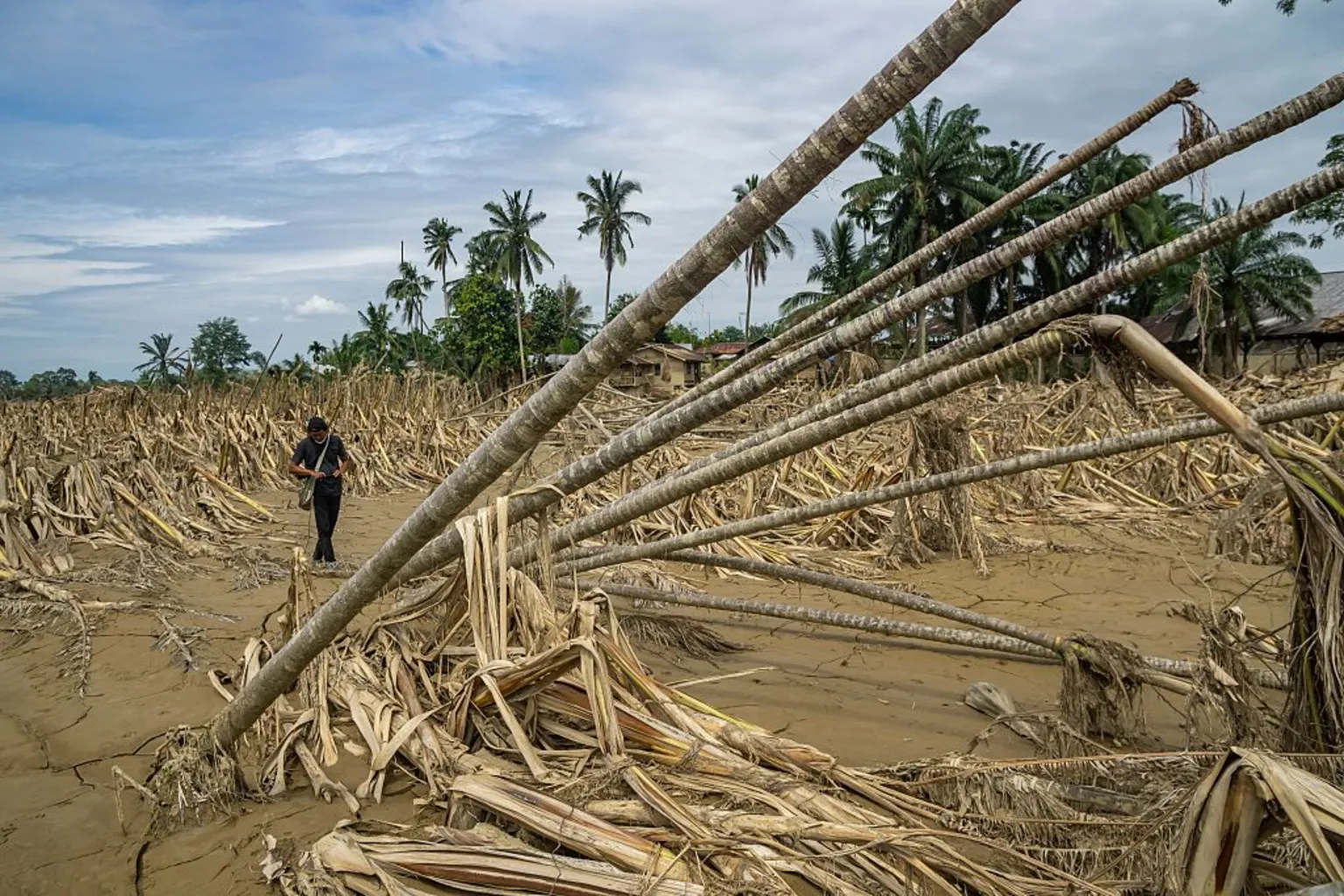
Cyclone Senyar and Its Devastating Effects
Cyclone Senyar struck Sumatra in late November, resulting in over 1,000 fatalities, marking it as Southeast Asia's deadliest natural disaster in 2025.
The study's authors highlight that extreme rainfall events like Cyclone Senyar pose a direct threat to the survival of great ape populations.
However, quantifying the damage to the island's wildlife has proven more challenging.
Observations and Early Estimates
Following the storm, wildlife experts and conservationists noted a significant decline in Tapanuli orangutan sightings, raising concerns that many may have been lost to floods and landslides.
Professor Erik Meijaard, managing director of Borneo Futures in Brunei and a co-author of the study, told the BBC in December that Cyclone Senyar had likely caused the deaths of about 35 orangutans. He described this loss as "a major blow to the population."

His updated estimate of 58 deaths represents a considerable increase from the initial figure.
Discovery of Orangutan Carcass
Weeks after the cyclone, humanitarian workers reported finding the carcass of a presumed Tapanuli orangutan partially buried under mud and logs in Pulo Pakkat village, located in the central Tapanuli district.
"I have seen several dead bodies of humans in the past few days but this was the first dead wildlife," said Deckey Chandra, a member of the humanitarian team operating in the area. "They used to come to this place to eat fruits. But now it seems to have become their graveyard."
Meijaard confirmed that he had viewed photographs of the deceased orangutan shared by Chandra.
"What struck me is that all the flesh had been ripped off the face," he said. "If a few hectares of forest comes down in massive landslides, even powerful orangutans are helpless and just get mangled."
"It must have been hellish in the forest at the time."
Climate Change and Future Risks
Researchers noted that while Cyclone Senyar was an unusual event, human-induced climate change significantly contributed to its severity.
They also warned that the frequency and intensity of extreme rainfall events in the region are likely to increase, posing ongoing threats to the survival of Tapanuli orangutans and their habitat.
Studies suggest that the species—which was only identified in 2017—faces extinction if it continues to lose more than 1% of its population annually.
Government Response and Conservation Efforts
In response, the Indonesian government has temporarily suspended major development projects in the Batang Toru area, a protected forest in Sumatra. This includes halting mining, oil palm plantations, and hydropower expansion, providing researchers with a rare opportunity to further evaluate ecological risks to the orangutans.
The authors of the report emphasize that the devastation caused by Cyclone Senyar underscores the vulnerability of the species.
"The crisis facing the Tapanuli orangutan illustrates the convergence of climate instability, biodiversity loss, and vulnerability, calling for a coordinated response matching the scale of the threat," the report states.
They further stress that sustained international support is essential to protect the remaining orangutans.
"Through strengthened domestic protection, climate-responsive planning, and global financial and technical assistance, we can still prevent the first modern extinction of a great ape species."


