

Introduction to the Controversy
What began as a viral complaint by a single student regarding a mismatch between the physical and digital versions of his Grade 12 physics answer sheet has escalated into a significant controversy surrounding one of India's largest and most critical school-leaving examinations.
Days after the Central Board of Secondary Education (CBSE), a government-run body, announced the Grade 12 results—equivalent to the UK's A level—numerous students raised concerns about errors in their marks, which they attribute to a newly implemented digital evaluation system used during the exam.
On-Screen Marking System and Its Challenges
The system, known as On-Screen Marking (OSM), involves scanning physical answer sheets and uploading them to an online portal where teachers conduct evaluations. Subsequently, software calculates the total marks for each exam. According to CBSE, this system was introduced to minimize human error, reduce effort, and enhance transparency and efficiency.
While manual evaluation has historically been prone to errors, students report that the new system has introduced fresh issues rather than resolving existing ones. Complaints include blurry scanned copies potentially affecting marks, missing pages, incorrect markings, and discrepancies between digital copies and original paper answer sheets.
CBSE has responded by affirming its commitment to a "fair and transparent evaluation process."
"All genuine concerns related to scanned answer books or evaluation will be reviewed by subject experts through the prescribed mechanism," the board stated.
The students’ grievances have sparked nationwide outrage and intensified scrutiny of the digital evaluation system.
Parents and education experts have questioned whether teachers received adequate training and whether the technology provided was sufficient for effective operation of the new marking system.
For millions of Indian students, CBSE examinations represent more than academic assessments; they are crucial gateways to college admissions, career opportunities, and social advancement.
CBSE is among the country’s largest education boards, with approximately two million students appearing for the Grade 12 exam this year. India also has various state-run, private, and international school boards.
Context of National Examination Issues
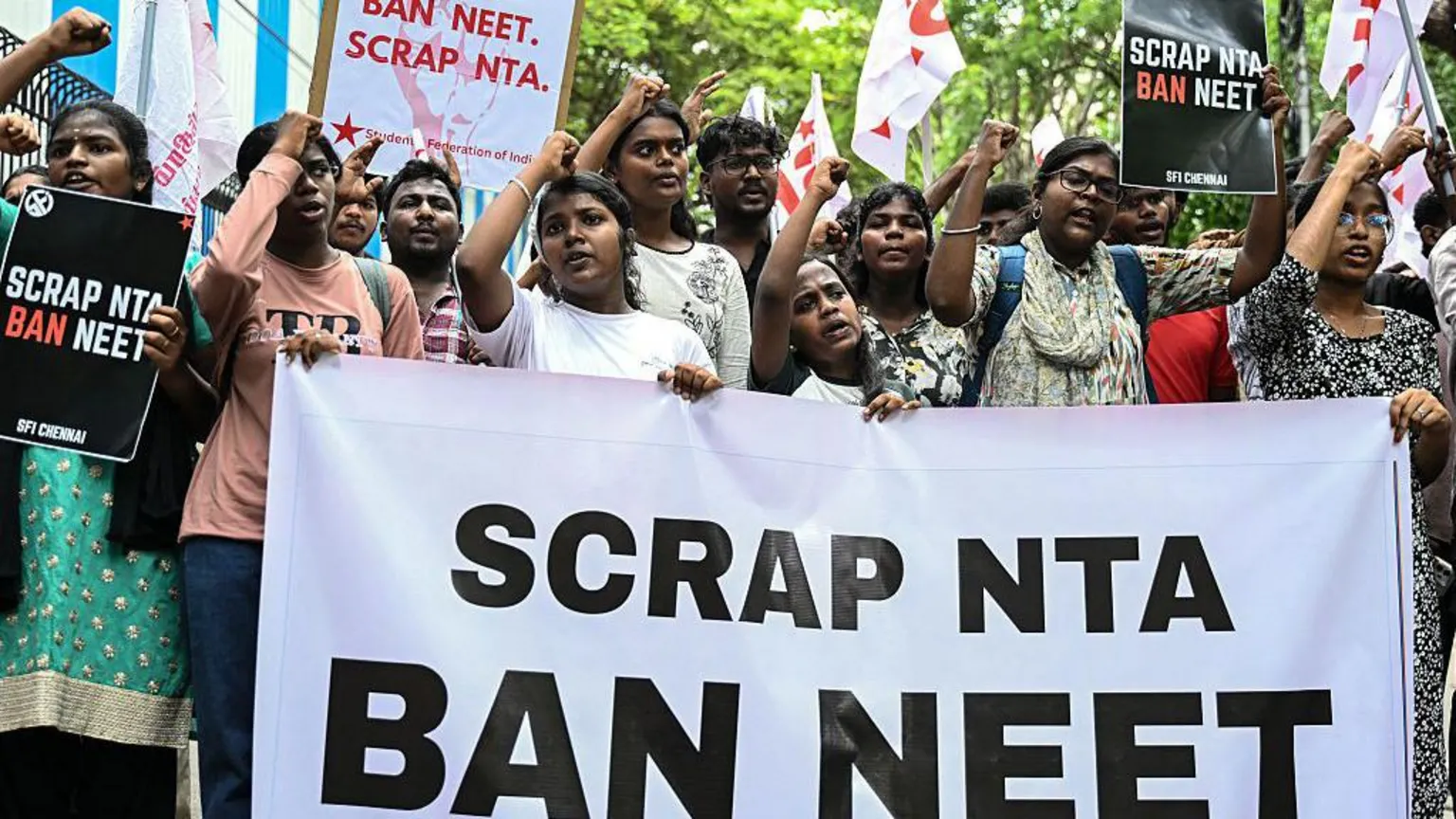
This controversy has gained significant attention partly because it follows a recent scandal involving another critical exam—the National Eligibility Entrance Test (Undergraduate), or NEET-UG—which serves as the entrance examination for medical studies in India.
In May, allegations of a paper leak led to the cancellation of the NEET-UG exam, affecting nearly 2.28 million candidates who had taken the test and resulting in a series of alleged suicides.
Congress leader Rahul Gandhi has accused Prime Minister Narendra Modi and his Bharatiya Janata Party (BJP) government of neglecting the youth of the country. Gandhi has demanded the resignation of the education minister over these controversies, alleging that the system is rigged and that students have had to resort to social media to seek justice. The education minister has not yet responded to these allegations.
Student Complaints and Viral Social Media Posts
On the social media platform X, Gandhi highlighted the case of Vedant Srivastava, a CBSE student who claimed his answer sheet had been swapped.
Srivastava stated on X that after requesting a re-evaluation of his physics paper, he discovered the scanned copy provided by CBSE was not his, citing differences in handwriting and answers to questions he had not attempted.
"I studied for an entire year. I sacrificed sleep, peace of mind, outings, everything for these exams. And now I don't even know whether my actual physics paper was checked. Do students really deserve this?"
His post went viral, prompting numerous similar complaints from other students. Many shared screenshots that appeared to show mismatched answer sheets and incorrect markings.
On Monday, CBSE stated it had emailed Srivastava the "correct copy" of his answer sheet but did not explain the alleged mismatch. Screenshots shared by the student then appeared to show manual markings in red ink, contrasting with the green tick marks used in the digital evaluation system.
According to CBSE, as of Tuesday, over 400,000 students had applied for scanned copies of their answer sheets, and approximately 1.1 million had requested physical copies.
Some students reported experiencing technical glitches while applying for copies of their answer sheets, leading federal Education Minister Dharmendra Pradhan to assign a team of experts from India's premier technology institutes to assist CBSE in ensuring a "glitch-free re-evaluation process."
Security Concerns and Alleged Hacking
Students have also raised concerns regarding the security of the examination portal after another CBSE student claimed to have hacked into it in February, gaining access to evaluators' accounts.
Nisarga Adhikary, who identifies as an "ethical hacker," told the BBC that he was able to crack the master password for the system, thereby accessing student records, answer sheets, and evaluators' accounts.
"With that kind of access, one can tamper with the answer-sheets, change marks or even access peoples' phone numbers and bank details,"
Adhikary reported approximately six to seven security vulnerabilities he identified in the portal to India's Computer Emergency Response Team (CERT-IN)—a federal agency responsible for cyber-security incidents—via a series of emails, which the BBC has reviewed. He has also posted his findings on his X account and blog.
On Tuesday, CBSE denied these allegations, asserting that "no security breaches have come to light on the portal deployed for the actual evaluation work."
The board added that the URL identified as compromised was a "testing site" and that "no actual evaluation data, marks or other data [were] held on that portal."
However, Adhikary maintains that after logging into the portal, he was able to view scanned answer sheets and independently verify the personal details of one evaluator whose account he accessed.
"If this was a test portal, why was this information uploaded on it?"
The BBC has sent inquiries to CBSE and CERT-IN and is awaiting their responses.
Follow India on Instagram, YouTube, X, and Facebook.


