

Shockwaves Across Mali and West Africa
The recent coordinated attacks that saw insurgents enter Mali's capital, Bamako, assassinate the defence minister, and reclaim northern territories have sent shockwaves throughout West Africa. On Saturday, residents in multiple cities awoke to gunfire and explosions. An alliance of two groups—the separatist Azawad Liberation Front (FLA) and the al-Qaeda-linked JNIM group—claimed responsibility for the assaults.
The scale of the offensive, coupled with the withdrawal of Malian and Russian forces from the northern city of Kidal, now under FLA control, has raised serious doubts about the strength of the military government led by Colonel Assimi Goïta, who assumed power in a coup in August 2020.
Colonel Goïta has not appeared publicly for several days since the offensive, prompting questions about the junta's future and the role of Russian forces deployed in Mali and neighbouring countries to address security threats.

Scenario 1: Junta Remains in Power and Mounts a Counter-Offensive
Many analysts consider it the most likely short-term outcome that the military will retain control, as it still holds major cities, towns, and state institutions. However, the coming days are critical as the army prepares to launch a counter-offensive against JNIM and the FLA.
Beverly Ochieng, a senior analyst at global consultancy Control Risks, stated that the success or failure of this counter-offensive will "determine the longevity of the junta." Three days after the offensive, the presidency's social media accounts shared photos of Colonel Goïta meeting with Russia's ambassador to Mali, Igor Gromyko, as well as images of the coup leader visiting a hospital where those wounded in the attacks are receiving treatment.
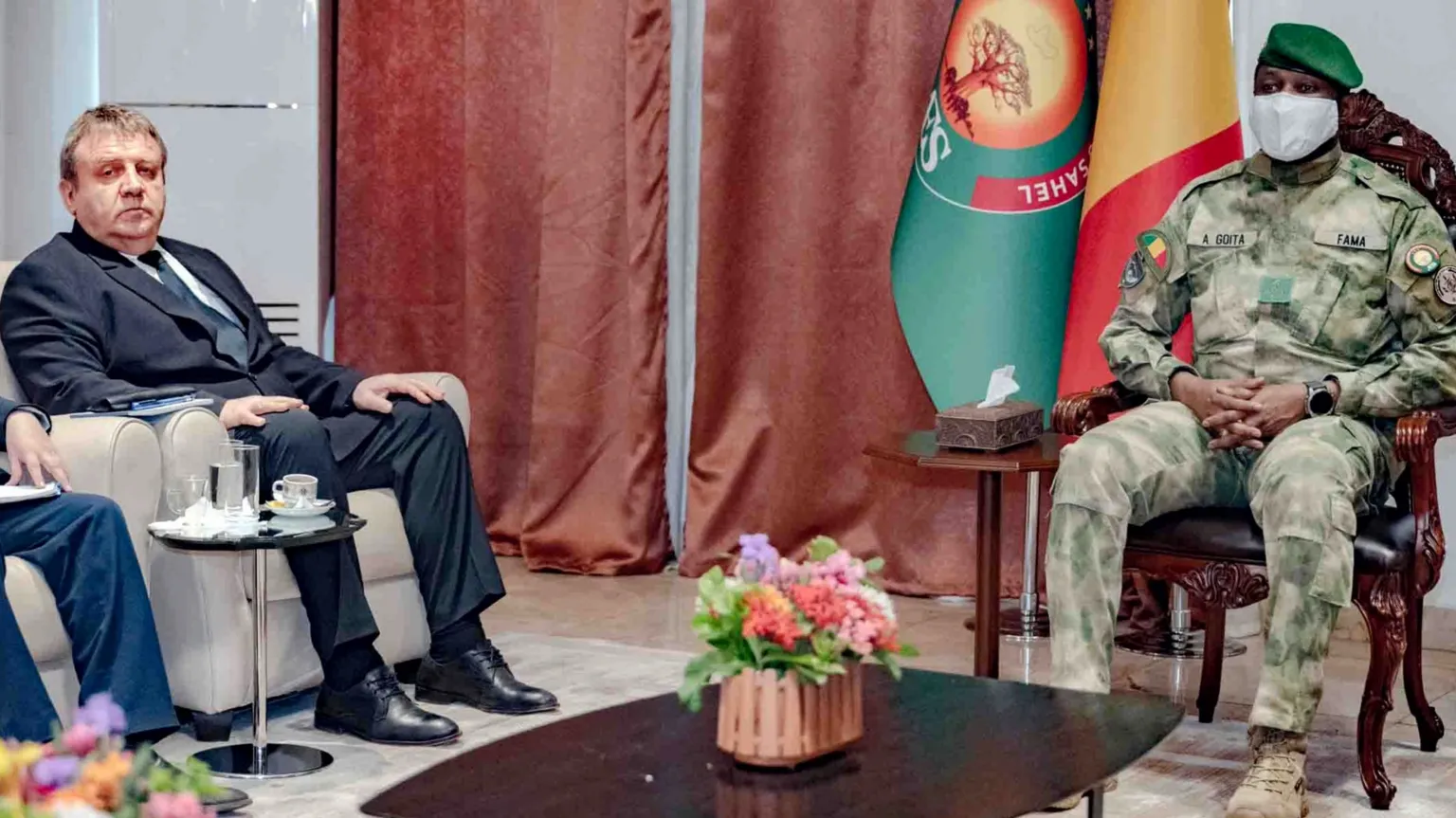
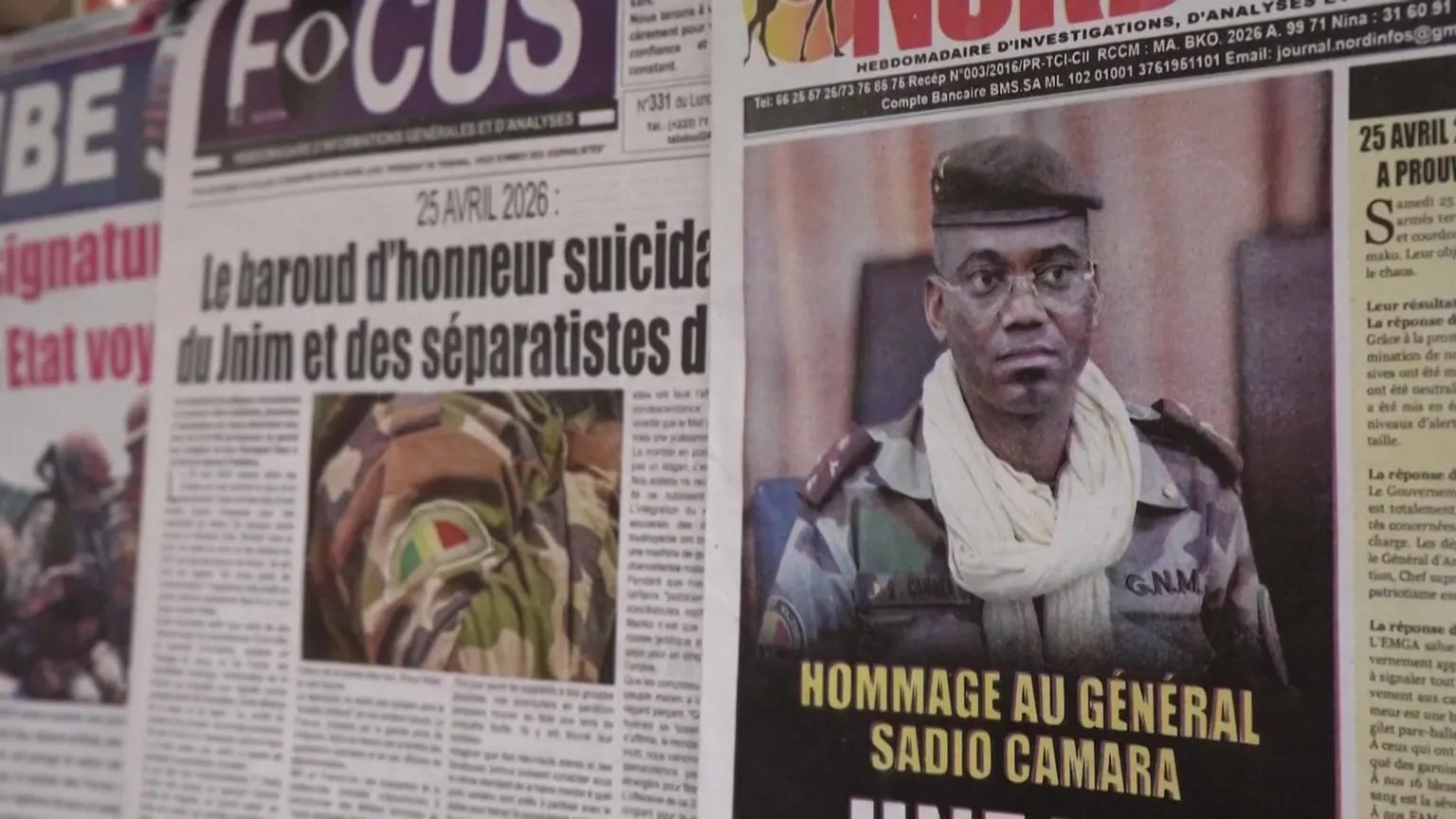
Despite these appearances, Colonel Goïta has yet to issue a formal statement regarding the situation. Analysts suggest that the death of Defence Minister Sadio Camara could undermine military coordination, potentially affecting the counter-offensive's effectiveness.
Ulf Laessing, head of the Sahel programme at the Konrad Adenauer Foundation, a German think tank, noted that Camara's death might also strain relations with Russia. Camara was a key figure in the ruling structure, described as "the main interlocutor for Moscow and the brain behind the deployment of Russian mercenaries in the Sahel."
While Malian forces assert their commitment to securing key regions, they face significant challenges as the FLA has expressed ambitions to expand south of Kidal.
"We want to take control of Gao city. All of Gao's gates have fallen, but the camps of the army have not," said spokesman Mohamed Elmaouloud Ramadane.
He further told the BBC that the historic city of Timbuktu is also a target:
"It will be easy to take over once we fully control Gao and Kidal."
The junta initially enjoyed popular support when it seized power nearly six years ago, promising to address Mali's longstanding security crisis. However, over the past year, it has been forced into a defensive stance due to JNIM's fuel blockade and the militants' expansion of their insurgency to include economic warfare.
If armed groups sustain their advance, Mali could face a protracted conflict, which would significantly impact the junta's future.
Scenario 2: Junta Retains Power with Russian Support but Seeks New Partners
The recent attacks have also damaged Russia's reputation as a dependable security partner in Mali, according to Ochieng. After the military takeover early in the decade, French forces, which had supported the army, were ordered to leave, and Russian fighters replaced them to help curb the insurgency.
However, Russia's Africa Corps has suffered a significant blow to its reputation following the failure to defend major cities and the loss of Kidal, Laessing added.
While Mali may continue to rely on Russian support, it could be compelled to broaden its military partnerships. One potential avenue is closer ties with Turkey, which has been actively seeking to expand its influence in Africa.

Ochieng mentioned reports of a Turkish security contact deployed "to train the presidential guard" in Mali. Turkey already maintains defence relations with Mali, supplying drones that reportedly played a decisive role in helping the military retake Kidal in 2024.
Mali has also shown signs of renewed engagement with the United States after years of strained relations. Earlier this year, Nick Hocker, head of the State Department's African affairs section, visited Bamako to express US "respect for Mali's sovereignty" and outline a "new course" in bilateral relations aimed at moving "past policy missteps."
Hocker also indicated that the US intends to work more closely with Mali's neighbours and allies, Burkina Faso and Niger, on shared security and economic priorities.
Bamako could also increase reliance on the Alliance of Sahel States (AES), which includes Mali, Niger, and Burkina Faso—all military-led governments. The bloc has pledged support for Mali, although it has yet to function as a major joint fighting force.
For Russia, a key question is whether it can maintain influence if Mali diversifies its security partnerships. This crisis could test Moscow's broader strategy in Africa, where it has expanded influence through military partnerships. If Russian-backed forces are perceived as unable to protect key allies, other regional governments may reconsider their reliance on Moscow.
Scenario 3: Pressure Forces Junta from Power—But Who Takes Over?
The attacks on Saturday represent the most serious challenge to military rule in Mali in recent years. Continued assaults could increase pressure on the military government amid growing public discontent.
One possible outcome is another military coup, with a different faction of officers seizing power. Alternatively, an alliance between the FLA and JNIM could replace the current government, though this would likely face significant internal tensions.
The FLA presents itself as a political and nationalist movement, while JNIM is an armed Islamist group. Mali's separatist and Islamist groups have had an on-again, off-again relationship since 2012, when the ethnic Tuareg separatist rebellion was overtaken by Islamist militants.
An FLA spokesman earlier described JNIM fighters as their "cousins," adding that "we share the same enemy, so we have to be under the same umbrella." However, FLA leader Sayed Bin Bella later told the BBC that there was "no merger."
"All the flags we have raised are our own, not those of al-Qaeda. If they wish to merge with us, they must withdraw from the global al-Qaeda organisation," he said.
Analysts suggest these ideological differences could complicate any future power-sharing arrangement. In recent years, JNIM has largely avoided the overt global jihadist rhetoric often associated with al-Qaeda and similar groups, according to Ochieng.
She argues that a possible outcome could resemble the situation in Syria, where a group once affiliated with al-Qaeda took power. Syria's leadership has been criticized by some hard-line Islamists for being too secular. Similar criticisms are already directed at JNIM due to its alliance with the FLA, according to analysts monitoring jihadist media channels.
However, ideological differences between JNIM and the FLA could become a source of tension unless the separatists secure full control of the north and distance themselves from developments elsewhere in Mali.
For more news from the African continent, visit BBCAfrica.com.
on Twitter @BBCAfrica, on Facebook at BBC Africa, or on Instagram at bbcafrica.


