
Flooding Devastates Ghana's Capital
At least 13 people have died in Accra, the capital of Ghana, following severe flooding caused by torrential rain, the Ghana National Fire Service (GNFS) reported. Rescue operations are ongoing as the government urges residents to stay indoors or move to higher ground due to an approaching storm from the east.
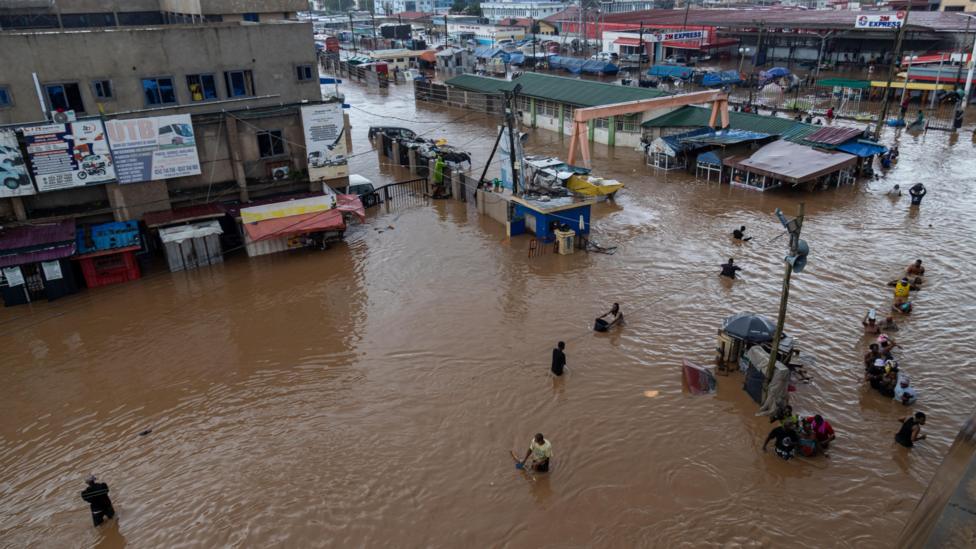
Although much of the floodwater from Sunday night's heavy rainfall has begun to recede, the GNFS cautioned that the death toll may increase as recovery efforts continue. Low-lying neighborhoods were especially affected, with social media videos showing submerged homes and vehicles, and numerous buildings destroyed.

Emergency Response and Safety Warnings
Emergency teams from the police, fire service, military, and the National Disaster Management Organisation have been deployed to the affected areas. The interior ministry stated these forces are monitoring the situation to protect lives and property. The GNFS has rescued over 470 individuals so far.
The floods also caused a significant fire at a rubber factory within the city. Some residents remain trapped in their homes, prompting government appeals for relocation to safer, elevated areas and warnings against traveling through flooded zones.
"Stay indoors if you are in a safe location," the president's office advised. "Do not attempt to cross flooded roads, whether on foot or in a vehicle. If your home is being inundated, move immediately to higher ground and call 112 for emergency assistance."
Record Rainfall and Climate Change Concerns
Preliminary data indicates that Accra received approximately 140mm of rain, according to Mahama, who highlighted this as a significant increase compared to last year's highest single-day rainfall of about 56mm. He linked this rise to climate change.
The Ghana Meteorological Agency forecast additional rain for southern Ghana, including Accra, from Tuesday morning into the afternoon, increasing the risk of further flooding. The agency advised residents to avoid sheltering under trees, stay away from loose electrical wires, and refrain from walking or driving through floodwaters.
Impact on Residents and Infrastructure
Accra, with a population exceeding four million and one of Africa's fastest-growing cities, has faced substantial disruption. Resident Philip Mensah reported his home was flooded, lamenting that his "1970s collection of vinyl records is now underwater." Schoolteacher Patience Naa Adjeley Adjei described spending hours trying to keep water out of her flooded room.
"I have mopped my room more than eight times," she said. "I can't even step out because my room is flooded, and outside is flooded."
Markets and businesses remain closed, with some washed away, as authorities prepare for more rain.
Power Supply Disruptions and Drainage Issues
The Ghana Grid Company Limited (GRIDCo) and the Electricity Company of Ghana (ECG) have temporarily cut power to parts of Accra affected by flooding as a precaution. In a joint statement, they explained the shutdown was necessary due to flood damage at multiple substations, which posed risks to electrical equipment and personnel.
Flooding in Accra is worsened by inadequate drainage systems, clogged gutters, and illegal construction on waterways. The president condemned these actions, stating they endanger entire communities. Following an aerial survey on Monday, he ordered the demolition of all illegal structures.
Historical Context and Calls for Improved Urban Planning
Accra experienced similar flooding in 2015, which led to a fuel station explosion causing 150 deaths. Ewurabena Yanyi-Akofur, director of WaterAid Ghana, emphasized the need for stronger urban planning and preparedness to protect communities from extreme weather exacerbated by climate change and rapid, unplanned urbanization.
"What we are witnessing in Accra is not an isolated weather event, but part of a pattern intensified by climate change and rapid, unplanned urbanisation," she stated.


