Voting Suspended in Parts of Ethiopia Due to Security Issues
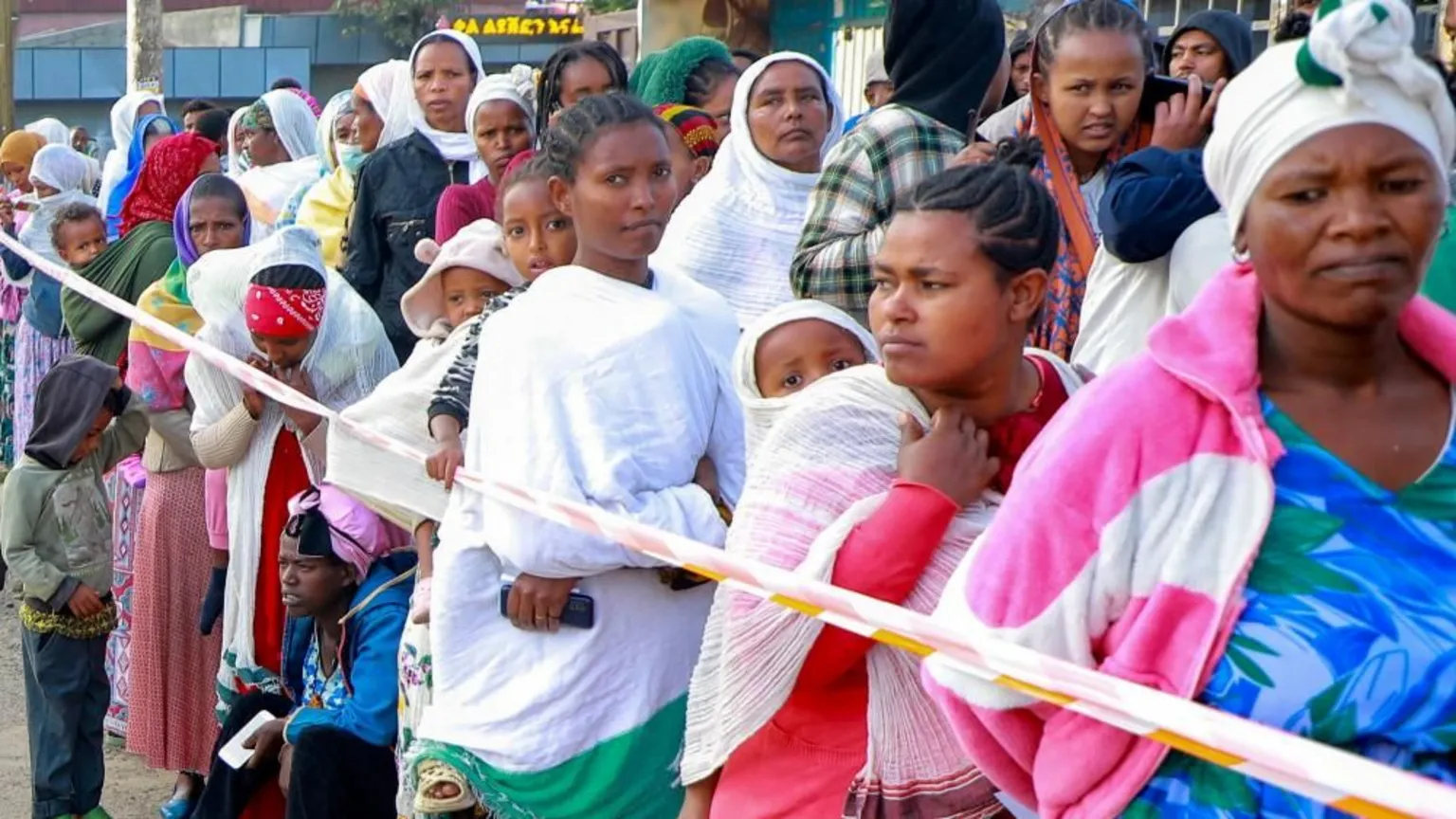
Voting in Monday's general election was suspended in parts of Ethiopia's Oromia and Amhara regions because of security concerns, according to electoral commission head Melatwork Hailu. However, long queues of voters were observed in other areas.
Conflict in segments of Africa's second most populous country had already prevented many citizens from participating in the seventh election since the fall of the Marxist military regime in 1991.
The entire northern region of Tigray, recovering from a civil war that ended in 2022, was completely excluded from the election.
Overall, more than 50,000 polling stations were operational, but 143 failed to open due to security problems.
Prime Minister Abiy Ahmed, in power since 2018, cast his vote and praised Ethiopia's progress since the end of the military dictatorship.
"The Ethiopian people have demonstrated that they do not need anyone to advise or lecture them in order to build their state and establish a democratic system," he said.
The media environment in Ethiopia remains tightly controlled, with many organizations, including the BBC, denied press accreditation.
Kenya's former President Uhuru Kenyatta, observing the election on behalf of the African Union, told reporters that voting was proceeding smoothly, according to .
Who is Likely to Win?
Although not directly elected, Abiy is expected to secure another term along with his Prosperity Party. Voters elect representatives to the 547-member parliament, and the party winning at least 274 seats earns the right to form the next government for a five-year term.
Abiy, 49, came to power following widespread anti-government protests against the Ethiopian People's Revolutionary Democratic Front (EPRDF), a coalition dominated by Tigrayan politicians that ruled since 1991.
He dissolved the EPRDF, of which he was a member, and replaced it with the Prosperity Party, which promotes a more centralized and less federal governance structure.
Prof Merera Gurdina, a veteran opposition politician and member of the Oromo Federalist Congress, described this election as the least competitive in recent Ethiopian history.
"We are participating symbolically because the law says you cannot boycott elections consecutively. We are participating, mainly to avoid deregistration," he told the BBC.
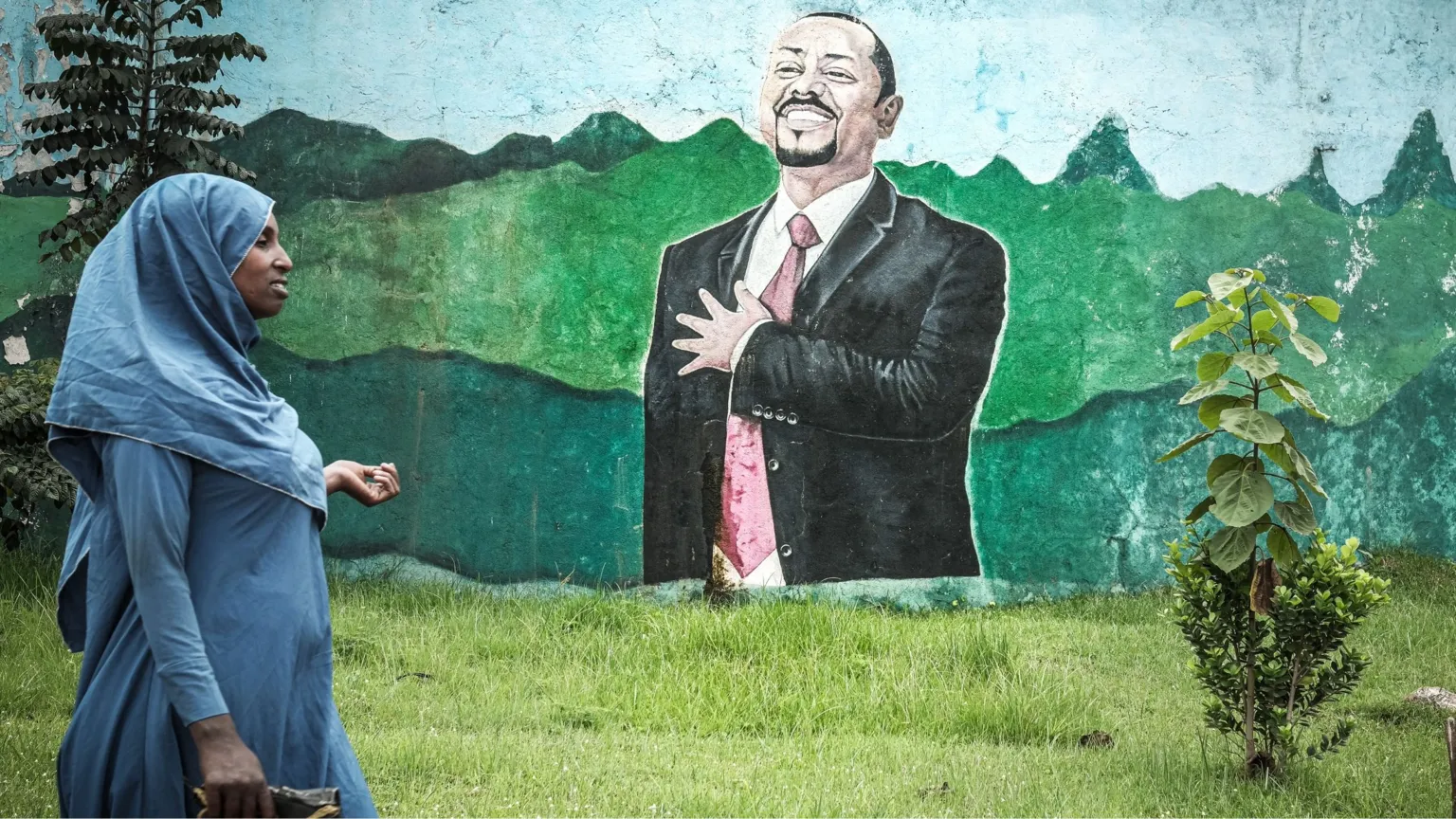
Abiy's Early Promise and Subsequent Challenges
When Abiy first assumed office, he was celebrated as a champion of democracy and press freedom, releasing hundreds of politicians and journalists from prison.
He was awarded the 2019 Nobel Peace Prize primarily for ending the 20-year military stalemate with neighboring Eritrea, but relations with Eritrea have since deteriorated.
Seven years later, the situation has changed significantly.
Criticism of Abiy's Government
Critics accuse Abiy's administration of suppressing dissent, forcing opponents into exile, and arresting political rivals.
Under Abiy, the government engaged in a two-year war starting in 2020 against Tigray's leaders, a conflict estimated by the African Union's mediator to have caused approximately 600,000 deaths and pushed the region toward famine.
According to Reporters Without Borders' 2025 press freedom index, Ethiopia ranked 148 out of 180 countries.
Human Rights Watch's September 2025 report condemned the government for arbitrary arrests of journalists and media professionals and called for an end to harassment of independent journalists.
After the revocation of credentials for three reporters in February, the Committee to Protect Journalists highlighted a concerning pattern of repressive actions against international and independent press in Ethiopia.
Supporters' Perspective on Abiy's Reforms
Supporters argue that Abiy has transformed Ethiopia positively.
The capital, Addis Ababa, exemplifies these reforms through rapid urban development projects such as the "Corridor Development" and "Riverside" initiatives.
However, these projects have faced criticism for mass demolitions that displaced tens of thousands of residents.
Abiy's economic reforms have received backing from the International Monetary Fund and the World Bank, contingent on liberalizing the foreign currency exchange market and managing the country's debt, which stood at $36.5 billion (£27.1 billion) in 2024, according to the World Bank.
With a population of 135.9 million, Ethiopia is Africa's second most populous nation after Nigeria and one of the continent's fastest-growing economies, despite ongoing insecurity in regions like Amhara and Oromia, residual effects of the Tigray war, and rising costs of goods and services.
The country's GDP per capita is projected to reach $1,133 in 2026, up from $641 in 2016.
Security Concerns in Amhara and Oromia
In addition to tensions in Tigray, Ethiopia's two most populous regions, Amhara and Oromia, have experienced violent insurgencies in recent years.
Fano militias in Amhara and the Oromo Liberation Army (OLA) in Oromia continue to clash with government forces, causing thousands of civilian deaths and displacing hundreds of thousands.
Both groups seek greater ethnic autonomy and feel betrayed by Abiy, though for different reasons.
According to conflict monitoring group Acled, over 9,400 people were killed in 2024 due to violence in these regions.
The government states that 97% of areas in Amhara and Oromia are prepared to hold elections.
The Coalition for Ethiopian Unity, an opposition alliance contesting the elections as a unified front, disputes this claim.
"We have previously stated that we cannot campaign in the Amhara and Oromia regions because there are no enabling conditions," Mistreselasie Tamrat, the coalition's secretary, told BBC Amharic.
Magnus Taylor, Horn of Africa expert at the International Crisis Group (ICG), noted the uncertainty about voter turnout.
"Prime Minister Abiy will be confident that he will be re-elected. This shouldn't obscure the fact that there are various internal insecurity issues, insurgencies and a risk of a new war in the north. The two things can exist at the same time," he told the BBC.
Situation in Tigray
Tigray, home to approximately six million people, was governed by an interim administration following a peace deal signed in November 2022 in Pretoria, South Africa, between the government and the Tigray People's Liberation Front (TPLF).
Earlier this month, the TPLF, upset by Abiy's reappointment of the interim administration's leader without consultation, elected Debretsion Gebremichael to lead the region.
Debretsion had led Tigray during the war when the government designated the TPLF a terrorist organization.
Tensions between the TPLF and Addis Ababa have worsened over the past year.
A major dispute involved whether the TPLF needed to register as a new party. The election board insisted it did, but the TPLF disagreed and is now effectively banned, with its legal status revoked.
The TPLF also accuses the government of reneging on other aspects of the Pretoria accord, particularly regarding the return of territory lost during the war, such as western Tigray.
Approximately one million people fled western Tigray during the conflict and currently live in poor conditions in makeshift camps.
Another point of contention is Eritrea, which borders Tigray to the north.
During the civil war, Eritrea fought alongside Ethiopia's government, but relations have since soured, largely due to Abiy's ambition to gain access to a Red Sea port.
When Eritrea gained independence over 30 years ago, it took a 1,350 km (840-mile) coastline, leaving Ethiopia landlocked.
Reports suggest Eritrea has been aligning with the TPLF, increasing tensions between Abiy's government and Tigray's leadership.
In May, the electoral board confirmed that no voting would take place in any of Tigray's 38 constituencies.
These developments have raised fears of a renewed wider conflict. Magnus Taylor of the ICG believes regional mediation is necessary to facilitate communication between the government and Tigray's leaders.
"At the very least that can prevent miscalculation or reduce the temperatures down to a situation in which they tackle their differences through talking rather than shooting," Taylor said.
Voter Expectations
The election board reports that over 50.5 million people have registered to vote. Despite conflicts and political tensions, many young and first-time voters express hope that the election will bring stability.
"If the outcome of the election is not positive, I think it will affect my daily life economically and politically. If instability arises, I may not be able to continue my education and it could be harder to move around," said Fenet Dereje, a resident of Addis Ababa.
Abiy's Prosperity Party won by a landslide in the 2021 election.
Deputy Prime Minister Temesgen Tiruneh, from the Amhara region where voting has already been canceled in 30 out of 137 constituencies, told local media in March that the ruling party "did not want to win everything" this time.
"We have ministers who are members of opposition parties. This trend will continue. We do not want to win 100% of the votes. We want to see our competitors claim victory because we want to accommodate diverse voices," he said.
For more news from the African continent, visit BBCAfrica.com.
on Twitter @BBCAfrica, on Facebook at BBC Africa, or on Instagram at bbcafrica.