

Introducing Renewable Energy and Sustainability in Education
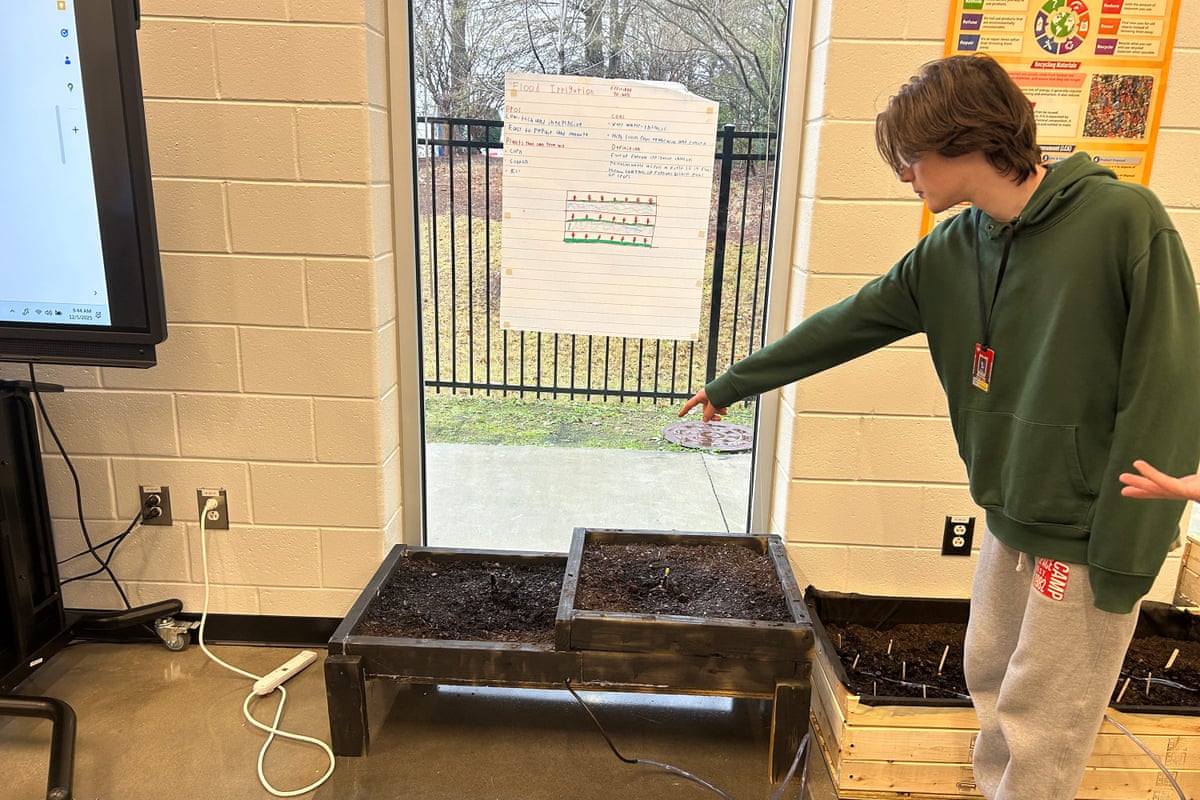
In a classroom in Greenville County, South Carolina, high school juniors observe small green sprouts—baby carrots and romaine lettuce—emerging from the soil of a drip irrigation system they constructed weeks earlier.
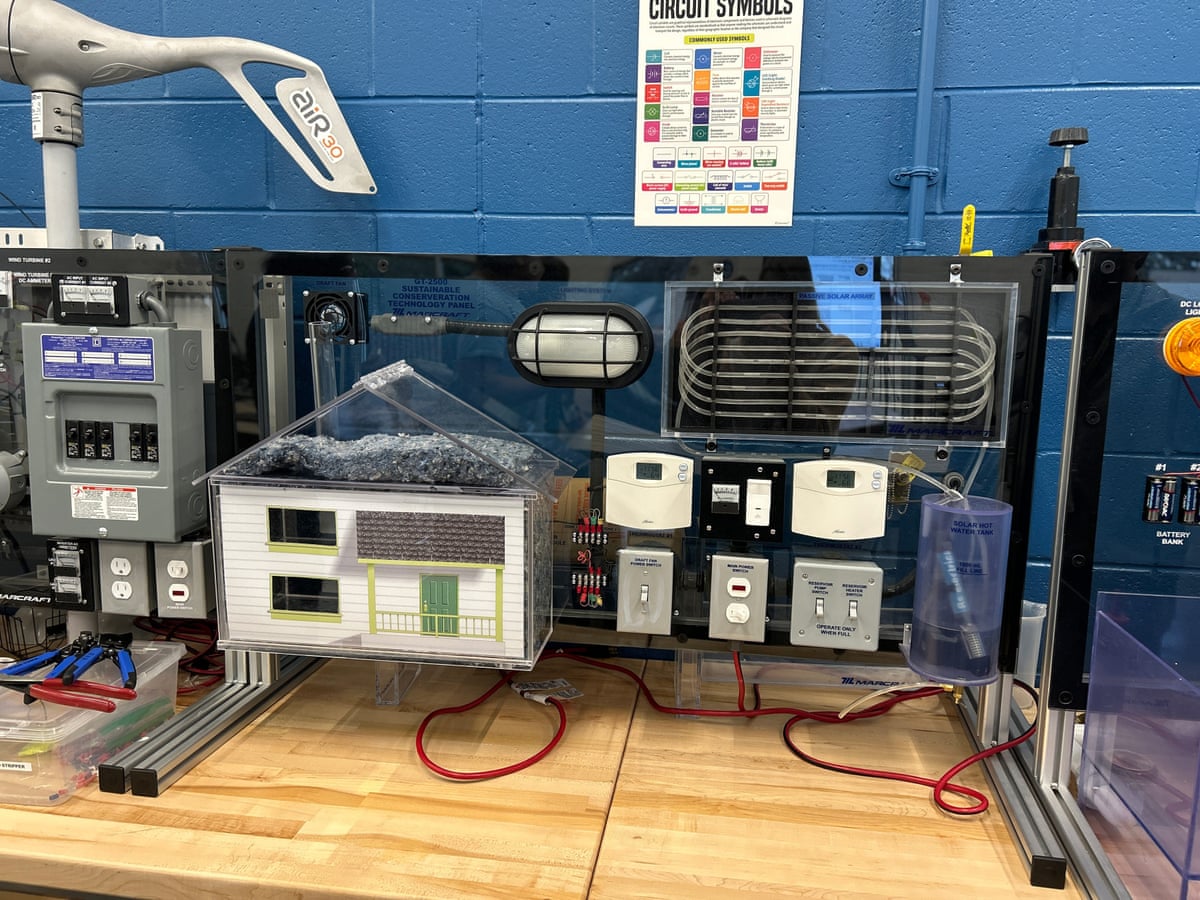
At the other end of the room, a model hydropower plant demonstrates how water movement generates electrical currents. This class focuses primarily on renewable energy education.
“It’s an extremely important thing to study, especially now with all the new technology coming,”said 11th-grader Beckett Morrison.
In 2023, Greenville County school district established the Innovation Center, a facility designed to rotate various career training programs every few years based on local industry demands.
Expanding Environmental Education Across States
Despite political opposition to climate change initiatives, including former President Donald Trump’s dismissal of climate change as a “hoax” and reductions in related funding, school systems in both Democratic and Republican states are incorporating clean energy and environmental sustainability into career and technical education (CTE) programs. These efforts aim to prepare students for a workforce increasingly influenced by climate change.
State and school leaders note that industries are adopting emerging technologies to stay competitive globally, adapt to environmental changes, and reduce operational costs. Even traditionally non-environmental jobs are evolving to meet new industry standards.
Additionally, a growing number of young people, many of whom have experienced severe hurricanes, heat waves, and other extreme weather events intensified by climate change, are motivated to engage in sustainability efforts.
“They want to make sure the world is safe and clean for foreseeable generations,”said Dan Hinderliter, associate director of state policy at Advance CTE, an organization representing state and school leaders in career and technical education.
Delaware’s Statewide Integration of Environmental Lessons
Delaware is at the forefront of this movement, planning to incorporate environmental lessons into all middle and high school CTE courses in the coming years.
The goal is for students across all industries—from carpentry to teacher training—to gain knowledge about sustainability and environmental impact, explained Jon Wickert, Delaware’s director of career and technical education and STEM initiatives.
Wickert emphasized that business accountants and building managers should consider energy reduction strategies that also lower costs. Carpentry students should understand the health and environmental effects of dust from wood, plastic, and fiberglass, including the consequences of these materials polluting waterways.
“As a company, if our employees are healthy, that’s going to help our bottom line in terms of health insurance costs. We want our students to think in that manner coming out of our high school programs,”Wickert said.
“So when they go to the workforce, they’re able to think bigger and think in ways that are connected.”
Rather than creating separate career pathways specifically for environmental jobs, Delaware is embedding sustainability lessons into existing middle and high school career education courses. For instance, solar panel installation and energy reduction topics are integrated into electrical career pathway coursework instead of offering standalone solar panel installation classes.
Delaware faces significant climate challenges as the flattest state in the U.S., situated just above sea level. The state is projected to lose a considerable portion of its land to the ocean by the end of the century.
“Every job is a green job,”said Denise Purnell-Cuff, a contractor involved in the statewide plan with the Delaware Department of Education.
“There is no disconnecting how we move forward in any area – there is no separating it from the environment.”
Growth of Clean Energy Jobs and Federal Funding
Clean energy jobs have expanded significantly in recent years. By 2030, two-thirds of all cars sold globally are expected to be electric, and more countries are anticipated to increase their reliance on renewable energy sources.
Under the Biden administration, schools accessed federal funding from the bipartisan Infrastructure Investment and Jobs Act to launch climate-friendly and clean energy workforce initiatives. This funding facilitated progress in states with limited climate program resources. However, much of this funding was rescinded during the Trump administration.
In the absence of federal support, schools are seeking alternative funding sources to develop greener CTE programs tailored to their communities’ environmental and economic needs.
Local Initiatives in Chicago and Washington, D.C.
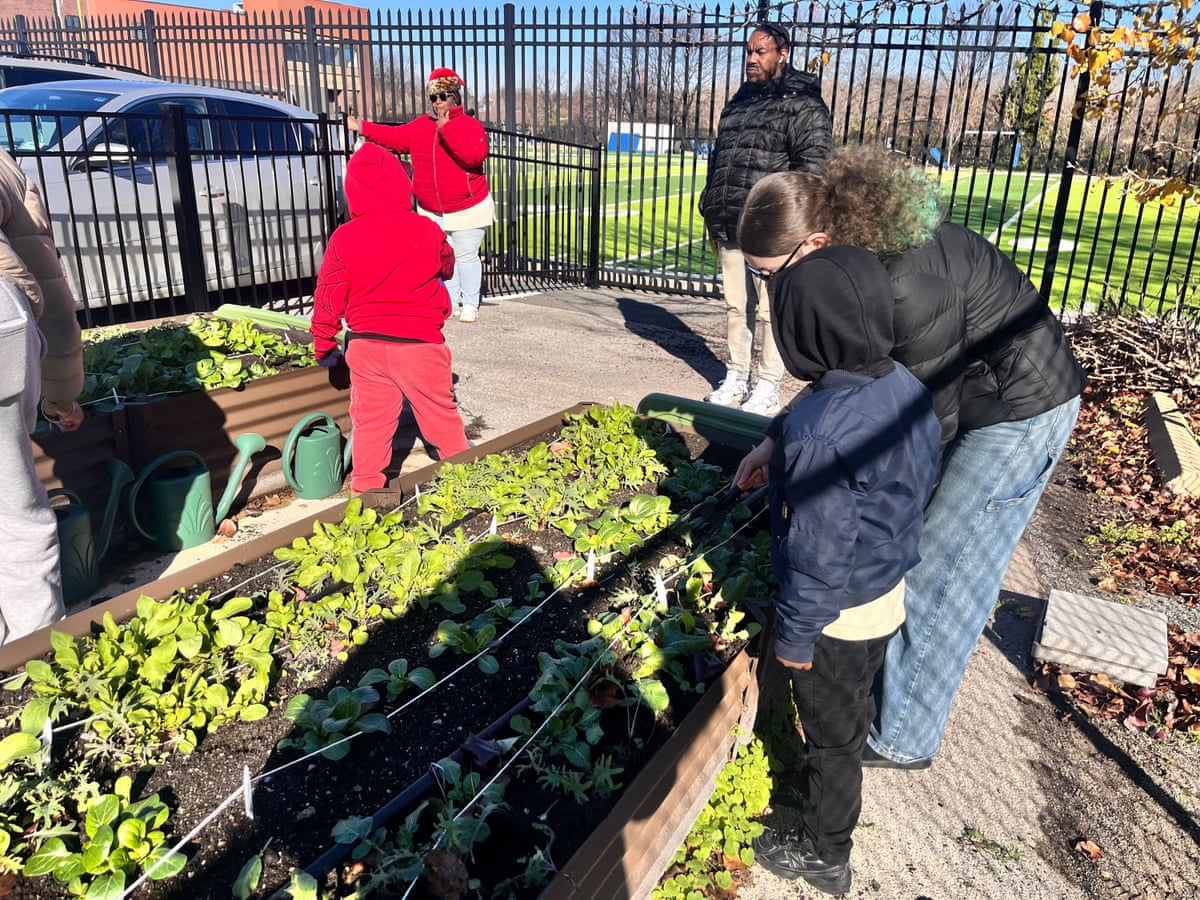
Last year, the Chicago Teachers Union successfully negotiated green initiatives in their contract with the school district, including sustainability-focused courses for students. In Washington, D.C. Public Schools, sustainability lessons such as hydroponic gardening are being incorporated into the district’s agriculture program.

Buffalo Grove High School’s Sustainability Pathway
In Cook County, Illinois, teachers at Buffalo Grove High School sought to expand science course offerings, resulting in the creation of the Sustainability Academy in 2023. Enrollment has increased more than fivefold to approximately 80 students who take classes including Introduction to Sustainability, Applications of Sustainability, and Advanced Placement Environmental Science.
“We felt like it was important to engage in these conversations with the students and to get them to think about policy,”said Michael McPartlin, a science teacher in the academy.
“They’re going to be the generation that’s shaping what the next steps look like.”
The school is located in the Buffalo Creek watershed. During their second year, students take a course on Sustainable Aquatics Systems, where they test water chemistry and study their community’s ecological impact.
Angel Johnson, division head of math and science at Buffalo Grove High, noted that the presence of local jobs requiring such skills supported the creation of the Sustainability Academy.
Trends in Sustainability Education Nationwide
Advance CTE does not maintain a specific database of “green” CTE pathways but has observed increased interest from communities in adding sustainability components to their programs, particularly following infrastructure investments during the previous administration.
In conservative states where climate change is not a statewide priority, communities recognize that sustainable CTE programs offer economic and workforce benefits beyond environmental impact.
“Ohio is a good example of this,”Hinderliter said.
“A very red state now has three major metropolitan areas that all have climate literacy plans, climate action plans and are all focusing programs on environmental outcomes both in CTE and in non-CTE programs.”
Greenville’s Industry-Driven Sustainability Education
In Greenville, where automotive and energy plants such as BMW and GE Vernova are major employers, students learn about electric and hybrid vehicles and renewable energy sources. These lessons enhance students’ career prospects while benefiting the environment.
“All manufacturing has a sustainability component,”said Katie Porter, director of the CTE Innovation Center. Industry representatives from Greenville County helped determine the courses offered when the Innovation Center opened three years ago.
Students like Morrison attend the center from various high schools across the county, enrolling in one of five programs: clean and renewable energy, aerospace technology, automation and robotics, emerging automotive research, or networks and cybersecurity.
Clean energy students can pursue engineering degrees or careers as electricians and energy auditors, which may not require college degrees. Automotive classes cover electric and hybrid vehicles alongside traditional gas engines.
Approximately 25 high school students are enrolled in the clean energy technology program at the Innovation Center. The three-year program culminates in a senior project reflecting their learning. Last year, a student developed a piezoelectric plate—a tile resembling a body weight scale that lights up and generates electricity when stepped on. He proposed installing these tiles in downtown pedestrian areas to generate small amounts of electricity for Greenville. Students present their projects to local industry leaders.
Students in the program have diverse career goals, ranging from engineering and environmental fields to electrician training at community colleges.
The program has expanded Morrison’s understanding of energy sources. For his next project, he is studying a type of algae that releases lipids convertible into biofuel when exposed to ultrasonic frequencies.
Morrison has long cared about environmental protection, and the energy courses have clarified the issue for him. He is learning about solutions applicable across industries, regardless of his future career path.
“It’s one of the most important things,”Morrison said.
“There’s no way to completely reverse our effects, but renewable energy is something that can help, will help and has helped.”
Kavitha Cardoza contributed reporting.
Contact staff writer Ariel Gilreath on Signal at arielgilreath.46 or at gilreath@hechingerreport.org.
This story about career and technical education was produced by The Hechinger Report, a nonprofit, independent news organization focused on inequality and innovation in education. for their newsletter.


