

Bumblebee Reactions Suggest Inner Experiences
Bees respond differently to sweet substances and plain water depending on the context, according to a study that may contribute to the understanding of insect sentience.
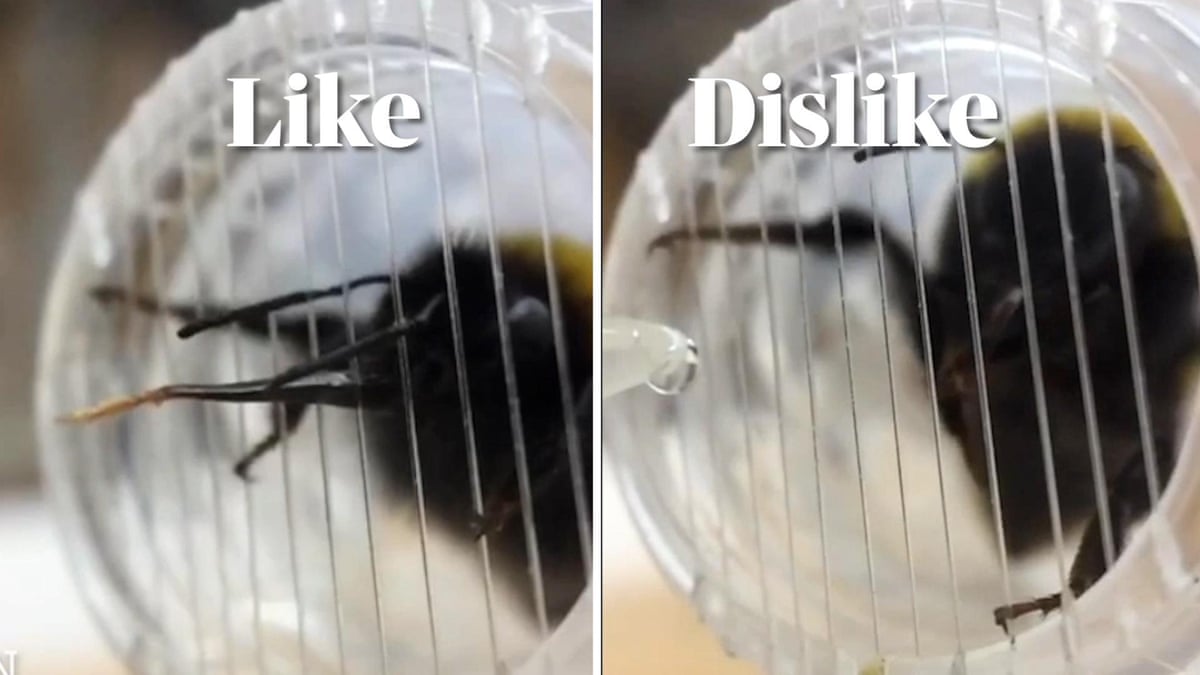
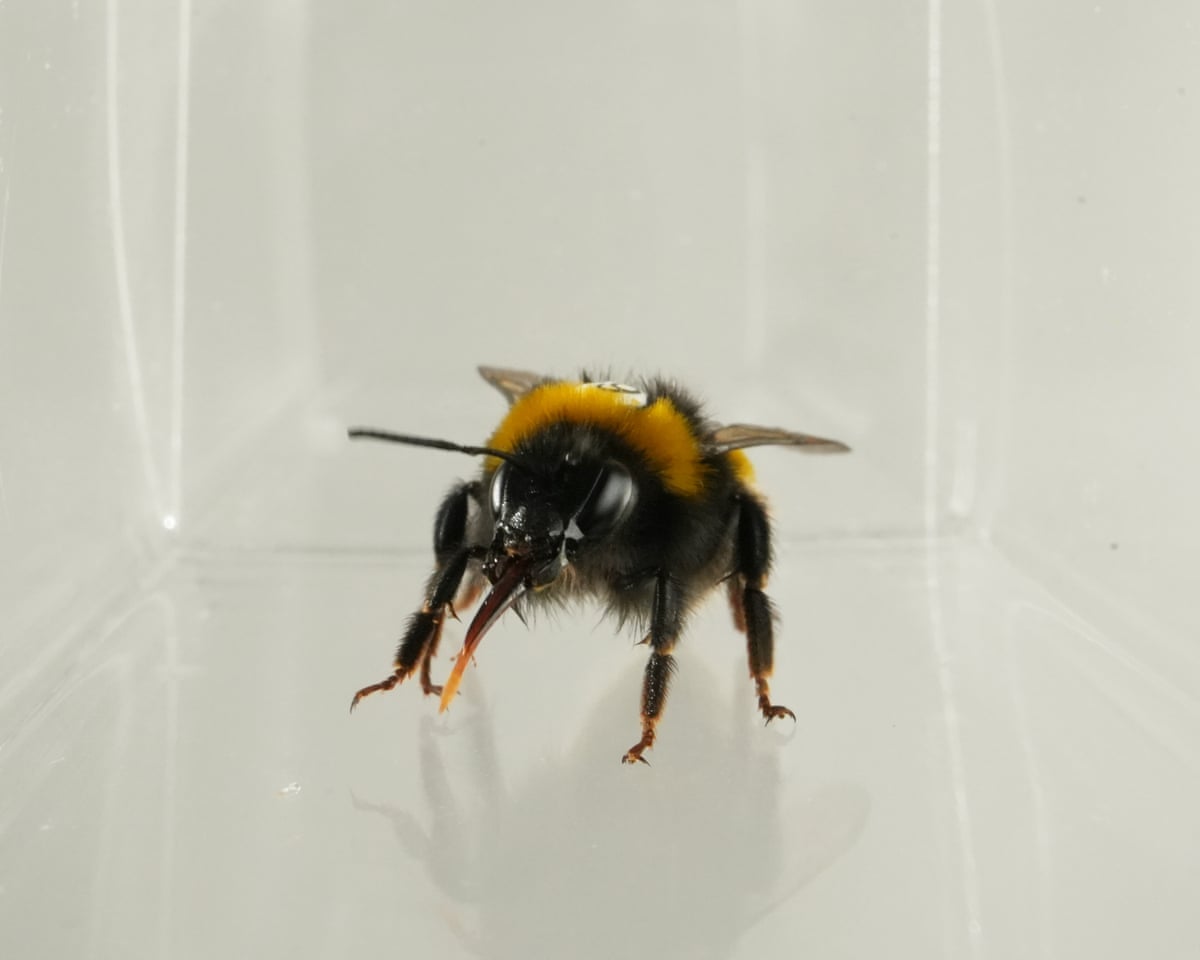
When bumblebees taste something pleasant, they extend their glossa – the insect equivalent of a tongue – for an extended period, resembling a lip-licking action. Conversely, when they encounter an unpleasant taste, they shake their heads and wipe their mouths.
Researchers who recorded these subtle facial expressions using slow-motion video indicate that such behaviors align with “liking” and “disliking” responses previously observed in mammals. The findings were published in the journal Proceedings of the National Academy of Sciences.
Study Design and Findings
The study was a collaboration between Macquarie University in Australia and Southern Medical University in China. Researchers offered bumblebees droplets of various solutions: 60% sugar, 20% sugar, plain water, 5% salt, and quinine at a concentration of 1 millimolar, then documented their reactions.
Professor Andrew Barron, an insect behavior researcher at Macquarie University and co-author of the paper, explained that under normal conditions, bees exhibited what is termed “post-consumption glossa” after tasting sweet solutions, continuing to lick even after finishing the drink.
In contrast, the bees displayed clear aversion to salt and quinine solutions.
“Facial expressions are an important window into the internal states of animals,” he said. “What we found is that bees show responses with their mouthparts to solutions that indicate their subjective like or dislike of those solutions. It tells us there is an inner life to the insect.”
Interpreting Insect Behavior and Sentience
Since insects cannot communicate verbally, establishing evidence for experiences such as pleasure or pain is challenging. Scientists therefore rely on behavioral markers like facial expressions to infer positive or negative experiences.

Previous research has demonstrated that mammals, including primates and rats, exhibit clear signs of “liking” such as licking and tongue protrusion, as well as “disliking” behaviors.
“If a rat gets a salty taste it doesn’t like, it wipes its mouth parts, wipes its whiskers, wipes its tongue,” Barron said. “And we see something similar in a bee.”
Despite these parallels, the idea of an inner life in insects such as bees remains “highly controversial”, according to Barron.
Controlling for Reflex and Contextual Influences
To ensure the observed behaviors were not mere chemical reflexes, the researchers tested 18 bumblebee colonies under various conditions, including heat stress, satiety, and exposure to different drugs.
The bees’ reactions varied depending on the context. For example, exposure to heat altered their responses to water or salty solutions from neutral or negative to positive.
“It is as if someone had offered you an electrolyte drink,” Barron said. “You’d probably go ‘blegh’ most of the time. Unless you’ve just been out on a really, really hot day, and done an enormous run, in which case an electrolyte drink is exactly what your body needs and it tastes fantastic.”
Expert Perspectives on Insect Sentience
Associate Professor Thomas White, an entomologist at the University of Sydney who was not involved in the study, noted that research into insect cognition and sentience is rapidly evolving.
He highlighted the study’s focus on positive experiences as particularly interesting, since most research tends to investigate negative feelings such as pain or fear.
“The picture is increasingly pushing towards a view that insects, or many insects, have some simple capacity to feel the world, not just to assess it and detect it and process information but to actually have a point of view,” White said.
White acknowledged that this perspective challenges common intuitions about where to draw the line regarding which animals can experience pleasure and pain, and consequently the ethical responsibilities humans have toward them.
Implications for Understanding Insect Life
Barron reflected on the longstanding debate about whether insects are merely automatons or animals with inner experiences.
“There’s always been a tension between thinking of insects as animals, or some sort of mini robots.
This is another step towards showing there’s an inner life to being a bee.”


