Resurrecting Extinct Species: The Debate and the Science
Can extinct animal species be brought back to life after thousands of years? Once a concept confined to science fiction, this question is now being explored within a modest building in a business park.
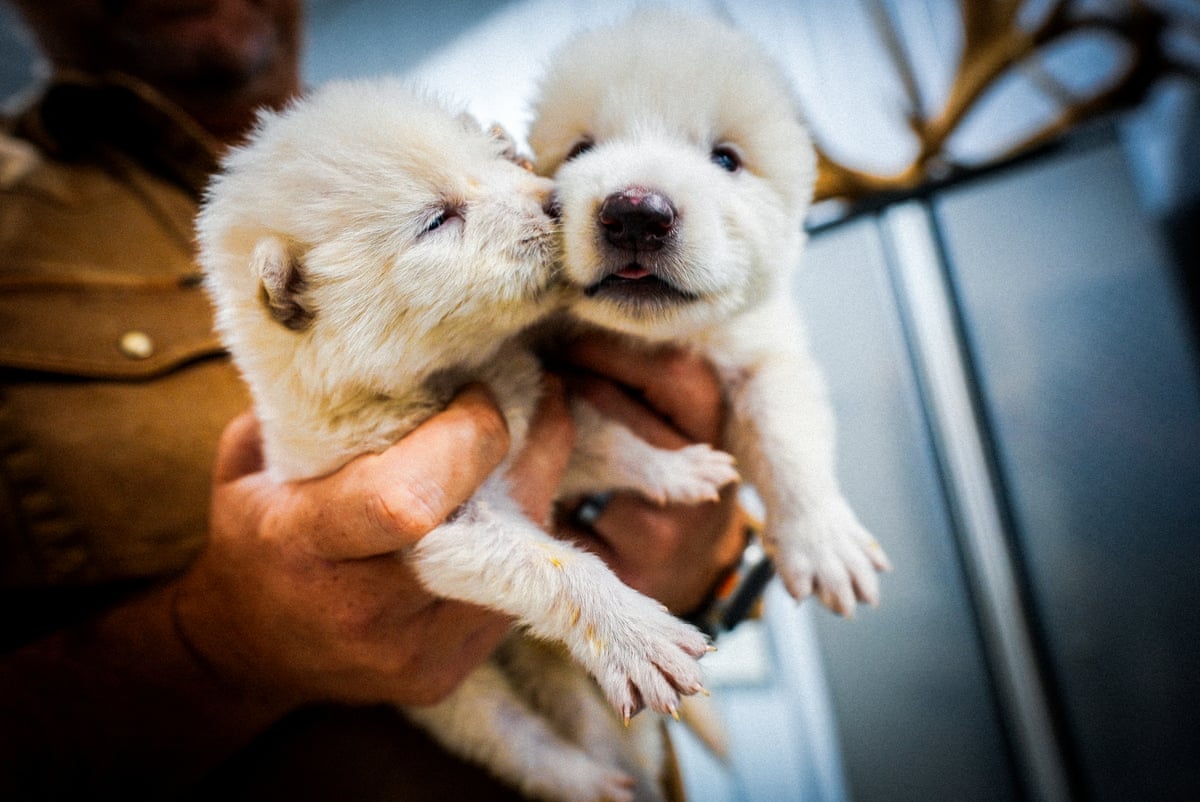
Colossal Biosciences, valued at $10.2 billion after securing hundreds of millions in funding from investors including celebrities such as Tiger Woods and Paris Hilton, has sparked both acclaim and criticism. Last year, the company announced the birth of three pups they described as “de-extinct” dire wolves, a species that vanished over 10,000 years ago.
The company plans to resurrect the woolly mammoth within two years, followed by the dodo, an iconic extinct bird. Their approach involves extracting ancient DNA from fossils and editing genes, drawing comparisons to the fictional Jurassic Park, a comparison Colossal’s CEO Ben Lamm embraces.
“I don’t mind the Jurassic Park comparison because we get it a lot,”said Lamm, a 44-year-old billionaire, during a meeting with in his office, which features statues of a mammoth and a brontosaurus (noting dinosaur DNA is too old for de-extinction). He and his team wore black T-shirts emblazoned with “Direwolf” and the phrase “original tour 8500BC, encore performance 2025.”
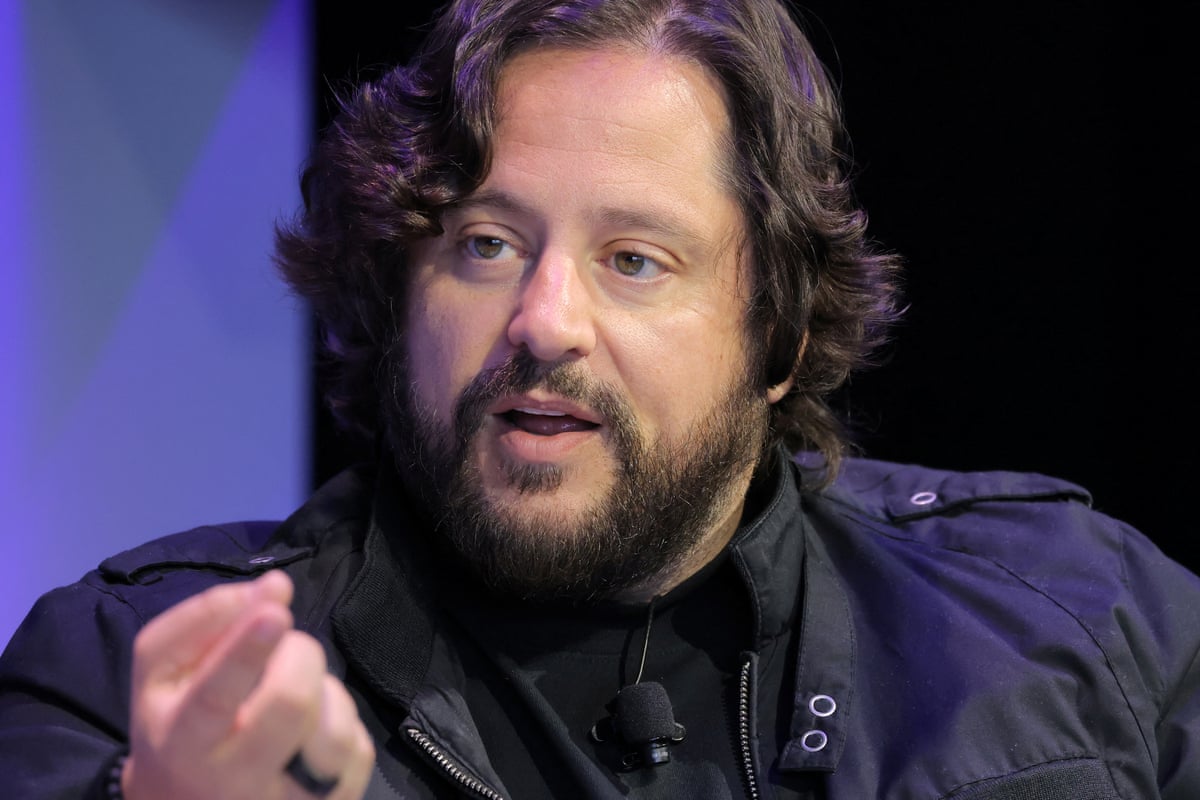
“Jurassic Park taught a large population of people, including non-scientists, that there’s this thing called DNA and humans now can change it,”Lamm added.
“Now, the movie goes terribly wrong because it’s a dystopian movie about hubris. But at the end of the day, I think it did a lot more right than did wrong.”
Lamm emphasized the current extinction crisis, where species are disappearing at rates 1,000 times higher than natural due to human activity, creates a
“moral obligation”to act. He said Colossal’s announcements have helped
“parents in middle America care about conservation and also get excited about science.”
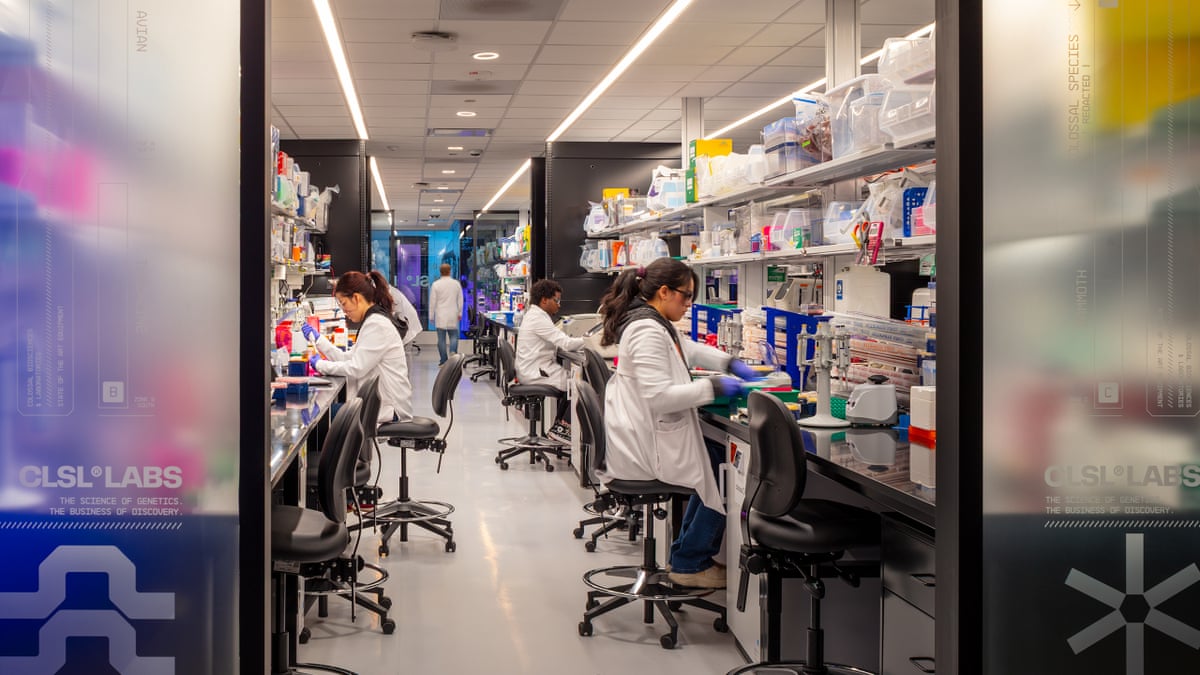
The hub of this advanced and sometimes controversial work is Colossal’s 55,000-square-foot facility in north-west Dallas. The reception area features an animatronic dire wolf and a mammoth model surrounded by artificial tundra and dry ice fog. Visitors are required to surrender phones to prevent images of ongoing lab work.

Inside the lab, teams of scientists in white coats isolate ancient DNA from extinct species and use gene editing technologies on closely related living animals. For the dire wolves, 14 out of 19,000 gray wolf genes were edited to produce hybrid offspring that are snow-colored, larger, and more cold-resistant than typical gray wolves.
Modifying species traits varies in difficulty. Colossal is also working to revive the thylacine, or Tasmanian tiger, which went extinct in 1936. Its closest living relative is the fat-tailed dunnart, a small marsupial. The project requires over a million gene edits and several more years of research.
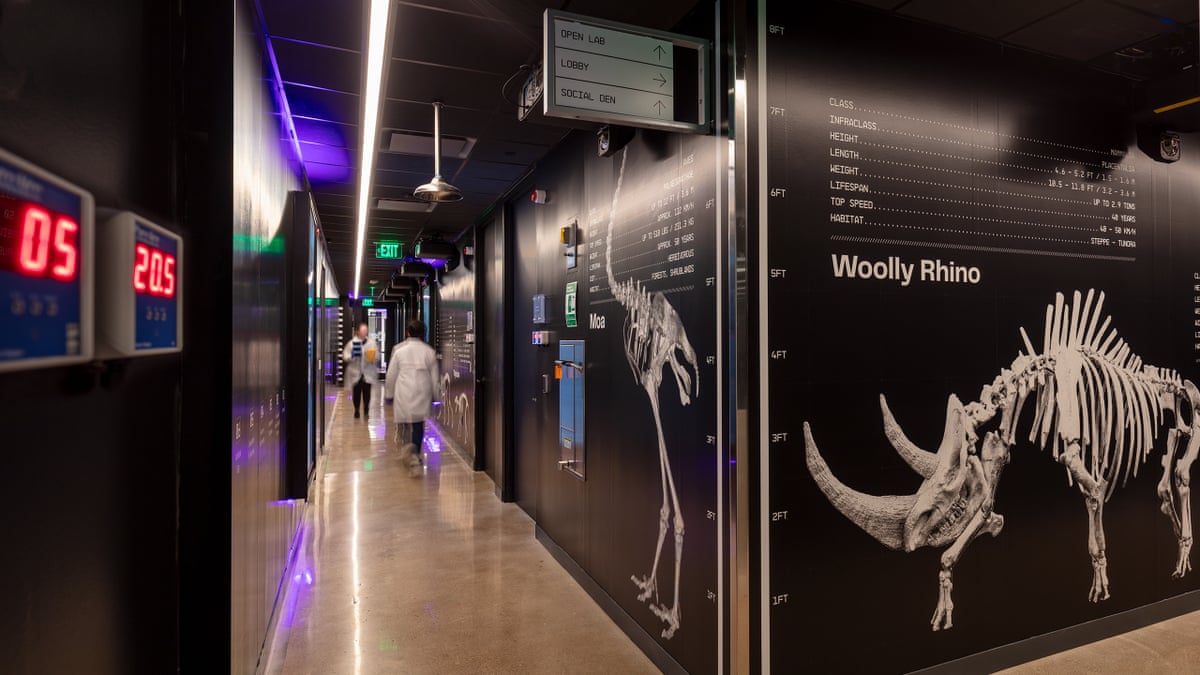
Birds present additional challenges, as they cannot be cloned from skin or hair samples like mammals. Despite this, Colossal is pursuing the resurrection of the dodo, an extinct flightless bird wiped out nearly 400 years ago, and the moa, a large flightless bird from New Zealand that disappeared centuries earlier.
Colossal has cultivated primordial germ cells—the embryonic precursors to sperm and eggs—from pigeons, the dodo’s closest relative. For the moa, the emu serves as the nearest existing relative. In an adjacent lab, incubators hold pigeon and moa eggs, with scientists carefully inserting instruments into the eggshells.
Colossal’s work has attracted significant media attention, with press clippings decorating one room’s walls. One UK headline from the Daily Star about the dire wolf pups read “Jurassic Bark.” Lamm acknowledged the polarized reception but expressed gratitude for the support.
“The fact that we have as much support as we do is kind of crazy given what we’re doing is so polarizing,”he said.
However, some scientists dispute that Colossal has truly achieved de-extinction. Vincent Lynch, an evolutionary developmental biology expert at the University at Buffalo, criticized the company’s claims.
“They made genetically modified gray wolves, not dire wolves – to say they are dire wolves is entirely arrogant,”Lynch said.
“You can’t put a mutation into a related species and call that thing the extinct thing. You can’t bring things back in the way Colossal are doing it.”
Lynch argued that Colossal’s species definition is outdated,
“one that hasn’t been used since Plato,”and noted that he and other critics have faced online attacks, which Colossal denies involvement in.
“They say if it looks like the thing then it’s the thing, but we haven’t used that definition for a long time,”Lynch said.
“And yet they keep calling the damn thing a dire wolf. Ben Lamm is a tech bro who thinks technology can solve the world’s problems, but de-extinction isn’t going to do that.”
While physical traits can be modified, behaviors of extinct animals remain largely unknown. The new gray wolf/dire wolf hybrids are not being released into the wild, but Colossal plans to release dodos, thylacines, and woolly mammoths—created by editing Asian elephant genes—hoping they will restore ecological roles such as predation, seed dispersal, and carbon storage.
However, ecosystems are dynamic and have adapted over time, even as humans continue to damage wildlife through pollution, hunting, habitat loss, and climate change.
Introducing species to new environments can cause harm, as seen with invasive species like rats that contributed to the dodo’s extinction. While dodos and thylacines might reintegrate into their original habitats, mammoths, extinct since the last ice age about 10,000 years ago, could cause significant disruption.
Julie Meachen, a paleontologist at Des Moines University who helped study mammoth fossils, warned of potential conflicts:
“Having mammoths in Alaska or Canada near human settlements would be asking for disaster,”she said.
“If they come into town will you shoot them? If they are instead held in a glorified zoo will you just sell tickets to rich people to ogle them? What would be the point? Mammoths would modify the habitat – they are a keystone species – but we don’t have a good idea how we’d coexist with them.”
Victoria Herridge, a paleontologist at the University of Sheffield, expressed concern about using elephants as surrogates for mammoths, calling it
“shocking.”Lamm stated the project is on track for 2028 after successful gene-edited mice, assuring that utmost care will be taken with elephants to avoid harm.

Critics also worry that gene editing to revive extinct species could weaken protections for endangered species, which have already been rolled back under the Trump administration and congressional Republicans. The argument is that if species can be revived later, conservation efforts may be deprioritized.
Doug Burgum, former Secretary of the Interior under Trump, commented last year:
“If we’re going to be in anguish about losing a species, now we have an opportunity to bring them back. Pick your favorite species and call up Colossal.”
Lynch described this attitude as a
“moral hazard”that replaces habitat protection and hunting bans with speculative technological solutions, similar to geoengineering proposals that might reduce incentives to curb pollution.
Lamm said Burgum’s remarks were misrepresented and emphasized that Colossal advocates for habitat preservation alongside technology.
“[Burgum] is a huge Teddy Roosevelt guy, he’s a big conservationist and he’s very, very deep in with the Indigenous people of America,”Lamm said.
“He told us when we were with him that animals must come off the endangered species list through recovery. And his issue with the Endangered Species Act is we put animals on there and they don’t come off because we have not prioritized technologies or ways to get them off, not by removing them, but because they have recovered.”
Lamm downplayed the debate over naming Colossal’s creations, calling it a semantic issue overshadowed by the urgency of the extinction crisis, which threatens up to one million species.
“I frustrate some of those critics because if people want to call our wooly mammoths wooly mammoths, I’m happy with that,”he said.
“If they want to call them cold-tolerant Asian elephants with edited mammoth alleles across the 1.4m, here’s the genetic divergence, using Crispr, I’m fine with that too. It doesn’t affect me. Their choice of what they call an animal doesn’t affect our work, our mission.
“Look, in every aspect of life, you got A teams and B teams,”Lamm said of his critics.
“Sometimes people don’t make the cut and they’re JV and they don’t make the varsity team and they’re going to be a little frustrated by that.”
Beth Shapiro, Colossal’s chief scientist and an evolutionary molecular biologist, has become a focal point for criticism within the scientific community. She recently faced verbal challenges at a conference but remains focused on the company’s conservation goals.
“I was surprised by some of the pushback, but if you don’t want to call them a dire wolf, that’s fine, I don’t care,”Shapiro said. She stressed the rapid extinction trajectory many species face, requiring bold interventions.
“If you’re not controversial, you’re not pushing hard enough, right? If we just stick with what everybody is comfortable with, then we’re just going to keep it with the status quo and we know that the status quo is not good enough.”
While the media spotlight often highlights the dramatic prospect of rewilding mammoths, dodos, and other extinct species, Colossal’s more significant contribution may lie in preserving existing species.
Its gene editing technology could restore genetic diversity to endangered species like red wolves, which number fewer than two dozen, develop vaccines to protect Asian elephants from deadly viruses, and make Australian marsupials called quolls resistant to toxins from invasive cane toads.
“I actually think that is going to be the broader application of these technologies,”Shapiro said. Colossal describes itself as a
“species preservation company”in a letter to the International Union for Conservation of Nature, acknowledging that perfect reconstitution of extinct species or ecosystems is impossible. Instead, they view de-extinction as a gateway to next-generation conservation tools.
Expanding this technology also offers financial opportunities. Colossal has initiated or plans five spin-off companies, including one targeting plastic pollution and another focusing on national security applications.
Meachen commented on the company’s public image:
“My science brain does think, ‘Urgh, I’m not into sensationalism,’ but I understand why they have tried to inspire wonder in the general public.”
“The true good work Colossal is doing is injecting genetic variation into organisms that are struggling. It’s not as sexy as de-extinction, but it can keep populations viable, and that to me is more important. Genetic editing can be a tool in the toolbox, although if there are no places for these species to live then they won’t survive, even if we edit all of their genes.”
Despite the focus on spectacular species, much attention remains on the dire wolf pups born last year. Named Romulus, Remus, and Khaleesi—a nod to the Game of Thrones series that popularized dire wolves—they have become symbols of Colossal’s work.
Peter Jackson, director of the Lord of the Rings films and a Colossal investor, owns Game of Thrones memorabilia including the Iron Throne. He suggested photographing the pups on the throne, adding to their growing fame after they were presented to George R.R. Martin, author of the books inspiring the HBO series.
“Handing a dire wolf puppy to George and saying, ‘This is the first dire wolf in 12,000 years’ – I mean, that’s one of those insane moments in your life where you go, ‘How the hell did I get here?’”said Matt James, Colossal’s chief animal officer.
Martin reportedly reacted with
“very overemotional sort of stuttering and then said, ‘You guys brought back the dire wolf,’”James added.
“It was incredible.”