
A woolly solution to NI's peatland problems?
A unique pilot project in the Antrim hills could provide sheep farmers with a new market for their wool while aiding peatland conservation efforts.
Traditionally, coir logs—made from coconut husks—have been imported from South-East Asia to reduce erosion, retain water, and re-wet degraded peatlands.
Currently, logs made from local wool are being trialed as an "exciting" alternative, according to Stephanie Clokey from the Ulster Farmers' Union (UFU).
James Devenney of Ulster Wildlife, partnering with the UFU, expressed optimism that wool logs could offer a "more local, sustainable and renewable option" that remains effective in restoring Northern Ireland's severely degraded peatlands.
Cutting carbon in conservation
Northern Ireland's peatlands cover 12% of the land and are internationally significant.
When healthy, peatlands play a crucial role in combating climate change by sequestering carbon deep within their layers.
However, 86% of these peatlands are currently degraded, causing them to emit carbon rather than store it.
Restoration is therefore essential, but existing conservation methods can have a carbon footprint.
Devenney, peatlands restoration manager at Ulster Wildlife, emphasized the need to find alternatives to imported coir logs.
"Coir is a by-product of coconut. It's a material found in coconut husks and it is imported from Asia, Indonesia, Southeast Asia.
"And we have been bringing it overseas here which obviously has a significant cost but also importantly a significant carbon footprint.
"So we're looking for a more local, sustainable and renewable option but we can still be effective in delivering peatland restoration in Northern Ireland."
'Bonkers' idea
Stephanie Clokey, peatlands officer at the UFU, is hopeful the project will benefit both farmers and the environment.
She noted the challenges sheep farmers face with low wool prices, sometimes not even covering shearing costs.
"We've seen really low prices for wool, in some cases not even getting the price to shear them.
"So what we're hoping is, long-term, that there'll be potentially a new market and to put to good use something that has been treated in the past as a waste product, but we see as a very valuable resource.
"And it was a great example of collaboration and the successes you can have between farmers and peatland management."
Last year, the Department of Agriculture, Environment and Rural Affairs launched a long-awaited peatland strategy.
This strategy outlines 26 actions aimed at restoring Northern Ireland's semi-natural peatlands to functioning ecosystems by 2040, while acknowledging that "significant financial resources" will be required.
What are wool logs?
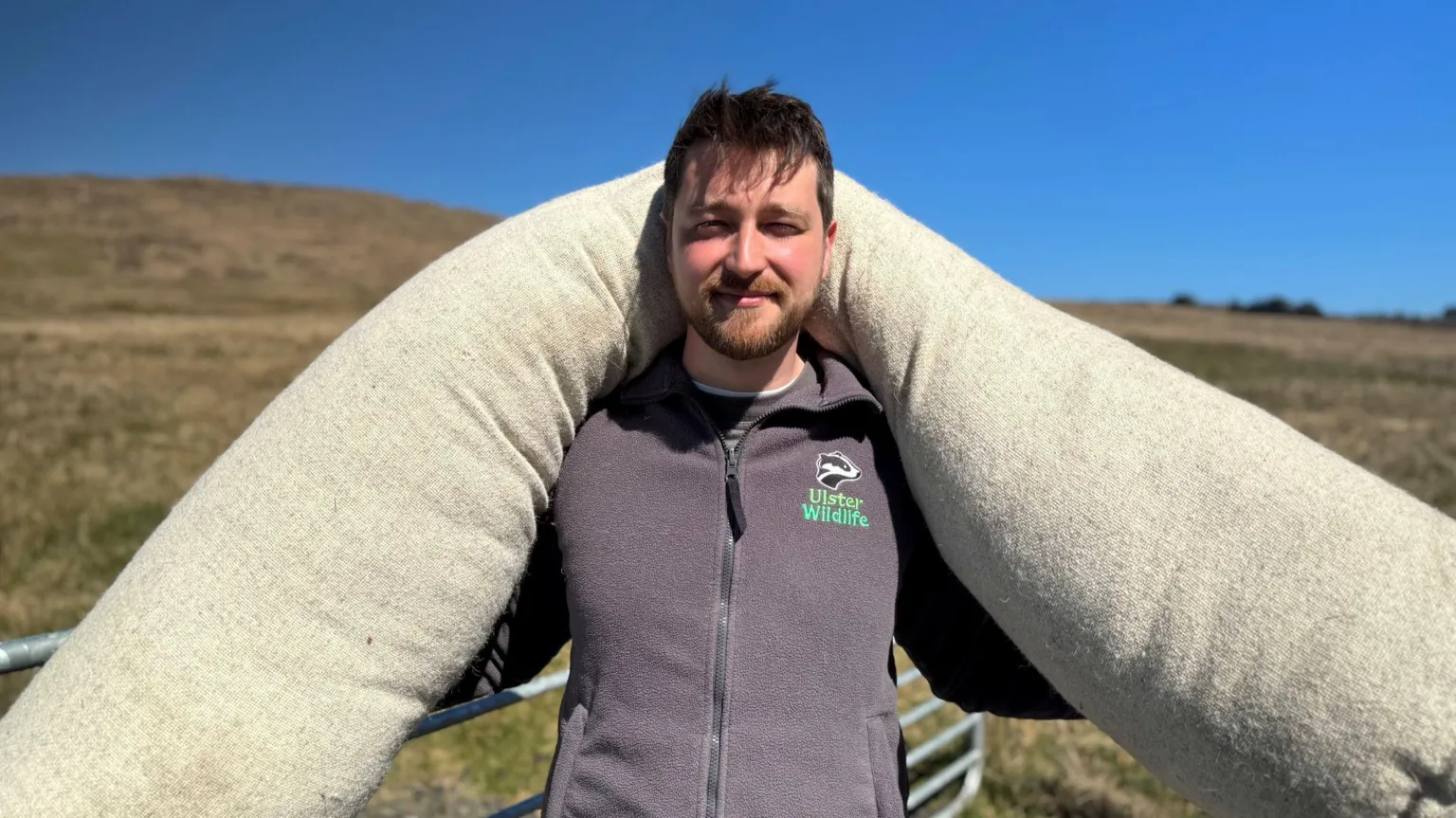
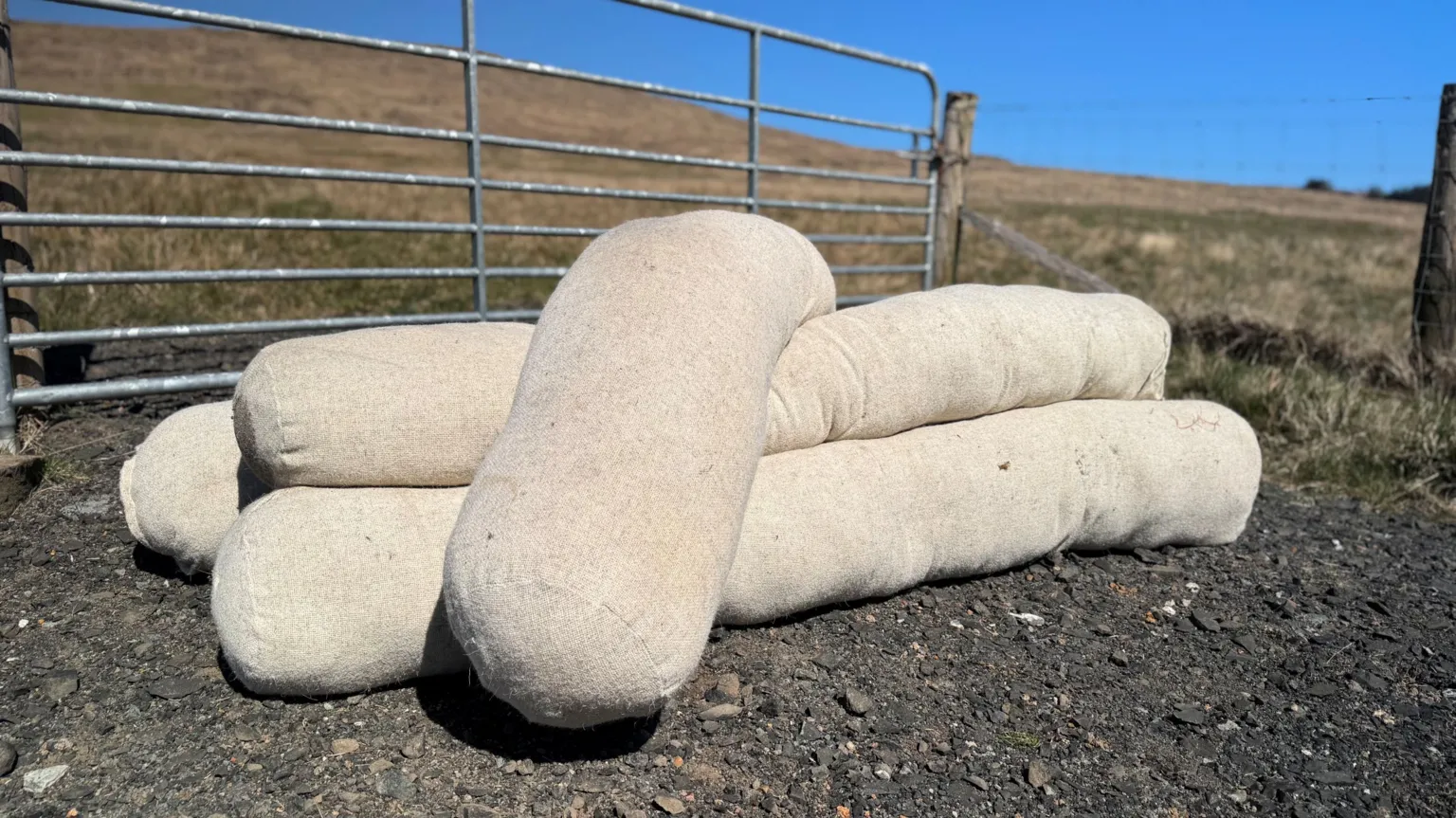
The wool logs are large, soft tubes filled with wool.
Clokey described them as massive draft excluders.
"There's a woven wool textile on the outside, with fleece packed on the inside. And in the core there's a solid wool rope just to sort of keep the structure to stop it sagging down when we put it in place.
"They're not too heavy, but they were tricky enough to get up the hill."
Each log weighs approximately one-and-a-half stone (9-10kg), significantly lighter than the seven stone (45kg) coir logs they replace.
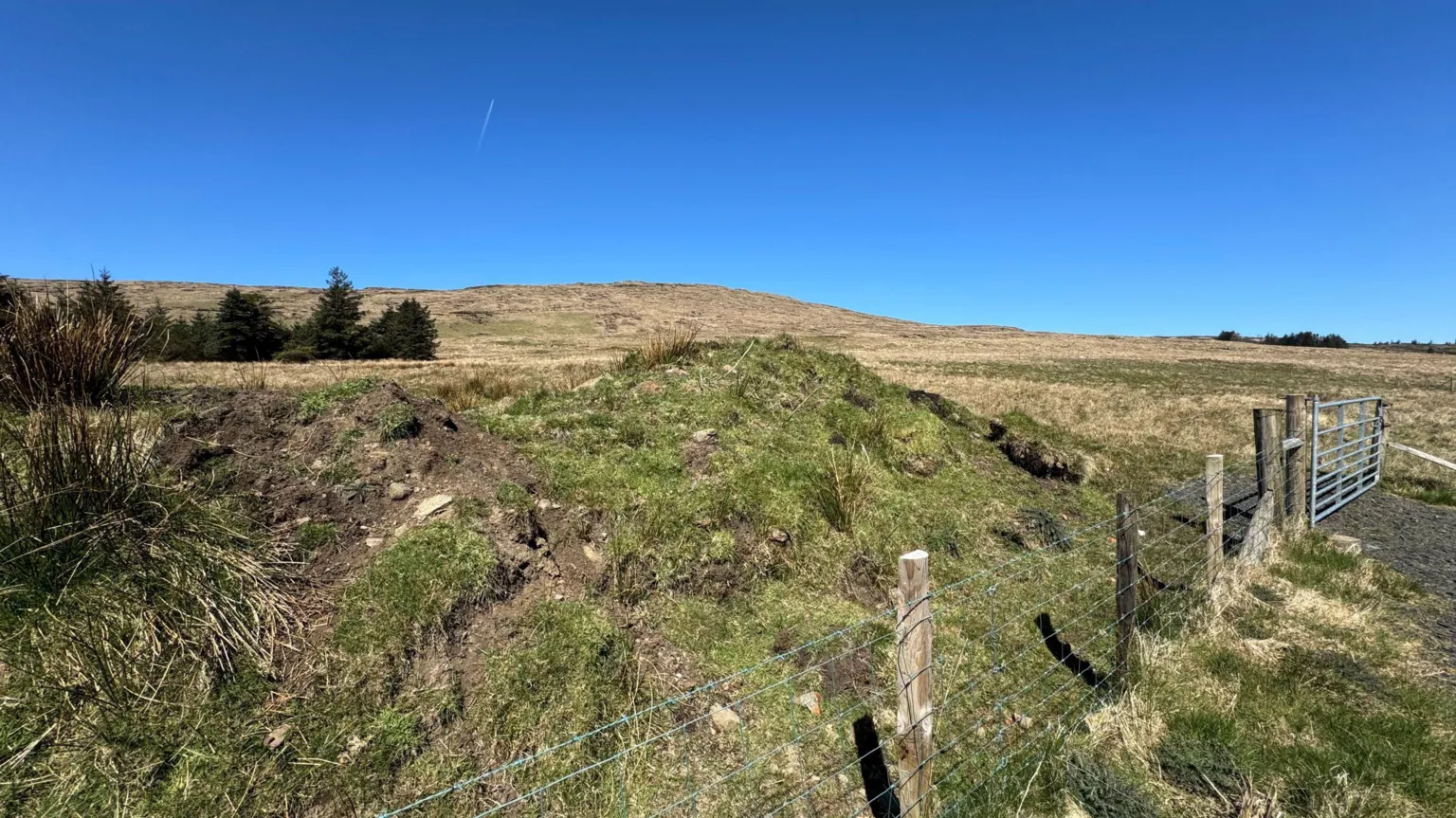
Nearly 60 wool logs were installed on Slievenanee in the Antrim Hills during a wintry day in February, with assistance from local farmers and landowners.
Devenney expressed great enthusiasm about the project.
"This area is designated for particular raptors such as the hen harrier and merlin birds of prey.
"Other peatland species that we are striving to protect - they're all endangered, they're all under significant threat - are curlews, your breeding waders, your priority butterflies, like your large heath and your green hairstreak, marsh fritillary butterflies, even down to the common lizard that you'll find across the mountain here.
"So yes, peatlands are really unique habitats and they're really special to the island of Ireland."
The wool logs are currently being monitored to evaluate their effectiveness in peatland restoration.


