Helium-3 Storage at Lancaster University
Dima Zmeev stands before Lancaster University's valuable helium-3 supply, which is stored in metal kegs reminiscent of beer containers.
However, these kegs are not found in student bars but in a secured laboratory where rows of metal kegs are arranged on shelves and interconnected with delicate copper piping.
These containers hold helium-3, one of the world's most expensive gases, costing approximately $2,000 (£1,500) per litre, though prices may vary.
"The lab has been going for 50 years or so. Back then, the helium was quite cheap," says Dima Zmeev, senior lecturer. "Our very wise predecessors stocked up."
Helium-3 Applications and Current Sources
Helium-3 has growing applications in quantum computing and nuclear fusion. Currently, its primary source is highly regulated, originating from nuclear weapons through the decay of tritium, a hydrogen isotope, within these weapons.
David McCollum, a distinguished scientist at Oak Ridge National Laboratory in Tennessee, estimates that tens of thousands of litres of helium-3 are produced annually worldwide via this method. However, anticipated demand may surpass this supply.
Consequently, some entrepreneurs and researchers advocate for new helium-3 sources. Although helium-3 exists in Earth's crust, it is generally found in very low concentrations.
Samples of lunar regolith from the Apollo missions indicate that helium-3 may be present on the Moon at relatively higher concentrations, prompting plans to extract helium-3 from lunar material.
Helium-3 Characteristics and Scientific Uses
Helium-3 is an isotope of helium, distinguished by its neutron count in the nucleus. Helium-4, which has one more neutron, is the more common and inexpensive isotope used in party balloons.
Zmeev utilizes helium-3 in physics experiments, such as filling small chambers with helium-3 to detect hypothetical dark matter particles. If such a particle interacts with helium-3 atoms, it causes them to vibrate, generating heat and a measurable temperature increase.
The helium-3 used in these experiments can be recycled repeatedly.
Scientists also combine helium-3 and helium-4 at extremely low temperatures to achieve some of the coldest temperatures known, reaching the millikelvin range (-273°C).
During this process, helium-3 atoms separate from the mixture, forming a pure helium-3 layer. This phase change consumes energy, producing a cooling effect similar to steam evaporating from hot water.
This helium-3-based cooling, known as dilution refrigeration, is essential for quantum computing.
Moreover, helium-3 has potential applications in certain nuclear fusion reactors that could eventually generate vast amounts of clean energy.
Lunar Helium-3 Mining Initiatives
InterLune, a Seattle-based company, plans to extract helium-3 from the Moon. Rob Meyerson, co-founder and CEO, states,
"We've spent the last four years developing, prototyping and testing technologies… We have a team of 30 people, and growing."
Meyerson previously served as president of Blue Origin, Jeff Bezos' rocket company, from 2003 to 2018.
One of InterLune's co-founders is Harrison "Jack" Schmitt, now in his 90s, who walked on the Moon during the Apollo 17 mission and has long supported helium-3 recovery from lunar regolith.
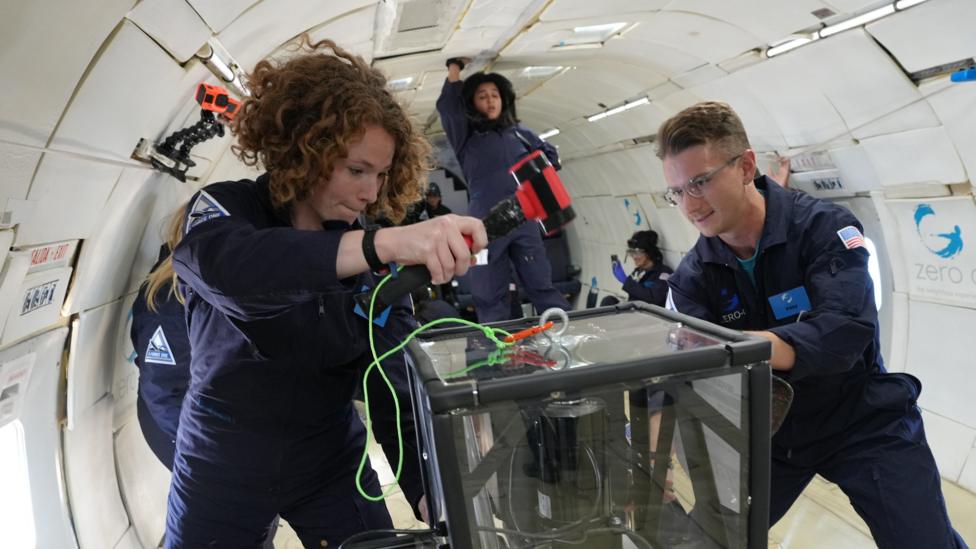
InterLune has tested equipment during parabolic flights that simulate zero gravity. Meyerson indicates their technology could be integrated into a lunar lander as early as autumn 2027.

Ultimately, InterLune aims to deploy autonomous excavators on the Moon to collect and process regolith, extracting helium-3 by crushing and churning the material.
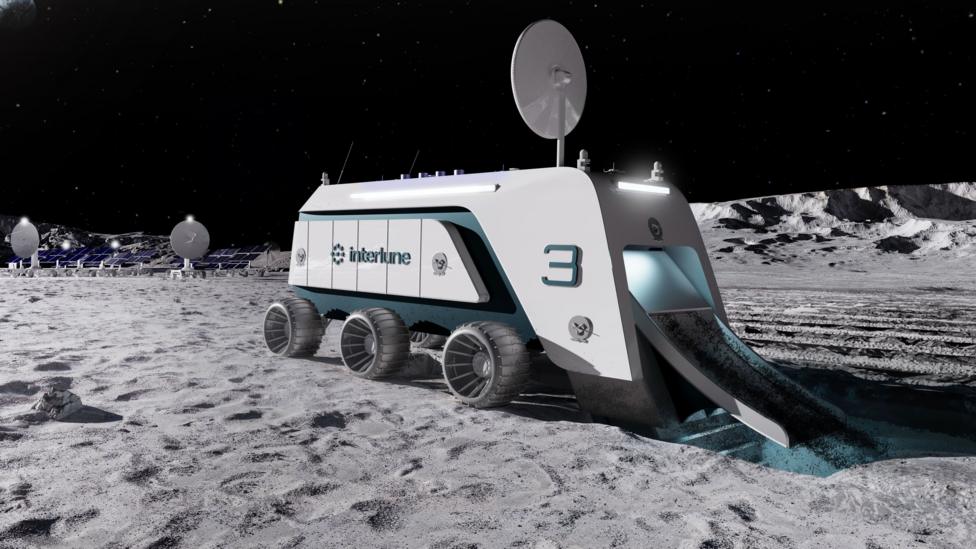
However, the exact concentration of helium-3 on the Moon is uncertain.
Paul Burke of Johns Hopkins Applied Physics Laboratory notes that Apollo regolith samples may have lost helium-3 during their return to Earth, potentially distorting estimates of lunar helium-3 abundance.
Additionally, helium-3 deposits may be sparse or located at depths that are difficult to access. Burke emphasizes,
"It's important that we understand where the helium-3 is."
According to Space News, lunar helium-3 concentrations may range from a few parts per billion (ppb) to over 20 ppb, necessitating excavation and processing of hundreds of thousands of tonnes of regolith to obtain one kilogram of helium-3, a "mountain-moving" challenge, Burke says.
Meyerson acknowledges the scale of the task, stating,
"We're not ignoring the fact that we've got to process large amounts of regolith."
Regarding economic feasibility, he adds,
"We have run the numbers… for everything we need to get to the moon, extract the [Helium-3] and bring it back to Earth."
InterLune declined to disclose these figures or the total development costs to the BBC.
Another US company, Astrotech Corporation, has announced plans to extract helium-3 from the Moon using a SpaceX Starship rocket. CEO and CTO Tom Pickens explains that their method involves heating lunar regolith to release helium-3.
Pickens acknowledges the challenges involved, stating,
"All of it is challenging."
Astrotech has experience producing mass spectrometers for space applications, instruments that identify chemical elements and their concentrations.
The company is developing a prototype for lunar helium-3 extraction and remains optimistic,
"You'll see it."
Currently, seven or eight people are working on the project.
Demand and Alternative Sources of Helium-3
Quantum computers may eventually require thousands of litres of helium-3 depending on their design, according to McCollum and colleagues, who recently published a paper analyzing the energy and resource demands of these devices.
This growing demand has attracted interest in lunar helium-3 projects. For instance, a Helsinki-based quantum computing company has signed a $300 million (£223 million) agreement with InterLune to purchase 10,000 litres of helium-3 annually from 2028 to 2037.
However, alternative approaches exist. Some scientists are developing quantum computer cooling methods that reduce reliance on helium-3, notes Richard Easther from the University of Auckland.
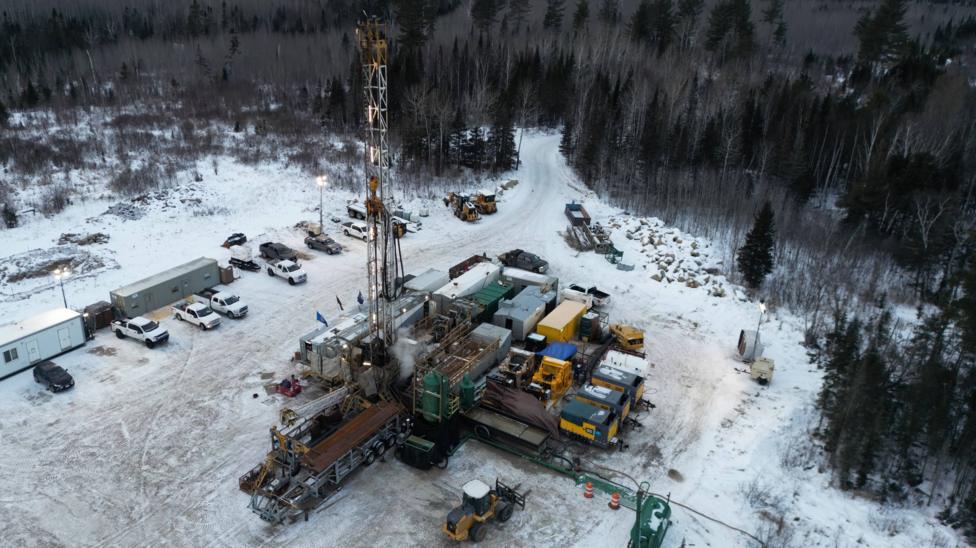
Additionally, helium-3 may be recoverable from Earth's crust. Pulsar Helium, headquartered in Portugal, is investigating helium-3 presence at a site in Minnesota.
Peter Barry, a geochemist at Woods Hole Oceanographic Institution and scientific advisor to Pulsar Helium, states that concentrations there are approximately 12 ppb.
He adds,
"Conventional drilling could potentially yield helium-3 from the ground there. Minnesota is a lot easier to get to than the moon."