

Tim Friede’s Unconventional Fight Against Snakebite Deaths
As global temperatures rise and environmental degradation continues, encounters between humans and venomous snakes are increasing, often with fatal consequences. Tim Friede, a 58-year-old American, has embarked on a remarkable and painful journey, subjecting himself to over 200 intentional snakebites to develop immunity that could lead to a universal antivenom.
For nearly two decades, Friede, a window cleaner without formal scientific training, allowed some of the world’s deadliest snakes to bite him in his home basement. His efforts nearly cost him his life, his leg, and fingers, and once left him in a coma.
“People said I was crazy, of course. Some people tried to stop me,” he told . “I understood it was dangerous but people are dying from snakebites and I was pissed at that. I couldn’t get that out of my head. I put my ass on the line and I’m glad I did.”
Friede’s sacrifices are now on the verge of producing a broad-spectrum antivenom that could reduce the 138,000 annual deaths and 400,000 cases of disfigurement and disability caused by snakebites worldwide, predominantly affecting impoverished populations in Asia and Africa. Globally, up to 5.5 million people suffer snakebites each year.
These figures are expected to rise as climate change drives greater overlap between human habitats and those of snakes. Warmer climates alter snake and human behaviors, increasing the likelihood of encounters. For example, in California’s Ventura County, a man was recently bitten by a rattlesnake, marking the sixth such incident this year amid an unusually warm spring.
Challenges in Snakebite Treatment and the Promise of a Universal Antivenom
Treating snakebites is complex due to the diversity of venomous species and the variety of antivenoms required. Centivax, a vaccine company based in California, where Friede is employed, aims to develop a near-universal antivenom. This antivenom is derived from antibodies isolated from Friede’s blood, developed through his extensive exposure to snake venom.
Jacob Glanville, Centivax’s chief executive, praised Friede’s resilience and contribution. He noted that Friede was exposed to venom from “very lethal snakes that would normally kill a horse.” Centivax’s research has demonstrated that Friede’s antibodies can neutralize toxins from 19 snakes within the elapid family, which includes roughly half of all venomous species such as cobras, mambas, taipans, coral snakes, and kraits.
A trial of this antivenom is planned for pets in Australia later this year before progressing to human use.
“I wanted to make sure this all wasn’t in vain, so that people couldn’t say I was an idiot for doing this,” Friede said about his extensive snakebite experience.
“I knew I was immune and that I could help people bridge that gap, and sure as shit I’ve done it. I wanted to do it for humanity, for people who are the brokest people on the planet.”
Friede’s Journey: From Childhood Encounters to Scientific Breakthrough
Friede’s unusual journey began in childhood after being bitten by a garter snake at age five, which did not deter him from interacting with snakes as he grew older. Starting in 2001, he began injecting himself with small mixtures of venom and saline hundreds of times to build immunity to various snake species before allowing them to bite him, typically on his forearm or fingers.
“For me it was a puzzle on how to not die from snakebites. I wanted to work out a way to make myself immune,” he explained.
While working as a window cleaner, Friede kept about 60 snakes in his basement in Two Rivers, Wisconsin. These snakes were sourced from a breeder in Florida and shipped in wooden crates, secured in zip-tied bags.
His experiment nearly ended in tragedy in September 2001, when he was bitten by both a monocled cobra and an Egyptian cobra within the same hour. The bites caused him to collapse and enter a coma lasting several days.

“If my neighbor wasn’t there to call 911, I would’ve been dead within 15 minutes,” Friede recalled. “I know what it’s like to be almost dead. It’s cold and dark, you can’t talk, my body just froze up. I could still think and hear everything around me, though, which was a trip.”
Despite his wife’s concerns—she later divorced him—Friede resumed his immunity-building efforts almost immediately. He believed that experiencing actual snakebites was essential to authentically simulate real encounters.
“I couldn’t walk, my body was beat to shit and I thought about whether I should wrap this all up,” he said of his recovery period.
“But then I thought I just have to get better at this, that giving up wasn’t fair to the people who have died. I came back from death so I didn’t want to say I did this for six months and then quit. This game isn’t for the weak-hearted.”
Over the years, Friede faced additional life-threatening challenges. He suffered anaphylactic shock multiple times, nearly lost a finger to a rattlesnake bite, and endured muscle disintegration in his leg caused by monocled cobra venom.
“The muscle just burst out of my leg. I had to cut it out with a razor blade,” he said. “I couldn’t walk for two months afterwards. I almost said enough was enough at that point.”
Friede described the pain from snakebites as “like a bee-sting, but 1,000 times worse, it’s just horribly painful and there’s nothing you can do about it.” He noted that necrotic venom, such as that from cobras, is particularly damaging as it destroys body tissue.
In total, Friede endured more than 200 bites, about half from mambas. A significant achievement was his immunity to the taipan, the world’s most venomous snake, which inhabits semi-arid regions of Australia and rarely encounters humans. A single taipan bite can kill over 100 people.
“It was a big goal of mine to beat a taipan. I spent four months preparing for it in order to build my immunity,” he said. “I knew if I beat that I could beat anything I put my mind to. I’ve now been bitten 22 times by a taipan, so I can now say I can do that.”
Collaboration with Scientists and Future Prospects
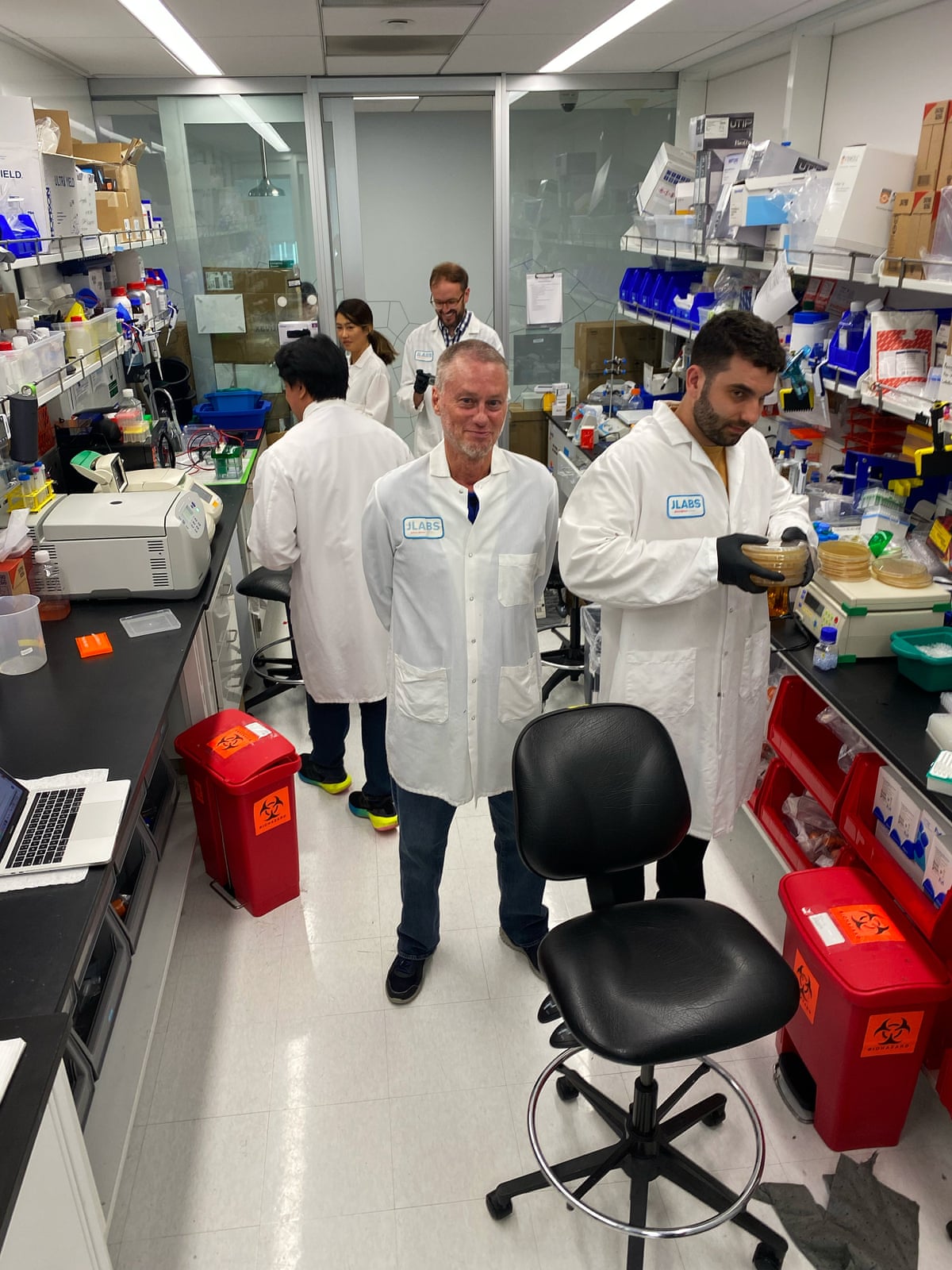
While working various jobs in construction and factories, Friede shared his experiences with scientists but found no takers until 2019, when Centivax hired him and began isolating his antibodies for antivenom development.
This collaboration began a year after Friede ceased venom injections and bites, following personal difficulties including divorce and child-support obligations. His basement is now free of snakes, and although his immunity will diminish over time, it remains notably high, as confirmed by a study conducted last year.
The urgency of developing effective antivenoms is heightened by climate change and human expansion into snake habitats, which increase the risk of snakebites among some of the world’s poorest populations.
Addressing this challenge requires increased funding and improved logistics, especially as many international aid budgets face cuts. A recent review of antivenom resources highlighted insufficient manufacturing capacity to meet clinical needs, particularly in regions with few producers.
It is important to note that snakes are not to blame for these incidents. They typically avoid humans and bite only in self-defense.
Snakes have an evolutionary history spanning over 100 million years, predating humans and even dinosaurs, and play a crucial role in ecosystems. The responsibility lies with humans to find ways to coexist peacefully with these creatures.
“With the way the world is going, who knows what will happen with them,” Friede reflected. “But one of the most amazing concepts of evolutionary biology to me is venom. Snakes have figured out how to get about with no legs, with venom that could kill you 10 times over.”
“They are such marvelous creatures. Sometimes I would go down into the basement with a bottle of wine and a joint, sit down in front of them and look at them. I did that for hours.”


