

Resident Doctors Initiate Strike Over Pay
Dr David Farren highlighted that doctors in Northern Ireland are either experiencing burnout or leaving the region, describing the situation as an "existential threat to our health service."
Resident doctors have commenced a 24-hour industrial action starting at 07:00 BST on Monday and concluding at 06:59 BST on Tuesday. This strike follows a recent walkout by consultants and specialist doctors last week, marking the first strike action by these groups in Northern Ireland.
Last week, Health Minister Mike Nesbitt affirmed his commitment to implementing this year's pay award but indicated that this was currently unfeasible due to the absence of an agreed budget.
Dr David Farren, chairman of the British Medical Association's (BMA) Northern Ireland consultants committee, stated that the resident doctors' strike would constitute a "full walk out," differing from the limited Christmas Day cover provided during Thursday's strike.
"The consultants and SAS (specialist, associate specialist and speciality) doctors will change what they do on a day-to-day basis to make sure that emergency care and urgent care is prioritised," he said.
Picket line demonstrations are scheduled at the Royal Victoria Hospital in Belfast, Craigavon Area Hospital, and Altnagelvin Hospital in Londonderry.
The BMA conducted a ballot over four weeks after rejecting a recommended 3.5% pay uplift proposed by an independent pay body. Earlier this month, 92% of resident doctors voted in favor of strike action, alongside 79% of consultants and 90% of SAS doctors.

Both branches cited "over 18 years of pay erosion" as the reason for rejecting the 3.5% pay rise. SAS doctors are fully qualified practitioners who work permanently within their chosen medical specialties.
Challenges Facing the Health Service
Dr Steven Montgomery, chair of the BMA's Northern Ireland resident doctors committee, emphasized that better pay and working conditions abroad are causing a loss of doctors at a time when demand is increasing.
"The growing patient numbers without the necessary number of doctors needed to meet this demand and pressure is a perfect storm for our health service," he said.
"We did not think we would have to take strike action again so soon after the last walk-outs, but we were left with no choice.
"The onus is now firmly on government to engage urgently and meaningfully and present a credible way forward to avert strike action," Montgomery added.
Dr Farren further commented on the pay situation:
"Doctors in Northern Ireland are lowest paid in these islands and we have been trying to work with the minister and the department of health to rectify that, to get what he terms 'pay parity'.
"Unfortunately, despite all of that, we continue to not have pay parity and, as a result, we have been forced after years of negotiations to take unprecedented strike action."
Health Minister Mike Nesbitt stated that if it were possible to pay doctors more than 3.5%, he would "be very happy to do so."
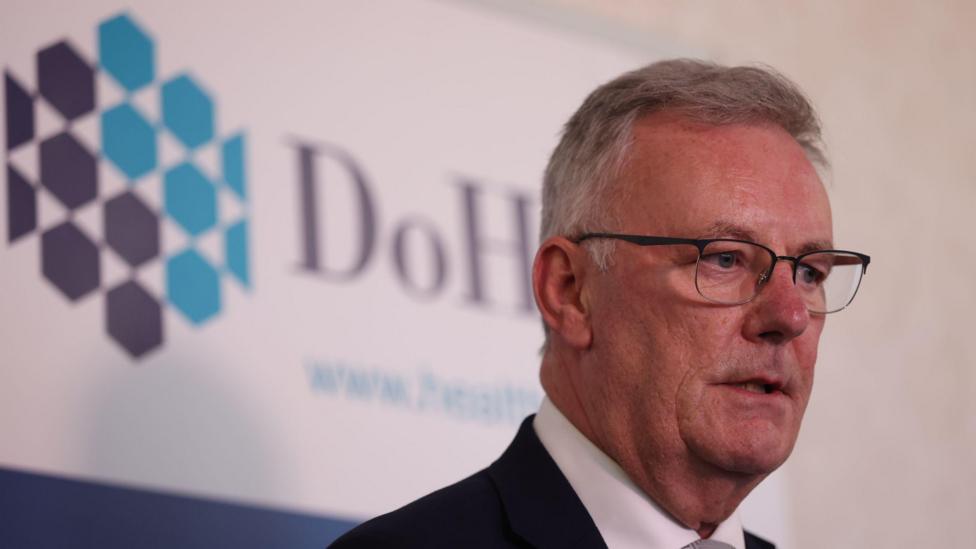
Last week, the minister noted that exceeding the 3.5% pay increase recommended by the independent pay review would have "significant repercussions for nurses, teachers, police officers and indeed the entire public sector workforce."
"I reiterate my commitment to ensuring HSC colleagues receive their recommended 26-27 pay uplifts, despite the unprecedented shortfall as indicated in my draft budget," he said.
"There is simply no scope for pay awards beyond the recommendations of the review bodies in 26-27."
Impact on Healthcare Services
Dr Farren acknowledged that the strike would "undoubtedly lead to cancellations of operations, outpatient appointments, and elective care," but emphasized that patient safety would remain a priority.
"It is a very difficult decision to go on strike.
"I have seen hospital consultants that I work with just simply either burning out or deciding for their own health and well-being to move to another country and practice medicine, the rest of us left behind have to shoulder that responsibility - it cannot go on.
"This is an existential threat to our health service," Farren concluded.


