
Hospitals in Nottingham Face Increased Pressure
Hospitals in Nottingham are currently struggling to meet the rising demand placed on their services.
An NHS trust responsible for two major hospitals in Nottingham has declared a "critical incident" following a surge in emergency care demand.
Nottingham University Hospitals (NUH) NHS Trust, which manages the Queen's Medical Centre and Nottingham City Hospital, confirmed the critical incident status on Monday, attributing the increased pressure partly to recent extreme heat conditions.
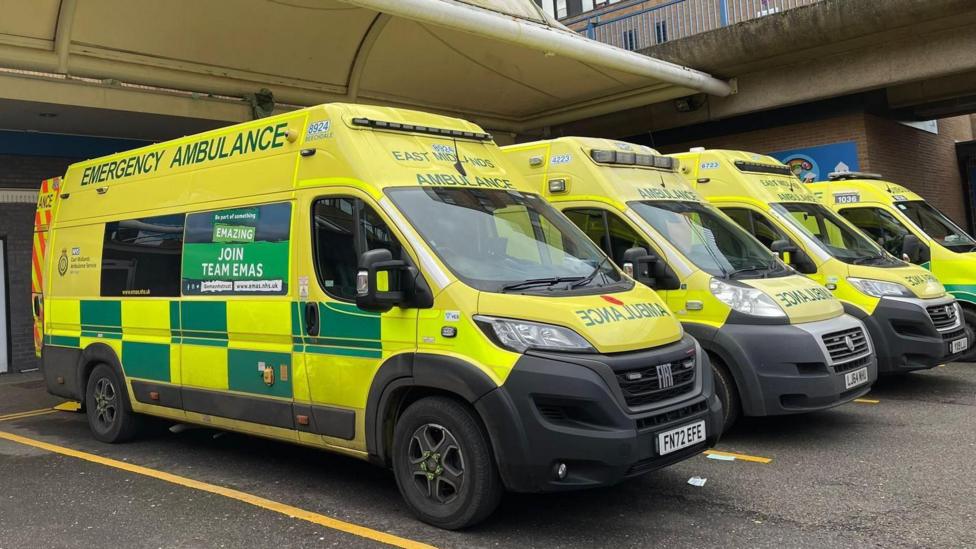
A similar critical incident declaration was made by East Midlands Ambulance Service (EMAS) in response to the hot weather, which lasted until Monday. This raises questions about the causes of these declarations and their practical implications for patients.
What is a Critical Incident and What Has Caused It?
In general terms, a critical incident indicates that an NHS trust or health organization is struggling to meet the demands placed on its services.
According to BBC East Midlands health correspondent Rob Sissons, there is no fixed criterion defining a critical incident.
"It's very much down to local NHS managers.
Typically, critical incidents are to do with system pressures, about the flow of patients through the entire NHS and social care system, and they are basically a smoke alarm.
We're not seeing them just in winter now. People on the front line, anecdotally, say that they're experiencing surging demands all-year round."
Patients are experiencing waits to be admitted, with "lengthy delays" and an increase in so-called corridor care.
The current pressures in Nottingham are partly attributed to recent hot weather, with NUH reporting an increase in patients presenting with dehydration and other conditions related to record-breaking high temperatures.
The trust also noted that more patients than expected are remaining in hospital after being medically ready for discharge.
Andrew Hall, chief operating officer at NUH, said: "Despite our teams working tirelessly throughout the extreme heat and often in difficult environments over the last week, the demand on our hospitals currently far exceeds our capacity.
Declaring a critical incident is not a decision we have taken lightly, but it is necessary to protect patient safety."
What Do Critical Incidents Mean for Patients and How Can People Help?
Critical incidents are declared to encourage patients to carefully consider which NHS services they access.
People are advised to call 999 or attend accident and emergency (A&E) departments only for serious and life-threatening emergencies.
For less urgent issues, patients are urged to use the 111 phone service or attend urgent treatment centres for non-emergency conditions such as sprains, cuts, and bites.
Additional guidance includes using pharmacies for minor ailments and avoiding hospital visits if unwell.
As part of NUH's critical incident response, the trust has stated that the emergency department will prioritize the sickest patients first. Individuals presenting with non-emergency conditions can expect extremely long waits and may be redirected to alternative services.
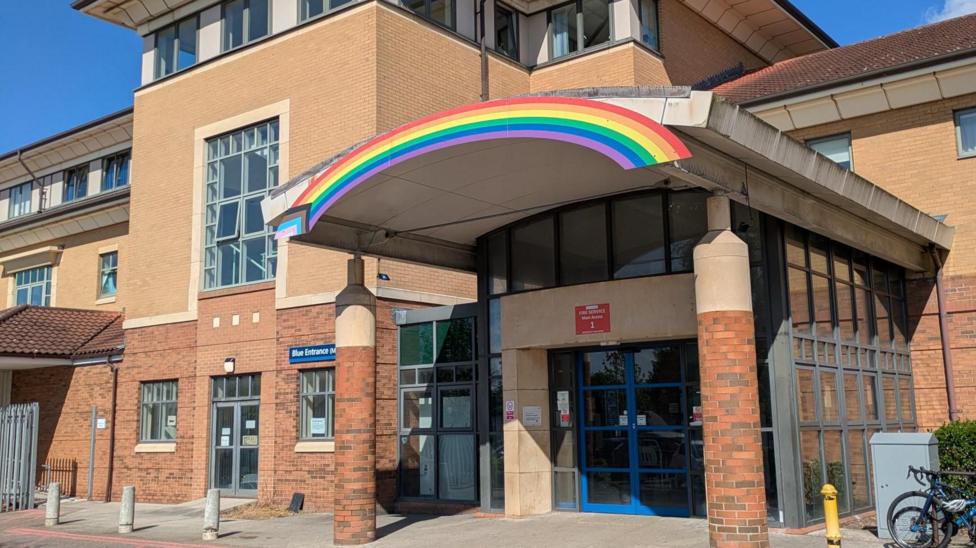
NUH clarified that although only the Queen's Medical Centre has an A&E department, the critical incident affects all its sites.
The trust outlined several measures being implemented in response to the critical incident:
- Rescheduling some elective procedures to free capacity for the sickest patients, with affected individuals to be contacted directly.
- Opening all available beds and spaces.
- Redeploying staff to alleviate pressures.
- Suspending non-essential meetings and activities.
Nottingham City Hospital is also impacted by the critical incident.
Patients with planned appointments are advised to attend unless notified otherwise, though some elective procedures are being rearranged to prioritize the sickest patients.
The trust also calls on families and community partners to assist in facilitating timely patient discharges.
Hall added: "When we're discharging patients, we ask that their friends or loved ones pick them up from hospital as soon as possible and have everything they need at home."
Individuals exhibiting flu or other respiratory illness symptoms are requested to refrain from visiting friends and relatives until recovery.
How Long Do Critical Incidents Last, and Should We Expect More?
The duration of critical incidents varies depending on the specific circumstances.
While they have traditionally been more common during winter months, when services face greater pressure, they are now also occurring during periods of extreme heat.
Different triggers can prompt a critical incident; for example, a previous incident in Nottingham was partly caused by issues with a new digital patient system.
It is not possible to predict precisely when pressures will ease.
Earlier critical incidents at the trust lasted two days in January and four days in February, while the recent EMAS incident persisted for over three days.
BBC correspondent Sissons noted: "Hospitals, a bit like budget hotels, often run at very high occupancy levels and there are very few beds free most of the time.
And so it doesn't take much to tip the bed capacity over the edge, where you're struggling to find space for patients.
Nottingham's home to one of England's busiest A&Es, so they've got big pressures. Longer-term, they want a new A&E facility in Nottingham, although there are changes to the same day emergency care service, which will help."
Get in Touch
Tell us which stories we should cover in Nottingham.
Listen to BBC Radio Nottingham on Sounds and follow BBC Nottingham on Facebook, on X, or on Instagram. Send your story ideas to eastmidsnews@bbc.co.uk or via WhatsApp on 0808 100 2210.
- Critical incident declared at city hospitals
- EMAS critical incident over hot weather stood down
- Expansion planned for QMC 'treat and discharge' unit
- Under-pressure hospitals declare critical incident


