

Early Signs and Challenges
Stephanie described her experience as "isolating" after her son Ben was born.
When Stephanie's son Ben was born full term weighing only 3lb, she immediately sensed something was wrong.
Ben had difficulty feeding, missed developmental milestones, and at six months old underwent surgery at Birmingham Children's Hospital to remove cataracts. Despite numerous tests and medical appointments over several years, no diagnosis was provided to the family.
It was only after eight years that Stephanie, a former lawyer aged 43 from Dorridge, received a life-changing phone call. By that time, she was 32 weeks pregnant with her third child.
Doctors had identified Ben's condition as You-Hoover-Fong syndrome, an ultra-rare genetic disorder with approximately 40 known cases worldwide, according to Stephanie.

Diagnosis and Impact
"It was a normal pregnancy, so we didn't suspect anything," Stephanie explained.
"When he was born he was only three pounds and all these symptoms started coming. We were just new parents with no clue what to do, looking to medical professionals for answers, but none were forthcoming.
"It was a really isolating experience. I couldn't really join the mum and baby groups because I didn't know how to relate to other parents whose babies were developing normally."
Following the discovery of Ben's cataracts, the family was referred for genetic testing through the government's 100,000 Genomes Project. After an eight-year wait, they finally received a diagnosis.
Career Change and New Initiative
After years of balancing her legal career with caring for Ben, Stephanie chose to leave law to become his full-time carer.

She also aimed to address the challenges faced by families caring for disabled children, which she had experienced personally.
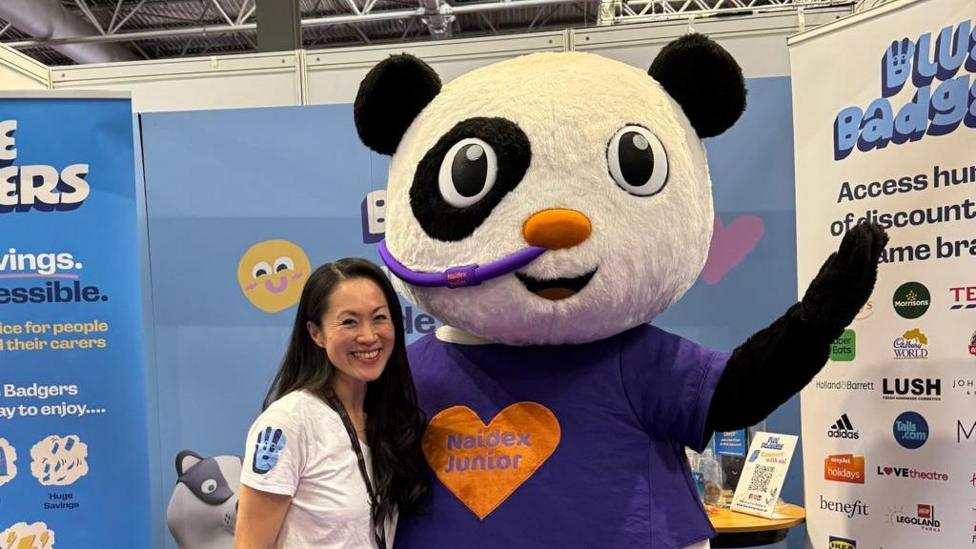
This motivation led her to establish Blue Badgers, an online platform and app that provides discounts, rewards, and accessibility information for disabled individuals and unpaid carers.
"It was a Sunday afternoon during the summer holidays and we decided to take the boys out to a local attraction," Stephanie recalled.
"We tried to book tickets but it was really difficult to find disabled tickets and tickets for carers, and in the end we just gave up and didn't go.
"That was the moment I realised there are millions of carers and disabled people who just aren't being properly recognised. There's something we can do about this."
Platform Features and Goals
The Blue Badgers platform collaborates with businesses to offer discounts and enables users to share information about accessible venues via an interactive map, Stephanie said.
She expressed hope that Blue Badgers would also help improve recognition of unpaid carers, who she believes are often overlooked despite their essential role in supporting disabled people.
"So for me, as a mum of a child with additional needs, I was always quite fearful of taking Ben out," Stephanie said.
"Not knowing what's going to be provided at the venue, if the sort of facilities of the changing rooms are going to be nice, or whether I can change him in there, or if he's just going to react terribly to it.
"What we want to do is make sure that this information is readily available to our community, so wherever they are they can see what's around and what venues have accessible features."
Get in Touch
Tell us which stories we should cover in Birmingham and the Black Country.
Follow BBC Birmingham on , Facebook, X, and Instagram.
More Stories Like This
- 'I found school life confusing - my autism diagnosis showed why'
- Transport decision left disabled teen stuck at home
- Parents of gravely ill child refused respite care


