Measles Outbreak in North London Schools
Health officials have reported a "fast-spreading" measles outbreak affecting at least 34 children across several schools in north London. The cases, confirmed through laboratory testing in January, originate from the Enfield area, according to the UK Health Security Agency (UKHSA).
A local general practitioner surgery noted that one in five children who contracted measles required hospital admission, all of whom "had not been fully immunised" against the disease.
Authorities have urged families to ensure their children are current with immunisations to protect against this highly contagious illness, which can lead to serious health complications.
Enfield's NHS Ordnance Unity Centre For Health stated on its website that there is a "fast-spreading measles outbreak in several schools" throughout the borough. Infections have been confirmed in "at least" seven schools within Enfield and the neighbouring borough of Haringey.
The 34 confirmed cases in Enfield represent more than one-third of the 96 total measles cases reported across England in January, as per the latest UKHSA data.
Enfield Councillor Alev Cazimoglu commented on the outbreak, noting it has "mainly affected children and some have required additional care with a short stay in hospital."
"Vaccination is the most effective way to protect yourself and your family. We urge everyone who is not fully vaccinated to act now."
Enfield Council is collaborating closely with the UKHSA, the NHS, and local partners to contain the outbreak, following national public health guidelines.
Expert Insights and Vaccination Recommendations
Dr Vanessa Saliba from the UKHSA described the outbreak as "big," primarily impacting unvaccinated children under 10 years old attending schools and nurseries.

"Measles is a nasty illness for any child, but for some it can lead to long term complications and tragically death, but is so easily preventable with two doses of the MMRV [measles, mumps, rubella, chickenpox] vaccine."
She emphasized the importance of children who have missed vaccine doses to "catch up as soon as possible" to protect themselves and others, including those too young or medically unable to receive the vaccine.
Dr Saliba also advised individuals planning travel abroad during the Easter holidays to verify their vaccination status, noting that "measles is widespread in some countries with close links to the UK, and there are ongoing outbreaks in parts of Europe."
Vaccination Rates and Rising Measles Cases
Measles cases have been increasing both in the UK and globally, with poor vaccine uptake partly contributing to the rise.
In Enfield, UKHSA data published in August revealed that only 64.3% of five-year-olds had received both doses of the MMR vaccine in 2024/25, one of the lowest rates nationally.
Across the UK, 84.4% of children had received two doses of the MMR vaccine by their fifth birthday, according to recent statistics. This figure was 84.5% in 2023-24, down from a peak of 88.8% in 2014-15.
In January, the World Health Organization announced that the UK had lost its measles elimination status following outbreaks in 2024.
What is Measles and What Are the Symptoms?
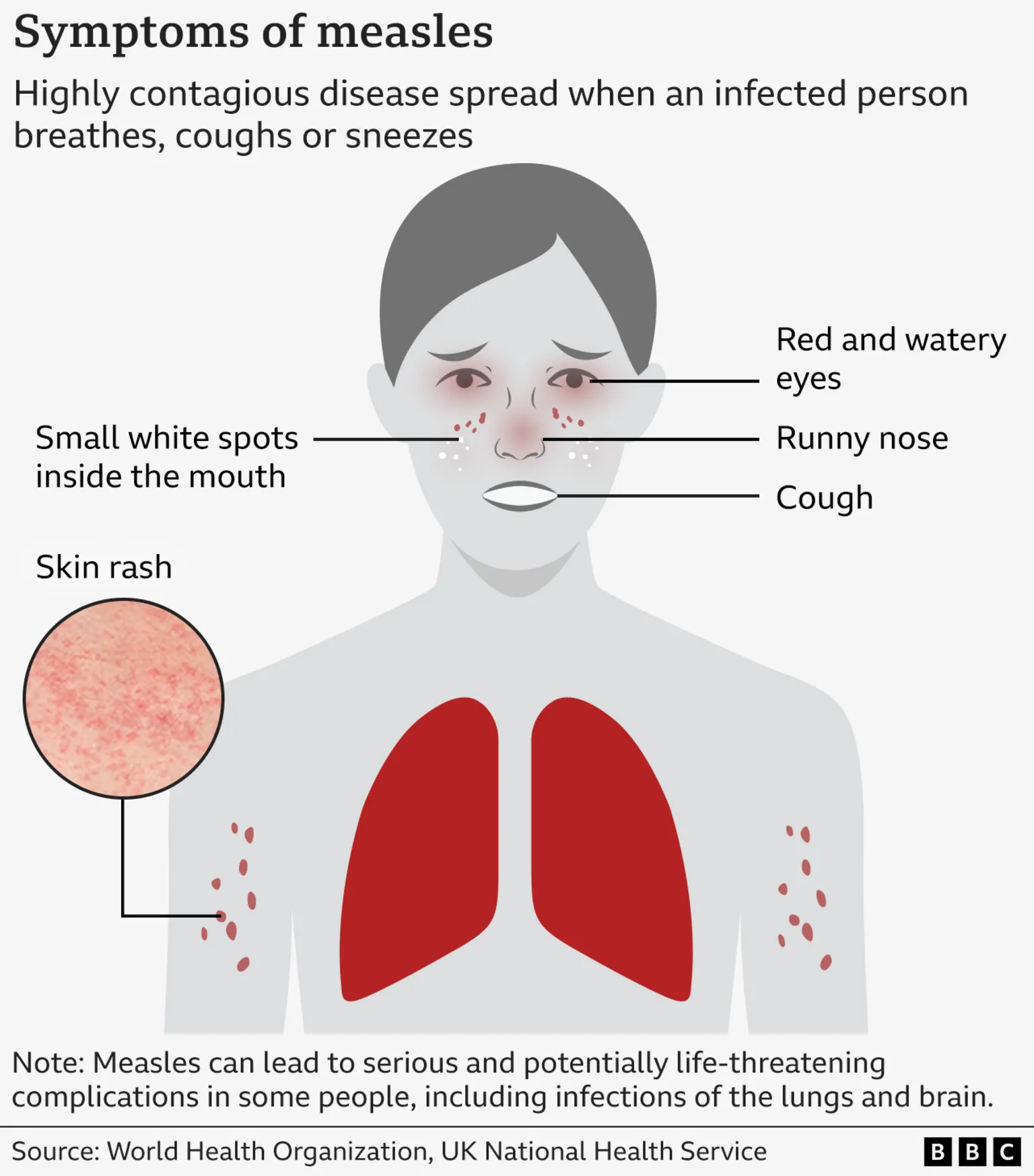
Measles is a highly contagious viral disease transmitted through coughs, sneezes, or contact with contaminated surfaces.
Initial symptoms include small white spots inside the mouth, followed by a blotchy red or brown rash that typically appears behind the ears and on the face before spreading across the body. The rash may be less visible on brown and black skin.