
Waiting for Medical Evacuation in Gaza
Saber Abu al-Kas's mother, Amina, passed away last month while awaiting medical evacuation from Gaza.
When Gaza's medical board approved Amina Abu al-Kas to leave the Strip for treatment abroad, her son Saber described it as the start of hope.
"It brought life back into her. She knew there was no treatment in Gaza, so she was happy and excited," he told the BBC.
Amina was suffering from an aggressive necrotising infection that had spread to her skull. Doctors in Gaza informed her that the necessary medicines and therapies were unavailable locally.
Saber recounted the severity of her pain.
"My mother couldn't sleep day or night; she stayed awake, crying out from the pain. Painkillers caused stomach ulcers and inflammation, and the doctors banned her from taking them."
After receiving the medical referral, the family awaited confirmation that Amina had passed security clearances and been accepted by a foreign country for treatment—both essential for her to leave Gaza.
"We knew that at any moment God might take her. And we also knew that at any moment a miracle might happen, that we might get a call saying, 'Get your bags ready and prepare to travel through the crossing,'" Saber said.
Despite the wait, no response came. Amina died on 29 May, and two weeks after her death, Saber received a call from the hospital informing him that her paperwork was ready.
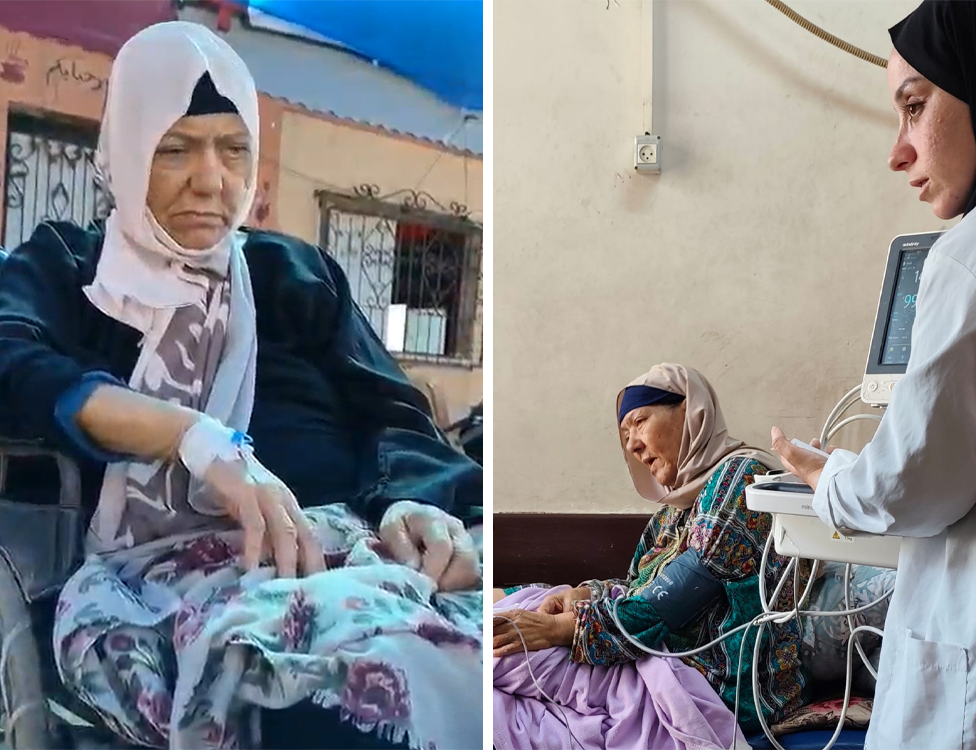
Gaza's Hamas-run health ministry reports that Amina is among approximately 300 Palestinians who have died waiting for medical evacuations since the US-brokered ceasefire between Israel and Hamas began last October.
These figures are also cited by the World Health Organization (WHO), which assists with patient transfers via Gaza's Israeli-controlled border crossings with Israel and Egypt.
Thousands more—currently estimated at 15,000 by the health ministry—are still awaiting treatment abroad, including those with war-related injuries and chronic conditions such as cancer.
The list of evacuees fluctuates as patients' conditions and decisions change, so not all deaths may be recorded.
Since the ceasefire began over eight months ago, the WHO states that 1,977 people have left Gaza for medical treatment. Without acceleration, evacuations could take years.
"We are talking about something that feels like a miracle," Saber said. "If a patient's name is selected and they are granted permission to travel for treatment abroad, it is almost a miracle."
Complex Evacuation Process
After approval by Gaza's medical referral board, patients must pass security checks by Israel, the host nation, and any transit countries, and also be accepted by a host nation for treatment, which is often complex.
"Many recipient countries are quite specific in the type of patients they can support - for example, some only want children; others only want patients for shorter treatments," said Dr Reinhilde Van de Weerdt, WHO Representative for the occupied Palestinian territory.
"Then patients and their companions need visas for the host country, and to pass security checks by Israel, Egypt/Jordan and the host country."
In early June, Maher Shamia, acting undersecretary of Gaza's health ministry, identified the primary causes of delays as the lengthy security screening process and limits imposed by Israeli authorities on the number of departures.
He noted that Palestinians are allowed to leave via the Rafah crossing with Egypt only three days a week, and medical evacuations via the Kerem Shalom crossing with Israel occur just one day a week.
The Israeli defence ministry body responsible for civil affairs in Gaza, Cogat, stated that departures depend on receiving an official request from a country willing to accept a patient and the completion of security screening by relevant authorities.
Cogat added that the "vast majority" of requests submitted by countries and organisations have been approved since the start of 2025.
Protests and Personal Stories
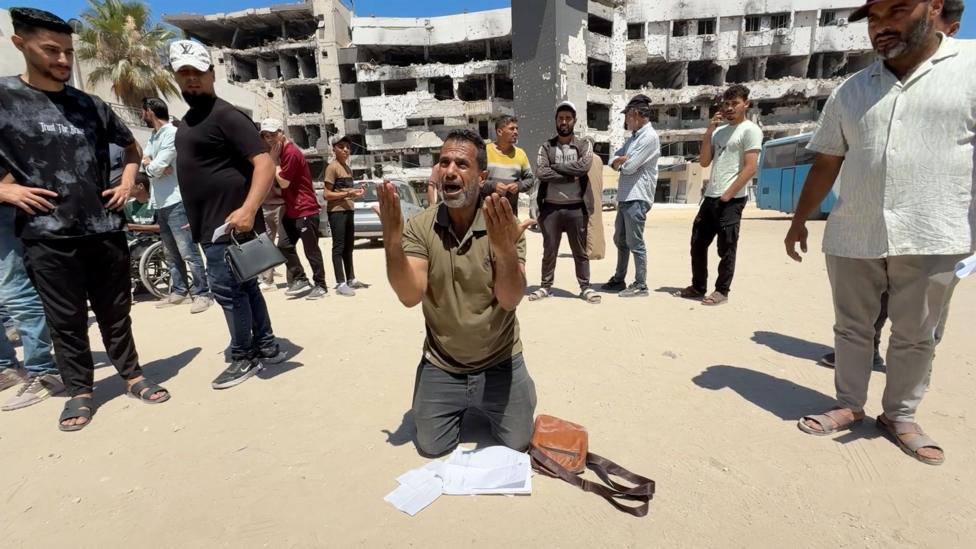
Outside Gaza City's al-Shifa hospital, which has suffered damage from gunfire and Israeli strikes, dozens have gathered to protest delays in medical evacuations.
Nidal al-Arir was seen wailing on the ground, pleading for his son who requires a corneal transplant.
Raeda Nuaizi, a cancer patient who had undergone removal of her breasts, ovaries, uterus, and pelvic bone before the war, expressed frustration.
"What is my treatment [in Gaza]? Painkillers!" she cried. "But what can painkillers do for a cancer patient?"
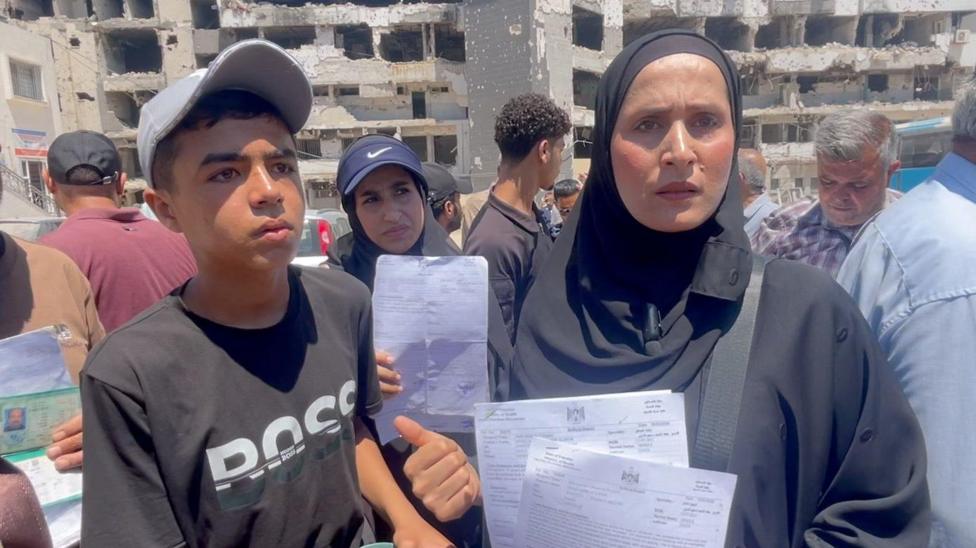
Nearby, 14-year-old Muath al-Dini, on crutches after a leg amputation, awaits two separate medical evacuations.
His mother, Umm Samir al-Dini, told the BBC that Muath lost his leg in an air strike on their home, which also killed another child and injured her husband and younger son.
Muath has also battled spinal cancer since infancy.
"Before the war, I used to receive treatment outside Gaza at a hospital in Jerusalem, and had surgery to stabilise my vertebrae. Here, there is no treatment for me," Muath said.
Some Gazans had permission before the war to travel to hospitals in the occupied West Bank and East Jerusalem for treatment, but Israel has since almost entirely closed that route, with only one Gazan patient recently travelling to the West Bank for cancer treatment.
Umm Samir reported that four screws holding Muath's spine have loosened, affecting his breathing, and doctors in Gaza have recommended further amputation.
After being told they had security clearance for evacuation, the family has heard nothing further since being asked to resubmit documents in May.
"We are still waiting," Umm Samir said. "My son's childhood has been lost. He is bullied and refuses to leave the house. There are no medicines, and no doctors [here] who understand my son's condition."
Healthcare System Under Strain
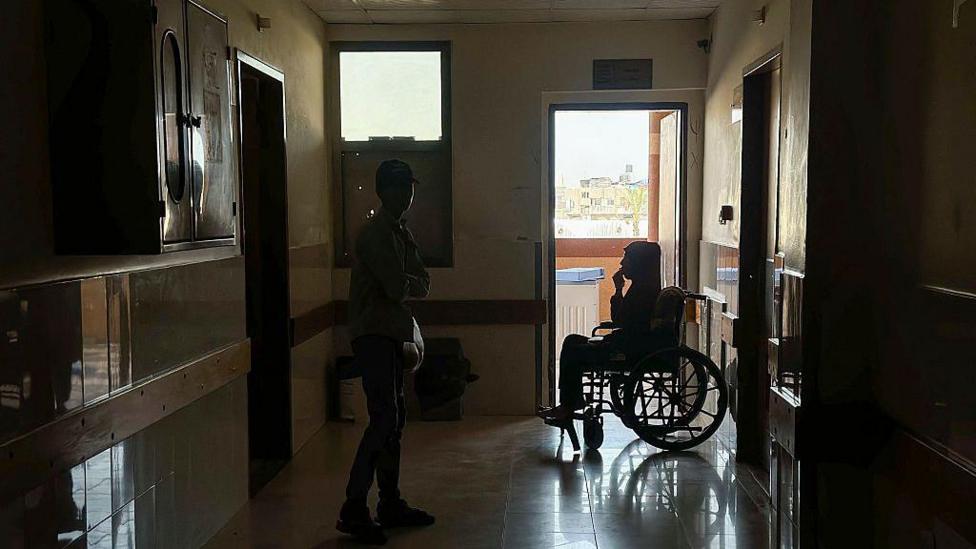
The desperation of patients permeates Gaza's hospitals, whose exterior walls bear damage from conflict, while the healthcare system remains unrepaired.
Eight months after the ceasefire mandated "full aid" to Gaza, aid workers report that shortages of essential medicines and equipment persist, forcing doctors to ration or share life-saving drugs and sometimes turn patients away from chemotherapy or dialysis.
"The fact that the medical evacuation list is thousands long is a sign that people in Gaza don't have access to what they should have - which Israel, as the occupying power under international humanitarian law, has an obligation to allow them access to," said Pat Griffiths, spokesman for the International Committee of the Red Cross (ICRC) in Jerusalem.
Shortages range from basic supplies like gauze dressings and painkillers to advanced medical equipment.
"There is no doubt in my mind that people in Gaza are dying because they can't receive the care they need - and that there are preventable deaths happening because of the limits on what can be brought in, in terms of healthcare."
In response to reports of critical shortages, Cogat stated that 17,000 tons of medicines and medical aid have entered Gaza since the ceasefire, including wheelchairs, cancer medications, insulin pens, anaesthetics, X-ray machines, CT scanners, dialysis machines, and medical consumables.
"Despite claims to the contrary," it said, "Israel has approved every request for medicines submitted by international aid organisations."
A humanitarian official involved, speaking anonymously, said Israeli authorities often use anecdotal examples to mask shortages and that aid supplies remain restricted.
"You don't count medical aid in terms of trucks and pallets; that's not a denominator we use," said WHO's Reinhilde Van de Weerdt. "We talk about the needs patients have, and the needs that are met."
"If medical supply is unrestricted, you don't have these discussions about what is given versus what is needed," she said. "We need certain buffer stock levels of medical supplies, [and] you can't run a hospital hoping the generator doesn't break down."
Mazen al-Arayeshi, director of engineering and maintenance at Gaza's ministry of health, said Israel is allowing enough fuel to run hospital generators, but surgeries are still cancelled due to insufficient power, and Israel has refused to permit replacement of old generators.
"If spare parts, filters and new generators are not allowed in, we are heading towards a catastrophe," he told the BBC. "Yesterday, one of the main generators at Nasser Medical Complex [in Khan Younis] stopped working, and we had to cut electricity to several departments."
Concerns Over Fraud and Patient Desperation
Some patients on the long evacuation list have reportedly paid self-declared agents thousands of pounds to expedite their cases.
The WHO website displays a warning in large red letters advising patients to "Beware of fraud" and not to pay anyone claiming to speed up the evacuation process.
"During this war, we have learned everything, adapted to everything, trained ourselves to endure everything," Saber said.
"Most of those who came to offer condolences for my mother said, 'At least she is at peace now.' That sentence sums up everything. Because a patient in Gaza is different from any patient elsewhere in the world."


