

Overview of the Ebola Outbreak in DR Congo
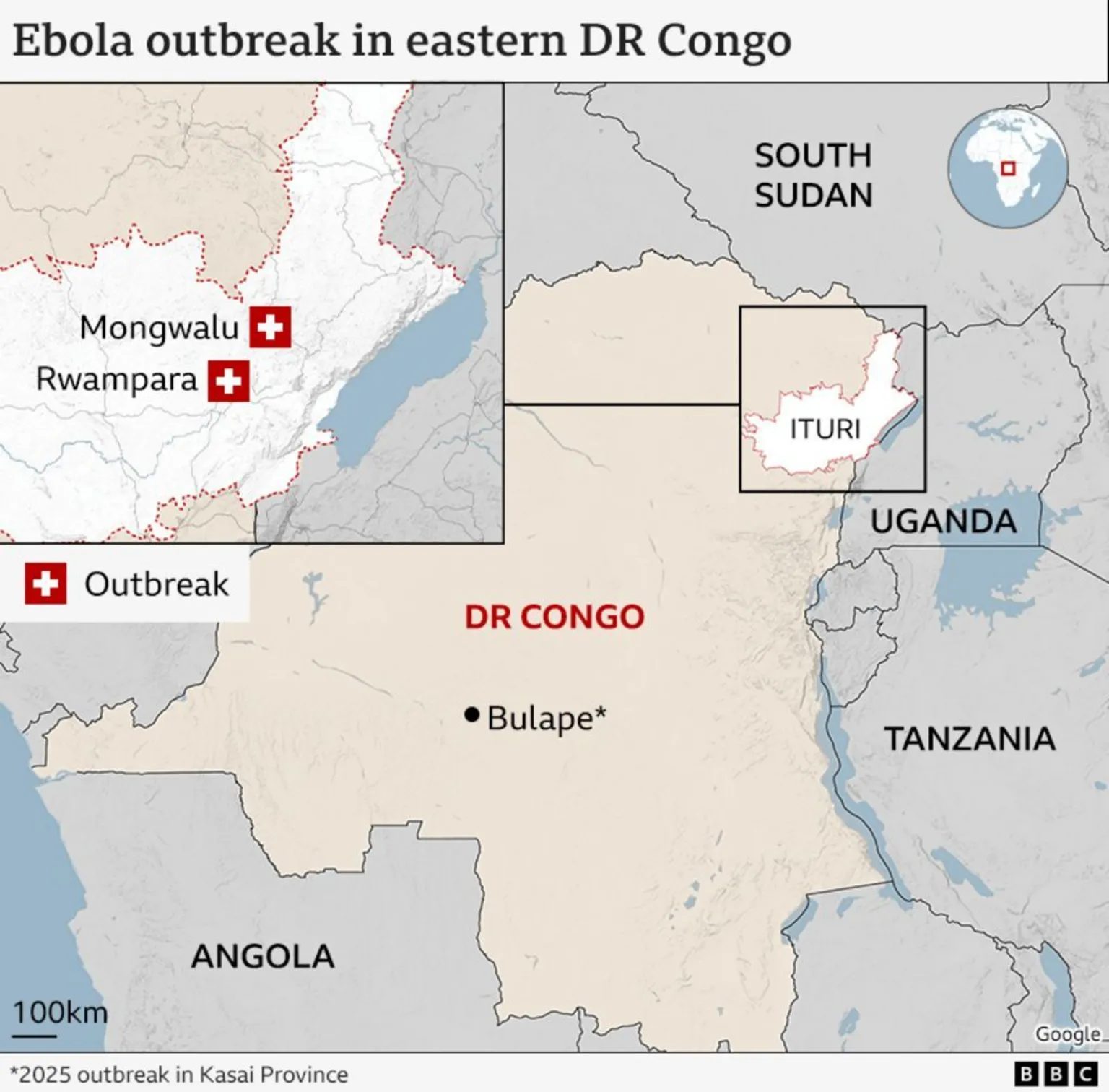
The Ebola outbreak in the Democratic Republic of Congo (DR Congo) has raised significant concern. It has been spreading undetected for several weeks in a region affected by civil conflict, complicating efforts to control the virus. The strain involved is a rare species of Ebola, which limits available treatment options for a virus that has a fatality rate of approximately one-third of those infected.
This outbreak represents a critical juncture, with uncertainty about the extent of its spread. To date, there are nearly 250 suspected cases and 80 deaths reported.
Context and Historical Comparison
Typically, Ebola outbreaks are relatively contained; however, experts remain cautious due to the memory of the 2014-16 West Africa outbreak, which infected 28,600 people and was the largest recorded Ebola epidemic.
The World Health Organization (WHO) has declared this situation a public health emergency of international concern. This designation does not imply the onset of a pandemic similar to Covid-19 but indicates the complexity of the situation and the need for coordinated international response.
"But it does reflect that the situation is complex enough to require international coordination," says Dr Amanda Rojek, from the Pandemic Sciences Institute at the University of Oxford.
Nature of the Virus and Transmission
Ebola is a severe and often fatal disease, though it remains rare. The virus naturally infects animals, primarily fruit bats, but can be transmitted to humans through close contact.
This particular outbreak is caused by the Bundibugyo species of Ebola virus. Bundibugyo is one of three Ebola species known to cause outbreaks but is less well understood compared to others.
Previously, Bundibugyo has been responsible for only two outbreaks, in 2007 and 2012, with a mortality rate near 30%.
Challenges Posed by Bundibugyo Ebola
The Bundibugyo strain presents several challenges. Unlike other Ebola species, there are no approved vaccines or specific drug treatments for Bundibugyo, although some experimental therapies exist.
Diagnostic testing is also problematic. Initial tests during this outbreak returned negative results for Ebola virus, necessitating more advanced laboratory techniques to confirm Bundibugyo involvement.

"Dealing with Bundibugyo is one of the most significant concerns in this outbreak," says Prof Trudie Lang from the University of Oxford.
Symptoms and Treatment
Symptoms typically emerge between two and 21 days after infection. Early signs resemble influenza, including fever, headache, and fatigue. As the disease progresses, patients may experience vomiting, diarrhea, and organ failure. Some develop internal and external bleeding.
Without approved targeted drugs, treatment focuses on optimised supportive care, which includes pain management, treating secondary infections, maintaining fluid balance, and nutritional support. Early intervention improves survival chances.
Transmission and Initial Detection
Ebola spreads through contact with infected bodily fluids such as blood and vomit, usually after symptoms appear.
The first known case in this outbreak was a nurse who developed symptoms on April 24. Confirmation of the outbreak took three weeks.
"Ongoing transmission has occurred for several weeks, and the outbreak has been detected very late, which is concerning," said Dr Anne Cori from Imperial College London.
This delay means health authorities are behind in efforts to contain the outbreak. The WHO warns this could indicate a potentially larger outbreak than currently reported.
Containment Strategies and Challenges
Key containment measures include rapid identification of infected individuals and tracing their contacts to prevent further transmission.
Efforts also focus on preventing spread within healthcare settings, where patients are most infectious, and ensuring safe burial practices for those who have died, as bodies remain infectious.
The situation is complicated by the outbreak occurring in a conflict-affected region of DR Congo, where over 250,000 people have been displaced.
"Many of the affected areas are mining towns with highly mobile and transient populations. This mobility increases risk as people move between communities and across borders," says Lang.
Response Capacity and Outlook
Despite these challenges, DR Congo has considerable experience managing Ebola outbreaks. The current response infrastructure is significantly improved compared to a decade ago.
"The response is significantly stronger today than it was a decade ago," says Dr Daniela Manno from the London School of Hygiene & Tropical Medicine.
The trajectory of this outbreak—whether it will be contained swiftly or escalate into a major epidemic—depends heavily on the effectiveness of the ongoing response efforts.


