

Dentists Return Significant NHS Funding Due to Unmet Patient Targets
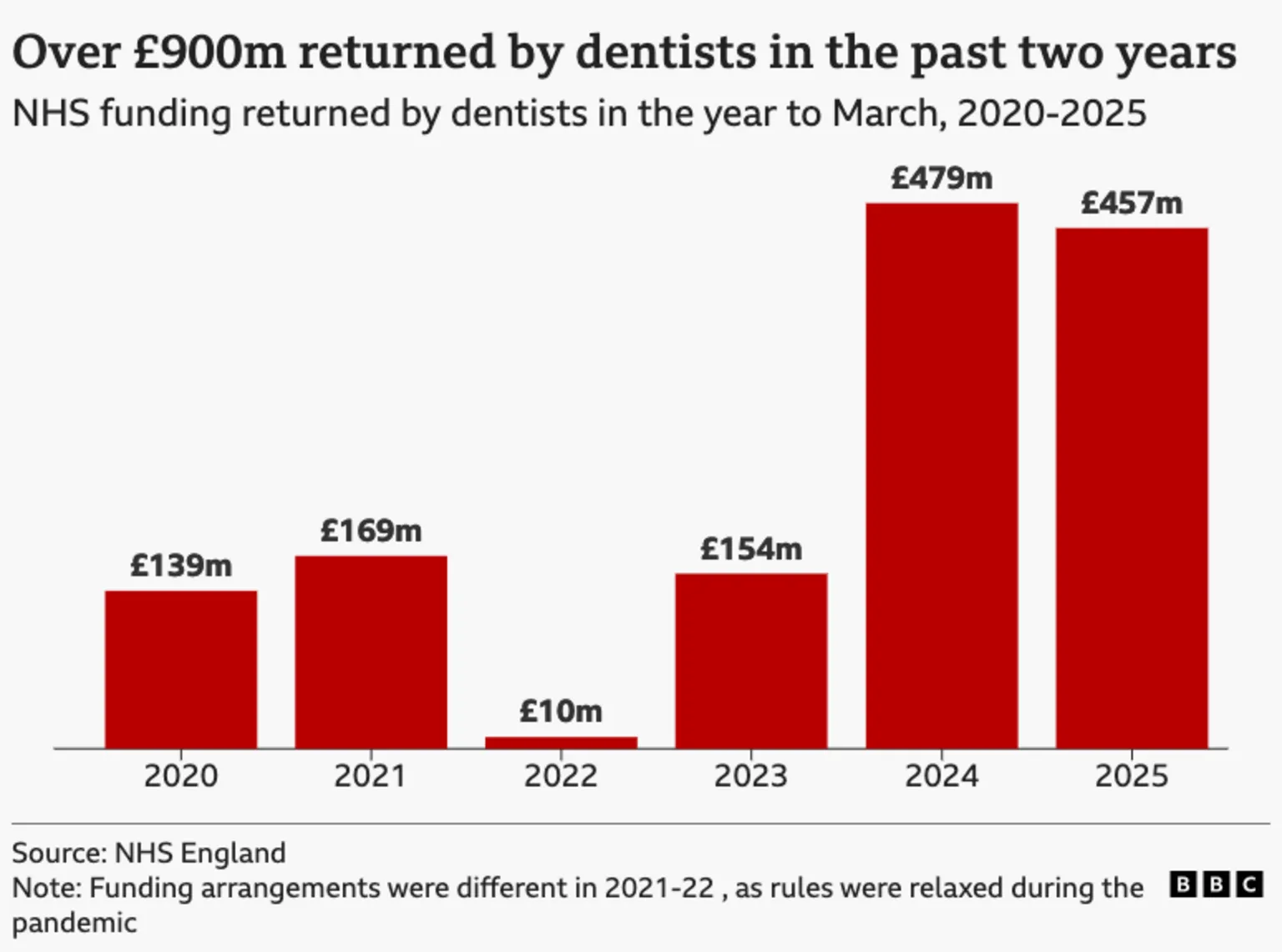
Dentists in England have returned over £900 million to the government over the past two years due to not meeting NHS patient care targets, the BBC has learned. This amount represents approximately £1 out of every £7 paid to dentists, as many prioritize private dental work instead.
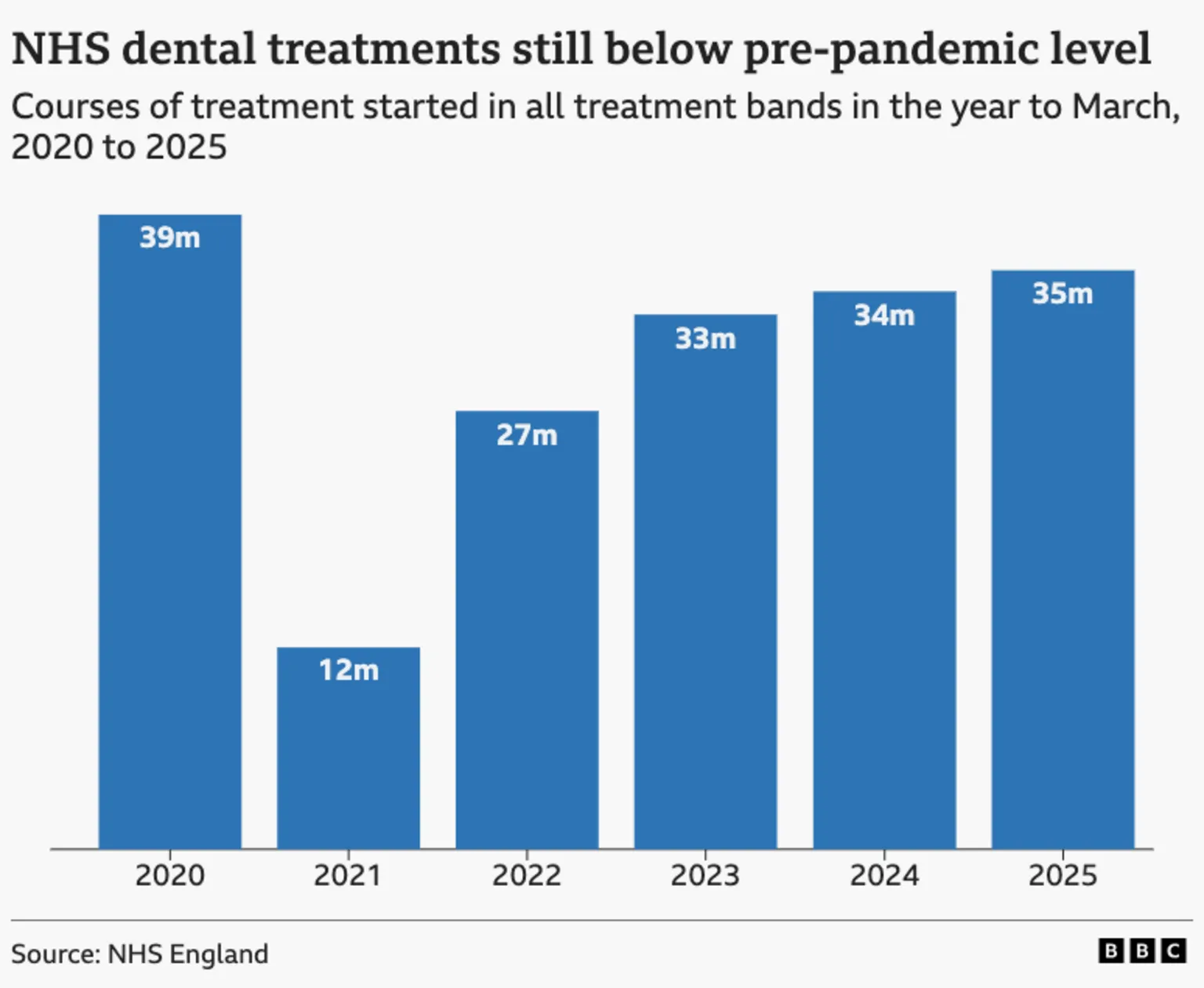
These findings provide insight into why, despite record funding allocated to NHS dentistry, many patients continue to face difficulties accessing care. More than 20% of people report being unable to obtain dental treatment when needed.
The government has stated that improvements are underway this year and that any funds returned by dentists are reinvested into NHS dental services.
Competition and Markets Authority Investigates Private Dentistry Prices
In response to rising concerns, the Competition and Markets Authority (CMA) has launched an investigation into the private dentistry market and the fees charged. The CMA reported that patient fees increased by up to 22% between 2022 and 2024.
Dentists currently earn approximately double for treatments such as fillings and extractions when performed privately compared to NHS work.
The British Dental Association (BDA) attributes this disparity to inadequate NHS payments, which result in dentists losing money on some treatments. The BDA identifies this as the primary reason for dentists failing to fulfill their NHS contracts.
NHS Contracts and Financial Clawbacks
Under NHS contracts, dentists agree on the volume of NHS work they will provide annually and receive monthly payments accordingly. If a dental practice delivers less than 96% of the contracted work, the NHS recoups funds from the practice the following year.
BBC analysis of NHS accounts reveals that in 2024-25, over £450 million was returned, while nearly £480 million was returned the previous year. In both years, more than 40% of dental practices had to return funds.
This marks a significant increase compared to previous years.

Patient Experiences Highlight Access Challenges
Nikita Jenkins, 27, from Cornwall, exemplifies the struggles faced by millions seeking NHS dental care. She has not accessed NHS dentistry for 14 years and has paid privately for her two young daughters’ treatments due to local waiting lists extending up to seven years.

"I tried every dentist in and around my area, but it was near impossible. We were waiting and, in the end, I felt like we had no choice but to take the jump and pay to go private, to ensure that our children had the right health care."
"Dentistry feels like a luxury, not a necessity, because it's just so inaccessible, which shouldn't be the case - especially for children," she told the BBC.
BDA Highlights Financial Struggles Under Current NHS Contract
BDA chair Eddie Crouch explained that the existing NHS contract, now two decades old, leaves dentists struggling financially when providing NHS care.
"It's the simple fact we now have dentists losing money delivering NHS care. It might suit the Treasury, but no healthcare professional can be expected to work this way."
The BDA noted that for new patient examinations under the NHS, dentists typically lose £7 per patient because the costs exceed the payments received.
Reasons for Returned Funds and Contract Issues
While most returned funds are due to underdelivery of contracted NHS work, a small portion results from audits identifying overclaims for NHS treatments.
Rebecca Curtayne of Healthwatch England, a patient advocacy group, stated:
"These figures reflect what people across the country tell us - many cannot get an NHS dental appointment and others find their dentist has stopped providing NHS care altogether and now only offers private treatment.
"The impact falls heaviest on those who are already vulnerable, especially people who struggle financially, who are left with nowhere to turn under a dental contract that is simply not fit for purpose."
Government Actions and Future Plans
The government has increased payments to dentists for NHS work and introduced £20,000 incentives to encourage dentists to work in areas with poor access. These measures have led to an increase in the number of treatments performed, according to official statements.
Additionally, the government aims to reform the dentistry contract fundamentally by the end of the current parliamentary term to further improve access.
Health and Social Care Minister Stephen Kinnock commented:
"We know there is more to do to get to the root of the problem."
An NHS England spokeswoman noted that clawback data is effectively "a year behind reality" and that returned funds are reinvested into dental services.
"We are working closely with government to introduce further reforms in the coming months."
Additional reporting by Elena Bailey and data analysis by Aidan McNamee.


