

Amber and Yellow Heat-Health Alerts Activated Across England
Amber and yellow heat-health alerts have been issued across England as the United Kingdom prepares for one of the longest-lasting heatwaves since 1976.
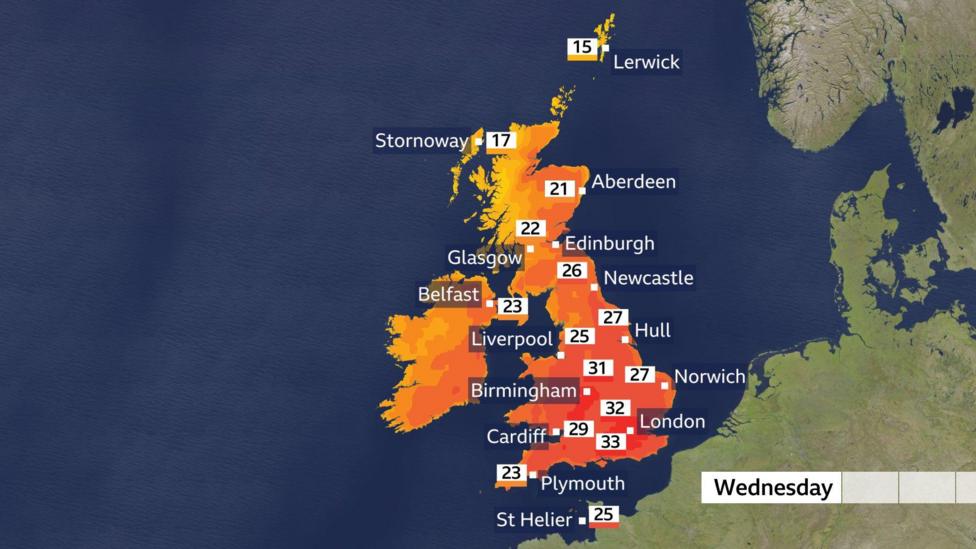
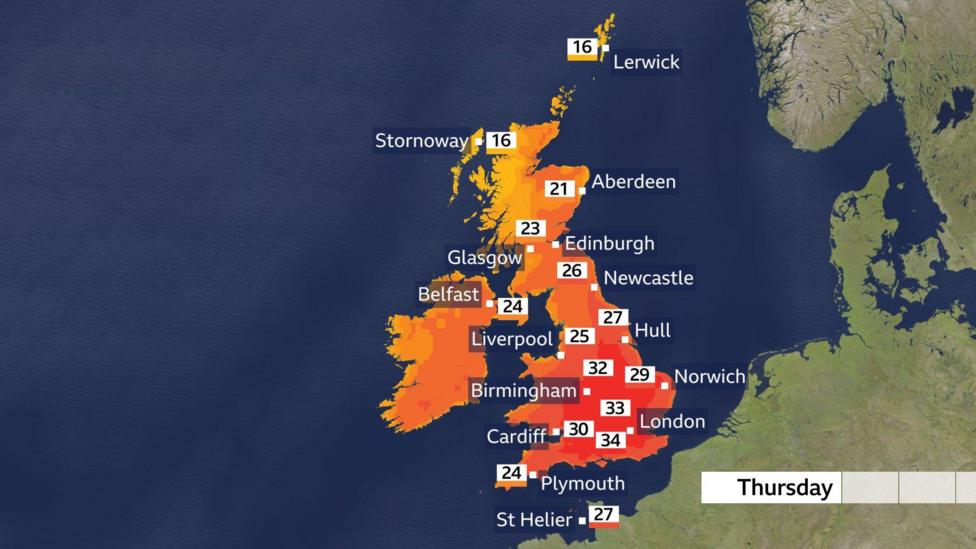
Temperatures are expected to reach as high as 36C (97F) in parts of southern England this week. However, temperatures will vary significantly across the country, ranging from the mid-20s Celsius in northern regions to the mid-30s in the south.
The Midlands, eastern, and southern England are currently under amber heat-health alerts issued by the UK Health Security Agency, effective until 21:00 BST on 12 July.
Simultaneously, yellow heat-health alerts are in place across northern England for the same time period.
These elevated temperatures are likely to have significant impacts on health and social care services, including an increase in mortality rates, particularly among individuals aged 65 and over or those with pre-existing health conditions.
Are 'heat spikes' becoming more common?
What to do if you think someone has heat exhaustion or heatstroke
Heat Forecast to Peak by Friday
Parts of southern and eastern England officially entered a heatwave on Monday after experiencing three consecutive days at or above their threshold temperatures.
Heatwave criteria were met more broadly on Tuesday, with temperatures peaking at 32.4C in both Teddington, Richmond upon Thames, and Frittenden, Kent.
More locations could reach 34C or 35C in the coming days, with the hottest areas expected to be in southern England.
Heat will continue to intensify and spread north and west into Northern Ireland and Scotland until Friday, where peak temperatures are expected to reach the high 20s Celsius.
As high pressure shifts towards the end of the week, an easterly wind will develop, cooling eastern areas of the UK.

The focus of the heat will then move further west, particularly across central southern England. South Wales may also experience highs of 33C on Friday.
Unlike the late-June heatwave, humidity levels are forecast to remain relatively modest this week, which may result in the heat feeling less oppressive despite temperatures exceeding 30C in some locations.
Nights will again be warm but are not expected to be as uncomfortable as those experienced in June.
However, a few tropical nights—when temperatures do not drop below 20C—are possible, especially later in the week in larger towns and cities.
Duration of the Heatwave
Currently, temperatures are not forecast to break records like those seen in May and June.
Nevertheless, this heatwave could be one of the longest-lasting since the notable 1976 heatwave. During that event, multiple locations in England recorded 13 to 16 consecutive days with temperatures above 30C.
Throughout this week and next, parts of southern England are expected to experience temperatures exceeding 27 or 28C, meeting the heatwave threshold for the region.
Some locations could remain within heatwave conditions for up to 14 days.
Stay informed about the forecast in your area with the BBC Weather ten-day forecast.
Additional Information
What are UV levels and how can you protect yourself?


