

Temperatures Approach Record Highs in Northern Ireland
Temperatures in Northern Ireland are forecast to rise close to the all-time record on Thursday.
The current record stands at 31.3°C, set in Castlederg, County Tyrone, in July 2021. Similar temperatures are expected on Thursday, particularly in western regions.
Coastal areas are anticipated to experience cooler and more moderate conditions, with temperatures generally reaching the low 20s.
Heatwave conditions were officially met in Northern Ireland on Wednesday after temperatures of 25°C or higher were recorded for three consecutive days, meeting the threshold defined by the Met Office.
In contrast, the Republic of Ireland requires five consecutive days of temperatures at or above 25°C to declare a heatwave.
Heatwave Conditions and Record Temperatures in the Republic of Ireland
Temperatures in the Republic of Ireland are also expected to rise significantly on Thursday, with the possibility of challenging an almost 140-year-old record.

The highest temperature recorded on the island of Ireland was 33.3°C at Kilkenny Castle on 26 June 1887. If this temperature is exceeded on Thursday, it would mark the hottest temperature ever recorded in Ireland.
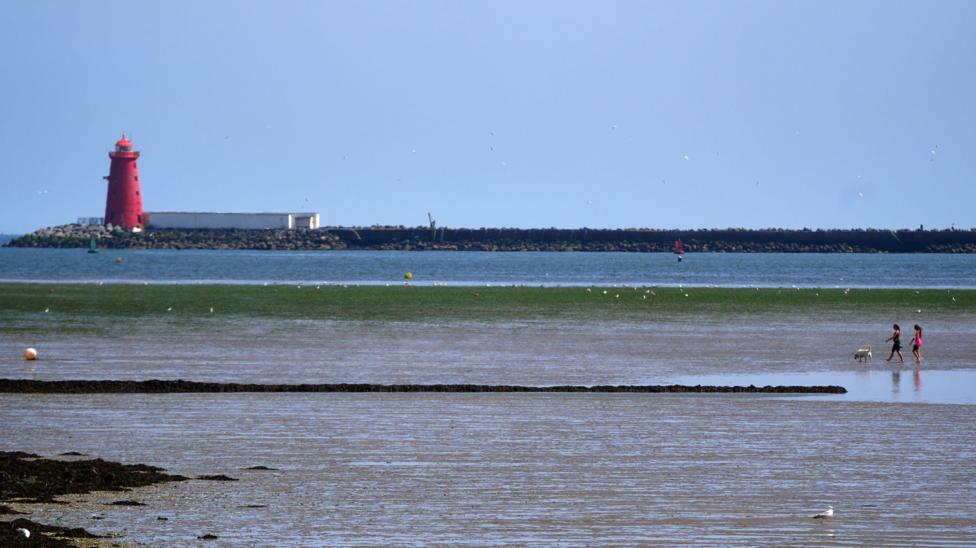
Temperatures in the Republic of Ireland are also rising as can be seen at Dublin Bay.
Met Éireann meteorologist Holly O'Neill indicated that the west coast of Ireland is likely to experience the highest temperatures.
"We're expecting temperatures to range between 25 and 31C, but it is possible we could see higher temperatures in some places," she told BBC Radio Ulster's Evening Extra programme.
"It's hard to pinpoint specific areas but we're looking at parts of Connacht and the midlands. It could be in Galway or even Newport Furnace in County Mayo."
A yellow heat warning is currently in place across the Republic of Ireland until 09:00 on Friday.
Climate Change and Increasing Heatwave Frequency
The Met Office's chief scientist has highlighted that climate change has contributed to more frequent and intense heatwaves.
"To see temperatures like this in the UK in June is sobering," he added.
Projections from the Met Office suggest that hot spells will become more common in the future, especially in the south-east of the UK.
According to Climate Central, a United States-based non-profit organisation, the current heatwave affecting western Europe has been made between three to five times more likely due to human-caused climate change.


