

Full Worm Moon Visible Across the UK
The first full Moon of spring, known as the 'Worm Moon,' rose over the United Kingdom on Monday night, offering a spectacular sight for sky watchers in London and beyond.
While observers in Asia, Australia, and parts of the Americas will witness the full Moon coincide with a rare total lunar eclipse, causing the Moon to appear red, this phenomenon will not be visible in the UK. Totality is expected around 11:30 GMT, outside the viewing window for the UK.
The Moon will remain full through Tuesday night into Wednesday, and with forecasts predicting clear skies, there will be additional opportunities to observe it.
BBC Weather Watchers contributed numerous photographs capturing the full Moon on Monday night.
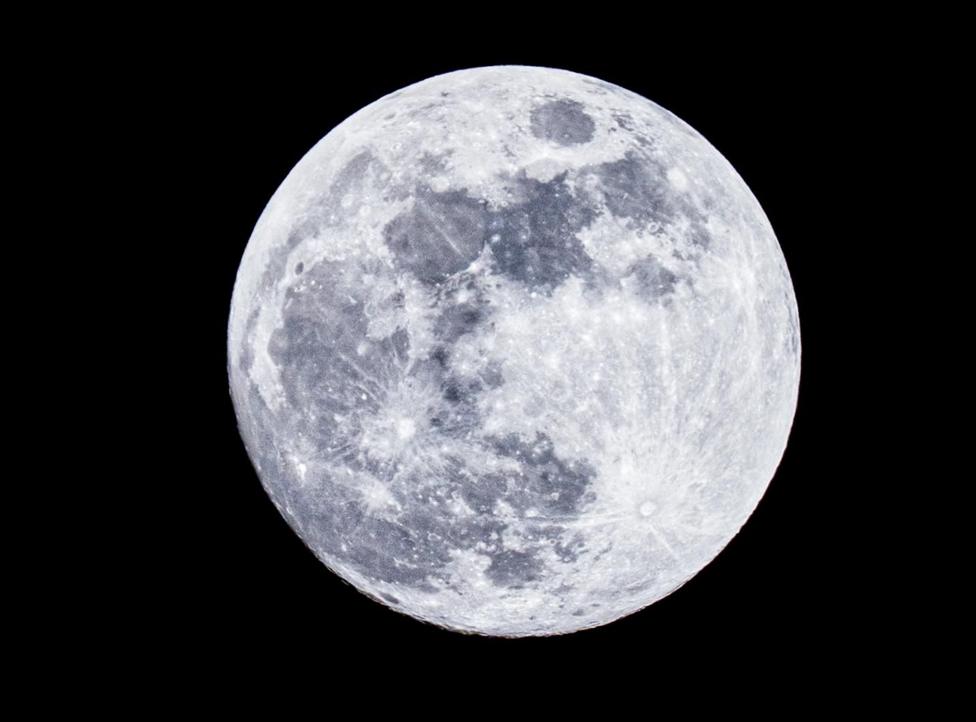
Full Moons have traditional names originating from ancient customs predating modern calendars. These names served as markers for seasonal changes and often related to significant natural events occurring at the time.
The March full Moon is called the Worm Moon, referencing the time when earthworms begin to emerge from the soil as temperatures rise during spring.
Rare 'Blood Moon' Visible in Some Regions
In parts of the world such as New York, the full Worm Moon rose on Monday night and will take on a reddish hue due to the full lunar eclipse.

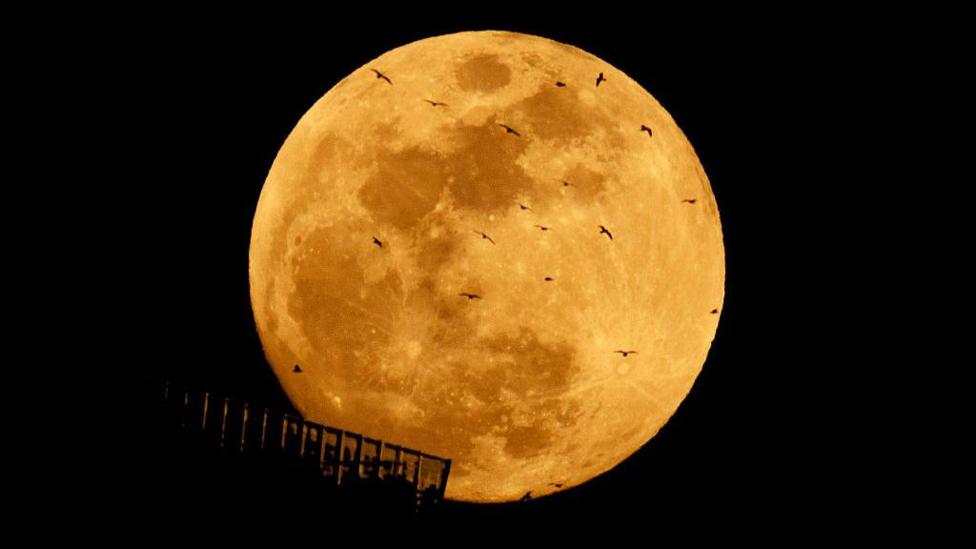
A lunar eclipse happens when Earth positions itself directly between the Sun and the Moon, casting a shadow on the lunar surface. During this event, the Moon can appear a rusty red color, earning it the nickname 'Blood Moon.'
Regions most likely to observe this phenomenon include parts of North America, South America, East Asia, and Australia.
The full eclipse is scheduled to begin at 11:04 GMT on Tuesday morning and conclude at 12:02 GMT. It is estimated that nearly one-third of the global population will witness the total phase.
Viewing Opportunities for the Full Moon
BBC Weather Watchers captured the full Moon rising in Hampshire on Monday evening.
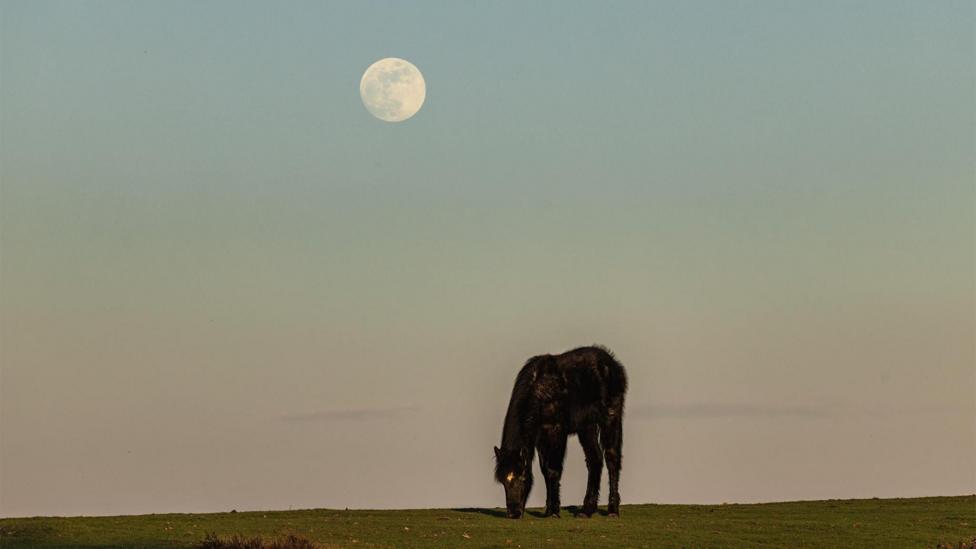
Forecasts for Tuesday night indicate that although some cloud cover is expected across England and Wales, there should be ample clear spells to observe the Worm Moon.
For those whose weather conditions are unfavorable, the next full Moon will occur on 1 April, known as the Pink Moon, followed by the Flower Moon on 1 May.
May will also feature a second full Moon on 31 May, referred to as a Blue Moon. This term arises because having two full Moons in a single calendar month is a rare occurrence, leading to the expression "once in a blue Moon."
Additional Context
Following the warmest weather recorded so far this year, questions arise about whether winter has finally ended.


