

Forgotten Fossil Revealed as First Dinosaur Bone from Antarctica
An unassuming fossil, which remained unnoticed for 40 years in a drawer, has been identified as the first dinosaur bone ever found in Antarctica.
The specimen was originally uncovered in 1985 on James Ross Island, Antarctica. However, the discovery team was uncertain about its nature, leading to the fossil being stored within the British Antarctic Survey's (BAS) geology collection in Cambridge.
Recent examination by palaeontologists confirmed that the fossil is a tail vertebra from a Titanosaur, a group of dinosaurs that included the largest creatures to have ever walked the Earth. This finding contributes valuable information about the existence and lifestyle of these dinosaurs in a region where fossil records are scarce.
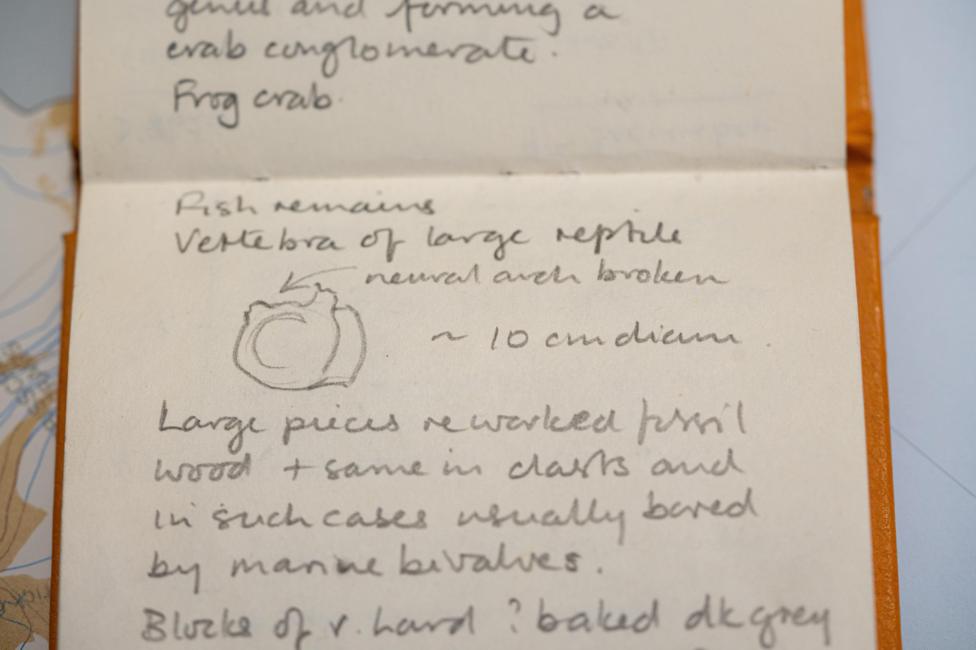
The discovery was documented in the field notebook of geologist Mike Thomson.
Rediscovery and Identification
Dr Mark Evans, collections manager at BAS, identified the fossil among thousands of specimens collected from Antarctic expeditions over several decades.
"It's only when you start thinking 'what's in this drawer', that sometimes you come across something and you think, 'Ah, this looks interesting'," he said.
The fossil was originally collected on James Ross Island, with its discovery noted in a field notebook maintained by geologist Dr Mike Thomson. Alongside a small, detailed sketch dated 9 December 1985, Thomson wrote "vertebra of large reptile," noting the fossil measured approximately 10 cm wide.
Evans suggested that the original team likely assumed the fossil belonged to a marine reptile. However, upon inspection, he recognized the vertebra's distinctly dinosaurian characteristics. Given the date of discovery, this fossil represents the earliest dinosaur find on the continent.
Insights into Titanosaur Anatomy and Size
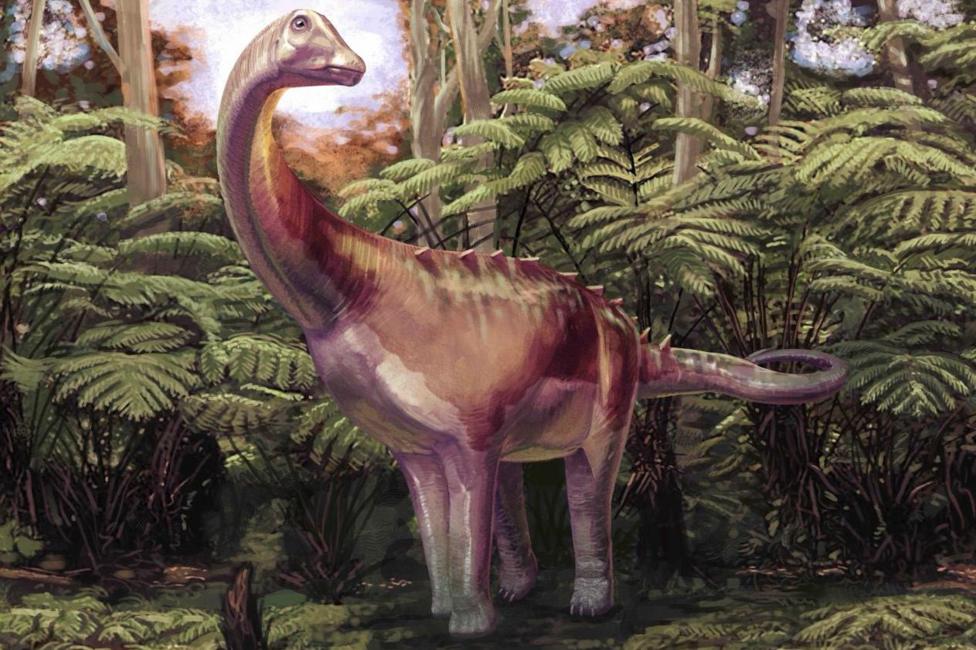
When Titanosaurs roamed Antarctica around 80 million years ago, the continent was covered by lush forests.

Evans consulted Professor Paul Barrett from the Natural History Museum (NHM) to verify the identification.
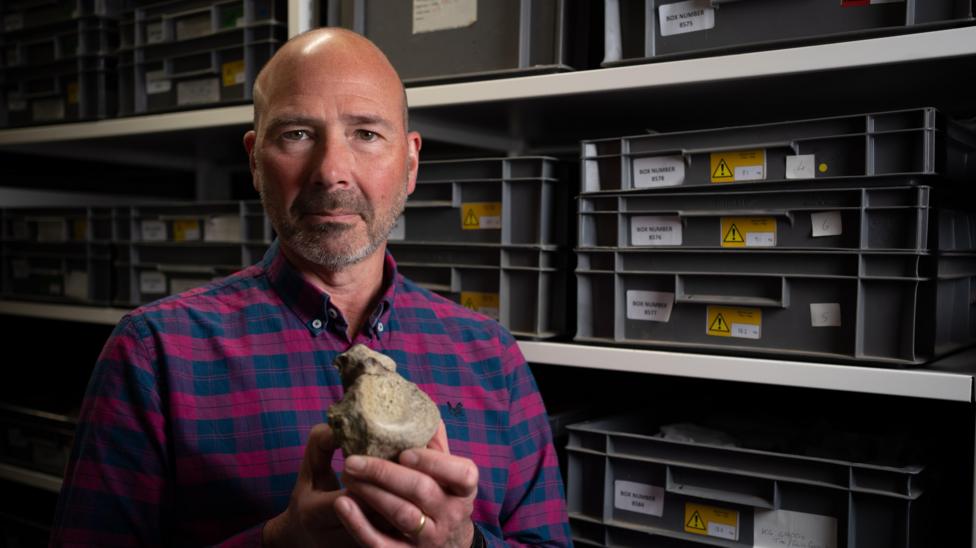
"Although it's not too much to look at, it actually has a really distinctive shape," Barrett remarked while holding the fossil. He pointed out a hollow on one end and a rounded bump on the other, explaining that the vertebrae form ball-and-socket joints along the tail.
"As soon as I saw it, I knew what we were dealing with… it was a dead cert we were dealing with a Titanosaur," he added. "This is a combination of features that's completely unique to these types of dinosaurs."
A Titanosaur cast, on loan from the NHM, is exhibited at Peterborough Cathedral.
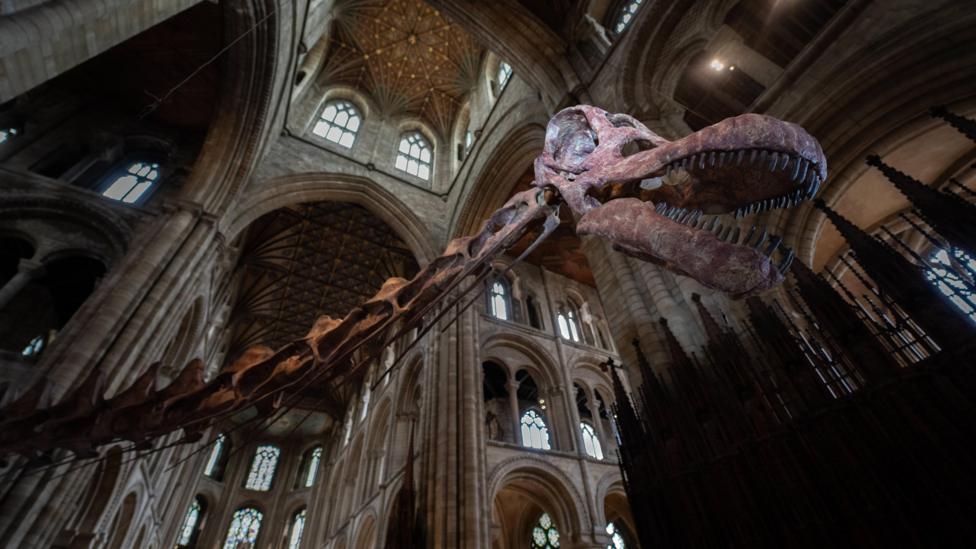
More than 100 Titanosaur species have been identified worldwide. These dinosaurs were quadrupedal herbivores with very long necks, which enabled them to reach high vegetation, and long tails that served as counterbalances. The largest Titanosaurs could reach lengths exceeding 115 feet (35 meters) and weigh approximately 60 tonnes.
Based on the size of the tail bone, scientists estimate that the Antarctic Titanosaur measured about 23 feet (7 meters) in length.
"Maybe it was a juvenile dinosaur, or maybe it was a genuinely small one - one that was actually bucking the trend for the rest of the group as a smaller adult," Barrett explained.
Antarctica’s Ancient Environment and Fossil Significance
This dinosaur lived approximately 82 million years ago during the Late Cretaceous Period, a time when Antarctica's environment was markedly different from today. The continent was covered in dense forests, providing abundant food for herbivorous dinosaurs like the Titanosaur.
Dr Mark Evans discovered the fossil within the British Antarctic Survey's geology collections.
The long-overlooked fossil now holds a significant place in Antarctic exploration history. Although other dinosaur fossils have been found in Antarctica since 1985, such discoveries remain rare.
Antarctica presents considerable challenges for palaeontologists due to its harsh conditions and ice coverage, which conceals much of the prehistoric record beneath the rock.
"It shows that an area that we now think is really uninhabitable was once actually very habitable and had this huge cast of characters living on it," Barrett explained.
"It's helping us to work out how they fitted into these broader ecosystems at the very bottom of the world about 80 million years ago."


