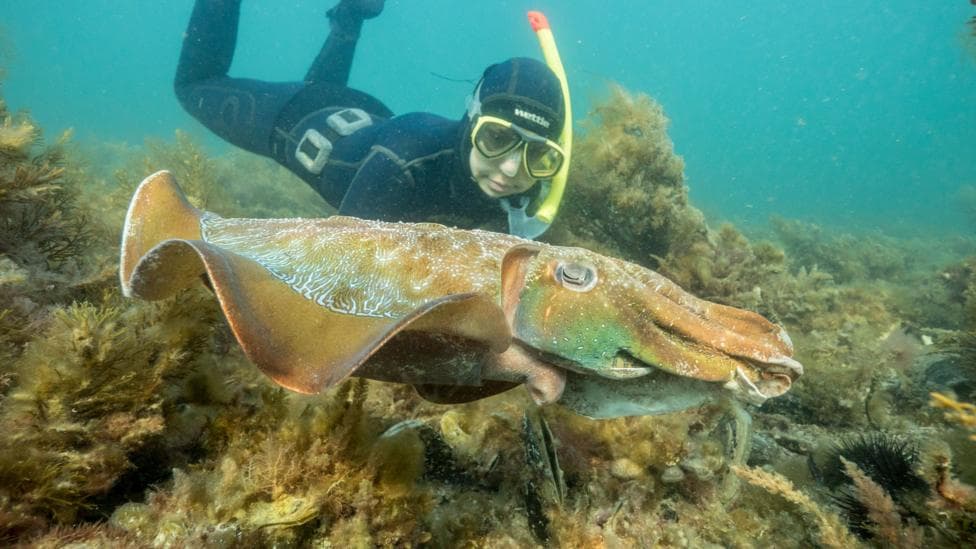
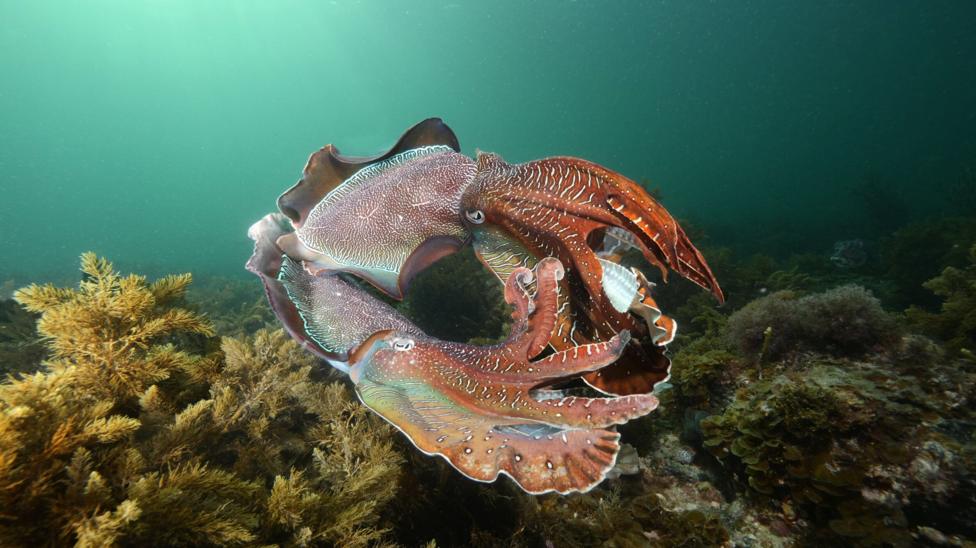
The world's largest gathering of giant cuttlefish, which occurs annually along South Australia's Cuttlefish Coast, has collapsed to its lowest level on record. Official figures released in August 2026 show only 1,811 cuttlefish arrived to breed this year, representing a catastrophic 97% decline from the 63,000 recorded in 2025. The state government has identified a prolonged toxic algal bloom that has devastated the coastline for more than 18 months as the likely culprit behind the sharp drop.
The breeding failure carries severe implications for the species' survival. Adult cuttlefish live only 12 to 18 months and die after reproducing, making each mating season critical for population renewal. This year, researchers counted just 440 eggs along the breeding grounds instead of the millions typically laid during the season. Conservation groups have publicly warned of an unprecedented absence of giant cuttlefish in 2026 as the harmful algal bloom crisis persisted.
Manny Katz, a 28-year-old diver tasked by South Australia's Department of Environment and Water to assess the breeding population, led a team that conducted eight one-hour underwater surveys across eight kilometres of coastline in July 2026. The team systematically searched beneath rocky reefs to locate and count eggs, a task that revealed the scale of the collapse.
What did the egg survey reveal?
The July surveys found approximately 440 eggs across the entire breeding zone, a figure that starkly illustrates the reproductive failure. Katz explained that under normal circumstances, the same stretch of coastline would host millions of eggs, as each female can deposit dozens and tens of thousands of breeding adults typically congregate in the shallow waters. The team also observed that the dozen or so adult cuttlefish they encountered—when tens of thousands should have been present—displayed unusual behaviour, remaining skittish and hiding beneath rocks rather than engaging in the characteristic mating displays that normally colour the waters.
The absence of strength in numbers appears to have altered the animals' behaviour fundamentally. Katz noted that the cuttlefish observed this year seemed stressed by their isolation, lacking the safety and confidence that comes from being part of a large aggregation. This behavioural shift raises additional concerns about the species' ability to reproduce successfully even when individuals are present.
Why has the population collapsed?
The toxic algal bloom that began in March 2025 represents the most severe environmental crisis affecting the region in recent memory. Scientists have linked the bloom to a prolonged marine heatwave and unusually warm water temperatures, which helped fuel the crisis. The algal bloom itself is a naturally occurring phenomenon—a rapid increase in algae population in water systems—but its severity has been exacerbated by ocean warming, marine heatwaves, and nutrient pollution, all of which are intensified by climate change.
Last year's breeding season was unaffected because the algal bloom had not yet reached the Cuttlefish Coast when mating occurred. However, since late 2025, small concentrations of the toxic algae have been detected in the breeding area. Cuttlefish, along with other cephalopods such as octopus and squid, are particularly vulnerable to the toxic algae, making the species especially susceptible to the bloom's effects.
Katz characterised the situation as a warning sign of broader marine ecosystem collapse. He stated that the decline in cuttlefish numbers serves as a canary in the coal mine, indicating that marine habitats across the region have been severely damaged over the past 18 months. The species' vulnerability to the algal bloom underscores how interconnected marine food webs and environmental conditions are, and how rapidly a keystone species can be affected by environmental degradation.

What do conservation experts say about the decline?
Stefan Andrews, co-founder of the Great Southern Reef Foundation, is actively seeking to have the giant Australian cuttlefish listed as a threatened species in response to the catastrophic decline. Andrews acknowledged that while the harmful algal bloom is a leading plausible explanation for the population crash, the available evidence does not yet definitively prove it caused the entire decline. Nevertheless, he emphasised that with so few adults and minimal breeding activity observed, the number of young entering the population next year is likely to be extremely low, which will make the subsequent breeding season especially challenging.
The low egg count means that the population entering the 2027 breeding season will be severely depleted. If the current cohort of juveniles fails to reach reproductive maturity in sufficient numbers, the species could face a second consecutive year of reproductive failure, potentially triggering an irreversible population collapse.
Prof Mike Steer, executive director of the South Australian Research and Development Institute, which helped conduct the underwater surveys, described the unprecedented low estimate as disheartening but expressed cautious optimism. He noted that historical data shows the cuttlefish population has demonstrated capacity to recover when environmental conditions improve. He pointed to positive signs, including the fact that adult cuttlefish are continuing to lay eggs, suggesting the population may recover over coming years if conditions stabilise.
What does the historical record show?
The cuttlefish population has fluctuated significantly in recent decades, influenced by environmental conditions. Previous surveys recorded a low of 13,500 animals in 2013, followed by a rebound to more than 100,000 just two years later. The population reached a peak of 247,000 in 2020, demonstrating the species' capacity for rapid recovery when conditions are favourable. A spokesperson for South Australia's Department of Primary Industries and Regions noted that cuttlefish populations naturally fluctuate depending on environmental conditions, and the 2013 recovery provides a precedent for population resilience.
However, the current situation differs markedly from the 2013 low. That decline occurred in isolation, whereas the 2026 collapse coincides with an ongoing environmental crisis—the algal bloom—that continues to affect the region. The persistence of the toxic algae means that conditions are unlikely to improve rapidly, potentially preventing the swift recovery that followed the 2013 low.
What conservation measures are in place?
South Australia has implemented several protective measures to support the species. State law passed in November 2025 prohibits taking giant Australian cuttlefish in the northern Spencer Gulf, providing legal protection against fishing and collection. Additionally, a temporary protection zone for giant cuttlefish covers the Upper Spencer Gulf breeding site from 1 July 2026 for 90 days, restricting recreational in-water activities and anchoring to minimise disturbance during the critical breeding period.
These measures represent an attempt to reduce human-caused stressors on the population, though they cannot address the underlying environmental crisis posed by the algal bloom. The 90-day exclusion zone provides a window of protection during the peak breeding season, but the broader challenge of algal bloom persistence requires ecosystem-wide intervention.
What research is planned for the coming years?
A joint research project between the South Australian government and Adelaide University is set to track the Spencer Gulf giant cuttlefish population through 2028. This multi-year monitoring programme will provide crucial data on whether the 2026 breeding cohort survives to reproductive maturity and whether the population begins to recover. Researchers indicated that the population's recovery prospects will become clearer within the next one to two years as the 2026 eggs hatch and the next breeding cycle unfolds.
The extended monitoring period reflects the urgency of understanding the species' trajectory and the effectiveness of conservation interventions. If the 2027 breeding season shows further decline, it would signal that the population may be entering a critical phase from which recovery becomes increasingly difficult.
Key Facts
- Only 1,811 giant cuttlefish arrived to breed in 2026, down 97% from 63,000 in 2025, marking the lowest count on record.
- Researchers found approximately 440 eggs along the breeding grounds in July 2026, compared to millions typically laid during normal breeding seasons.
- A toxic algal bloom that began in March 2025 and persisted through 2026 is the leading suspected cause of the population collapse, as cuttlefish are particularly vulnerable to the toxic algae.
- Adult cuttlefish live only 12 to 18 months and die after breeding, making the 2026 reproductive failure critical for determining the species' population trajectory in 2027 and beyond.
- A joint government and university research project will monitor the population through 2028 to track recovery prospects as the 2026 egg cohort matures.