

Significant Emissions Reduction in Wales Linked to Steelworks Changes
Wales has experienced a "significant" reduction in greenhouse gas emissions, primarily due to the closure of the blast furnaces at the Port Talbot steelworks, according to a recent report.
In 2024, Wales' emissions were 8.6% lower than in 2023, marking an overall decrease of 44% since 1990, as reported by the UK Climate Change Committee (CCC).
The Port Talbot steelworks had been the largest single source of carbon dioxide emissions in the UK, accounting for approximately 2% of the nation's total greenhouse gas emissions.
The traditional coal-fed blast furnaces were shut down in July and September 2024, resulting in the loss of 2,000 jobs. These furnaces are planned to be replaced by a £1.25 billion electric arc furnace designed to recycle scrap steel.
Tata Steel has indicated that the new £1.25 billion furnace may face delays due to an electrical issue.
One year after the closure, the future of Port Talbot's steel production is taking shape with a focus on greener technology.
Expert Commentary on Emissions Decline and Future Opportunities
Nigel Topping, chair of the CCC, noted that Wales has experienced "a steeper decline" in emissions compared to the UK overall.
"This was largely driven by the closure of the Port Talbot blast furnaces ahead of their transition to electrified steel-making," he said.
"Looking ahead, the biggest opportunities for further progress lie in how we use land, heat our buildings, and decarbonise transport."
"Seizing these opportunities will be critical if Wales is to sustain momentum and continue to play its part in tackling climate change," he added.
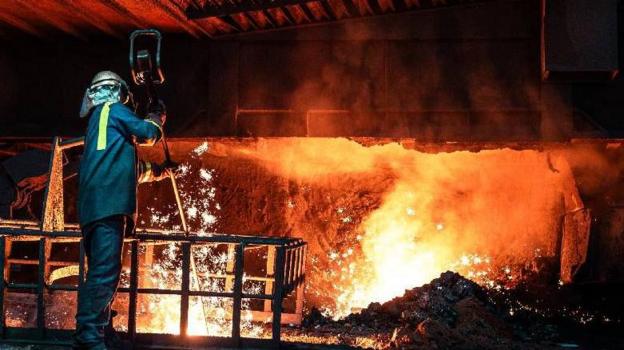
The blast furnace will be replaced with an electric arc furnace which produces less carbon dioxide but requires fewer workers.
Annual Assessment Highlights Industrial Changes Driving Emissions Reductions
The CCC published its annual assessment of the UK's progress toward reducing emissions to achieve net zero by 2050.

Industrial changes accounted for 74% of the total reduction in greenhouse gases directly emitted from Wales in 2024.
There were also reductions in emissions from electricity and fuel supply, land use, and agriculture; however, these were partially offset by increases in emissions from buildings, transport, and aviation.
Provisional figures for 2025 indicate further declines in industrial emissions, noting that Port Talbot's blast furnaces were operational for much of 2024.
The committee stated that the temporary closure of Port Talbot was responsible for nearly two-thirds of the emissions reduction in industry across the UK between 2023 and 2025.
Criticism of Transition Management and Calls for Support
Despite the emissions reductions, the CCC reiterated previous criticism regarding how the steel-making transition in south Wales was managed, suggesting that the Welsh and UK governments could have done more to prepare the region.
Environmental groups have warned that the situation at Port Talbot could undermine public support for climate action if perceived as causing job losses and the decline of heavy industry.
The CCC stated that "a more proactive and decisive transition plan should have been developed to mitigate impacts on the local economy."
One of the committee's recommendations to both governments is to "work with communities, workers and businesses in areas of the economy that may have been adversely impacted by the net zero transition" to develop plans for new green jobs and opportunities.
Government Responses and Investment Commitments
The Welsh government expressed its intention to collaborate with the UK government on implementing the report's recommendations but called for increased investment from Westminster.
"We recognise the recent fall in emissions reflects significant industrial change, including at Port Talbot, with real impacts on local communities," a Welsh government spokesperson said.
"We are working with the Tata Steel Transition Board to deliver £100m of funding to support those affected by the move to electric arc steel-making."
"More UK government investment is needed in clean energy infrastructure to support the ongoing transition of Port Talbot and the wider south Wales industrial corridor in order to retain skilled jobs, attract new industries and strengthen the resilience of our communities," the spokesperson added.
The UK government stated it has committed £2.5 billion in investment, in addition to £700 million allocated to Port Talbot, "to rebuild the steel industry for decades to come and ensure a bright and sustainable future for UK steel-making."
"We have taken decisive action to protect people and businesses in the area to mitigate the impact of the blast furnace closure on the local economy," a UK government spokesperson said.
"Driving forward with clean, homegrown power is the best route to bring down bills for good, deliver energy security and create jobs."


