

Golden Eagles Set to Return to English Skies with Government Support
Golden eagles are poised to become a permanent presence in English skies once again, following a government commitment of £1 million to support the species' reintroduction as early as next year.
Once Britain’s second largest bird of prey, golden eagles were eradicated from England during the 19th century due to extensive hunting campaigns.
Forestry England is preparing to launch a public consultation in collaboration with the charity responsible for the successful reintroduction of golden eagles along the Scottish border.
Restoring Upland Nature (RUN) has reported widespread public support for the return of this "impressive" species, although farming communities have previously expressed concerns regarding the potential threat the predator could pose to lambs.
Characteristics and Historical Decline
Golden eagles are among the fastest animals globally, capable of diving at speeds up to 200 mph. Their exceptional vision allows them to detect prey such as rabbits from distances of up to three miles.
Despite these remarkable traits, golden eagles were hunted to extinction in England and Wales, primarily due to fears over their impact on livestock and grouse populations.
Research and Reintroduction Efforts
Following extensive research by Forestry England into suitable habitats, and a successful reinforcement of the species along the Scottish border, the government is now endorsing a parallel reintroduction project in Northumberland.
"Aside from being Britain's second largest bird of prey with an impressive two-metre wingspan, the golden eagle is a keystone species that can play a vital role in nature recovery more widely," said Environment Secretary Emma Reynolds.
The UK is recognized as one of the most nature-depleted countries worldwide. Research conducted by NGOs and academics in 2023 revealed that one in six species in the UK is at risk of extinction.
In response, the government has supported various species reintroduction programs over the years aimed at reversing biodiversity loss, including efforts to re-establish pine martens, beavers, and white-faced darter dragonflies.
Ecological Role and Site Selection
Ed Parr Ferris, species recovery manager at Forestry England, emphasized the ecological benefits of reintroducing golden eagles, noting their role in controlling mesopredators such as foxes and badgers.
"Golden eagles are impressive and beautiful birds, and one of our only remaining apex predators in Britain. Any predator applies a pressure on a system to balance all the different other animals that are living in that place ... allow[ing] space for rarer animals to survive and to thrive."
The feasibility study conducted by Forestry England evaluated 28 potential sites for new golden eagle populations. Of these, eight locations were identified as having the appropriate climate, landscape, and minimal disturbance potential, with Northumberland emerging as the preferred site. Other suitable locations were also considered.
Progress and Future Plans
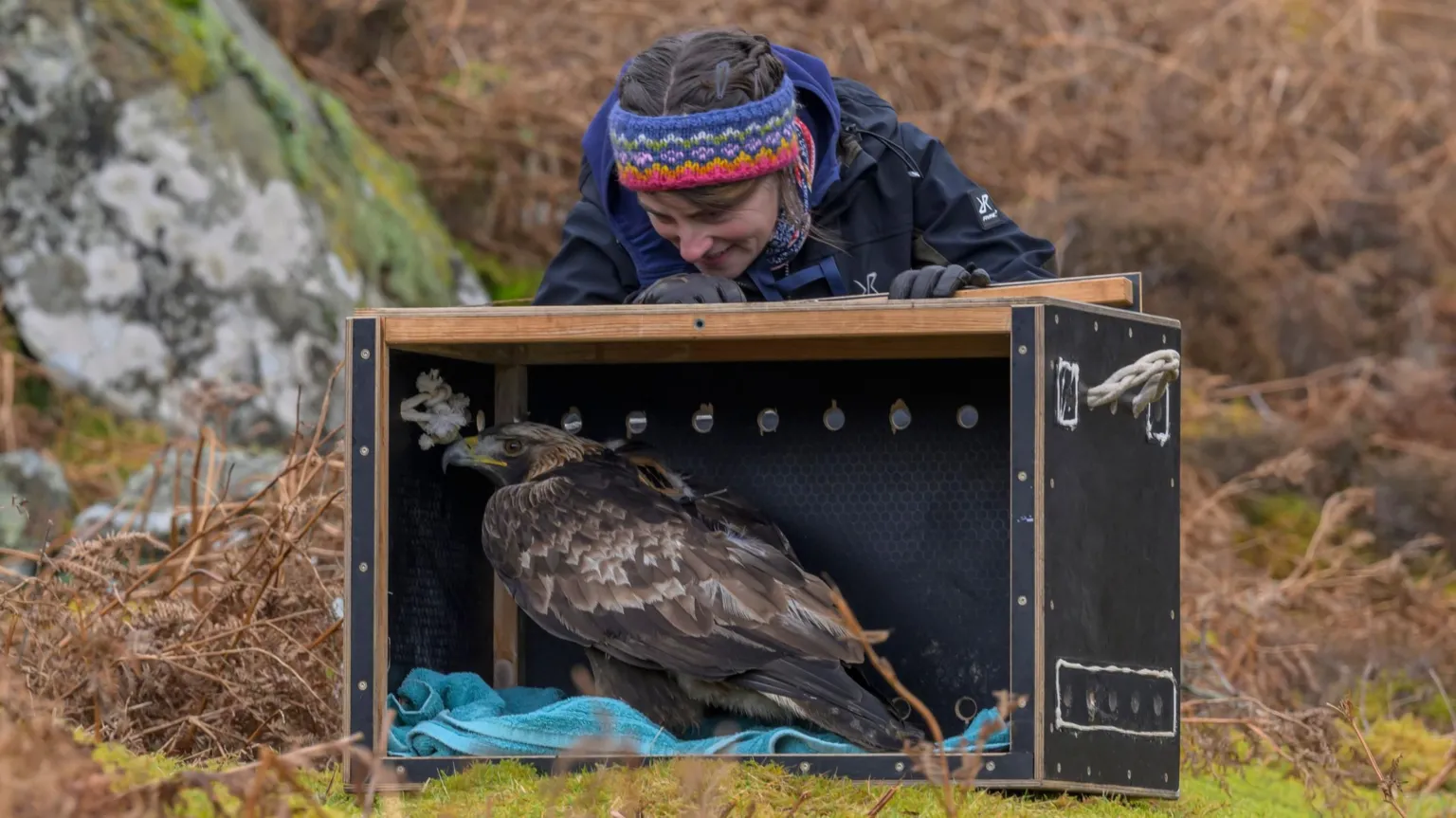
Over the past eight years, 28 golden eagle chicks from the Scottish Highlands and Orkney Isles have been relocated to the Scottish border, where they have successfully established populations.

Some of these birds have occasionally migrated temporarily into England. However, the study estimated that without additional support, natural expansion and settlement further south would take approximately 20 years.
Restoring Upland Nature (RUN), the charity behind the Scottish border re-establishment initiative, will lead the £1 million program in England over the next three years.
Initial steps include a public consultation with landowners and farmers, with the possibility of introducing chicks as early as next summer, according to Dr. Cat Barlow, CEO of RUN.
"It is really difficult to get people excited about peat restoration. But something like a golden eagle can get new audiences excited, and get them aware of how the whole ecosystem can work together," Dr. Barlow said.
Stakeholder Concerns and Engagement
Professor Davy McCracken, professor of agricultural ecology at Scotland's Rural College, expressed skepticism that an 18-month consultation period would be sufficient.
"You've got to remember that land managers and farmers who may be most concerned about being impacted, have very intensive periods of seasonal activity - times when they can't necessarily engage effectively in any consultation."
William Maughan, Chair of the National Farmers Union North Regional Board and a farmer, emphasized the importance of thorough and clear engagement with farmers for the project's success.
"Farmers cannot be expected to carry the cost, risk, and responsibility of poorly implemented reintroduction projects," he said.
Past Challenges and Differentiation from Other Apex Predators
The reintroduction of apex predators in the UK has previously faced resistance. For instance, following the reintroduction of the sea eagle, Scottish farmers reported abandoning hill farms due to significant lamb losses attributed to the birds. The National Farmers Union Cymru has also voiced concerns regarding golden eagles.
Ed Parr Ferris clarified that golden eagles differ in behavior from sea eagles.
"We do recognize they can take small lambs very occasionally as a part of their diet, but that's rare, and it's far more likely that they'll be taking carrion," he said.
The feasibility study estimated that golden eagles would account for between 0.15% and 3% of all lamb losses within their hunting range.
Building Trust and Changing Perceptions
Dr. Cat Barlow acknowledged the challenges in altering public perception but highlighted the progress made through the Scottish project.
"It started from quite a challenging start point. There has been a lack of trust between the shooting community, for example, and conservationists and raptor workers."
She noted that employing a retired gamekeeper helped foster collaboration, with shooting estates now assisting in building artificial nests.
Professor McCracken suggested that while farmers might find reassurance in the Scottish project's success, ongoing concerns are understandable, especially with discussions about reintroducing other carnivorous predators such as lynx.
"We have a tendency to look at things in isolation," he said. "One species on its own might not have a major impact. It's just being aware there may be cumulative effects [...] having two or three additional species reintroduced."
Ongoing Risks and Security Measures
The potential for conflict between wildlife and humans remains a concern. In February, one of the golden eagles relocated to the Scottish Borders, named Hamlet, was found with pellet wounds.
To protect the birds, the government has decided not to disclose the exact release location under consideration in Northumberland.


