

Dolphins Become Key to Strangford Lough's Ecosystem and Tourism
Since March 2023, two bottlenose dolphins named Squiggle and Squashy have established themselves as regular inhabitants of Strangford Lough in County Down. Their presence has been noted not only for its ecological significance but also as a draw for visitors to the area.
The dolphins are frequently observed following boats and entertaining visitors, especially in the waters between Strangford village and Portaferry.
Dr Nick Baker Horne, marine conservation manager at Ulster Wildlife, emphasized the importance of the dolphins to the local marine environment.
"We need predators like dolphins around to keep the balance in check of marine life,"
he stated, further noting the economic benefits their presence brings.
"A few groups are popping up now, a few businesses are taking advantage of the pull of the dolphins - eco-tours and stuff - so hopefully bringing some excitement and some money into the local area through eco-tourism."
The animals are known for their intelligence and curiosity.
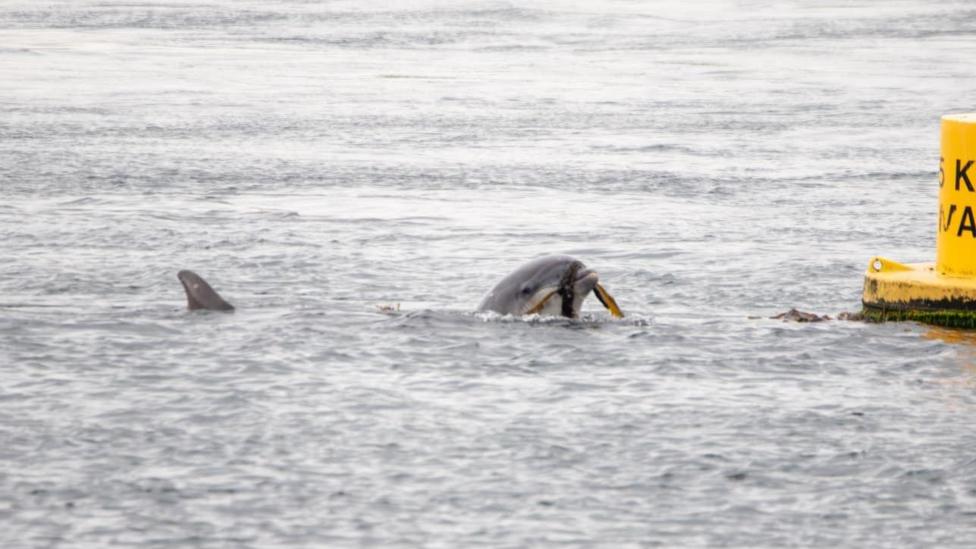
Dr Baker Horne attributed the dolphins' continued presence partly to the protected status of Strangford Lough.
"There's no mobile fishing gear, so no trawling happens in Strangford Lough,"
he explained.
"So it's a very protected area and that's really key to why animals like dolphins want to come in."
The dolphins' behavior of following boats demonstrates their intelligence.
"They seem to enjoy or make use of boats quite a lot - by swimming just ahead of a boat they're eventually taking the push of the boat in the water,"
he said.
"So they could be saving energy by moving around like that, but with small rowing boats they're likely being inquisitive - they're highly intelligent animals.
They're fantastic hunters, so they end up having free time for doing fun things."
The dolphins are often seen accompanying boats on the lough.
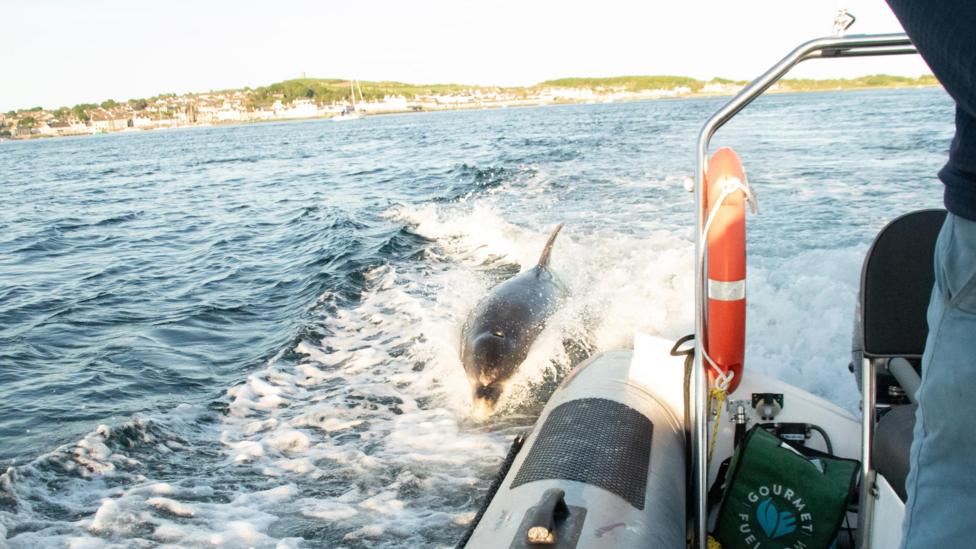
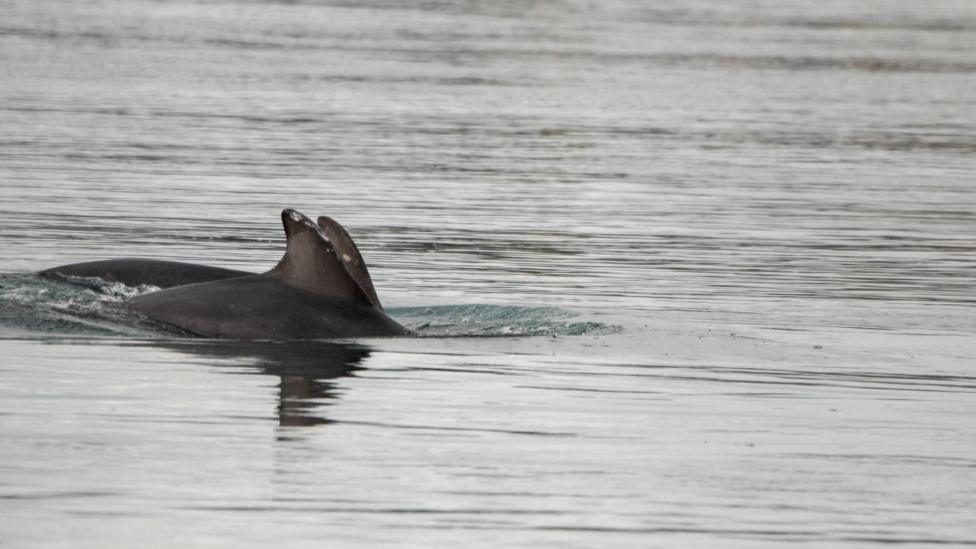
Squiggle originated from the Moray Firth on Scotland's east coast, where he was born in 2016. After joining a pod in the Firth of Clyde on Scotland's west coast, he eventually arrived in County Down.

Squashy's background is less clear, but he is believed to be younger than Squiggle.
"It's usual for young males to go in search of new horizons,"
Dr Baker Horne said.
"They will travel and look for new pods to join or spend that time away, because there's only a certain number of adult males that can hang around in the same pod."
'Charismatic Megafauna' and Responsible Viewing
Dr Gavin Grant, marine and coastal engagement officer for AONB and Geopark, remarked on the popularity of Squiggle and Squashy among visitors.
"They are what scientists call 'charismatic megafauna', basically large animals that are widely popular and mean many things to many people,"
he explained.
Dr Grant stressed the importance of respecting the dolphins' space.
"We would encourage everyone to keep their distance when possible, ideally over 100m away, and let any interactions be on the animals' terms, never chasing, feeding or touching them,"
he said.
"It is also not safe for people in the water with them, given their size {2.5-4m long} and the fact they are large marine predators."
While the dolphins have settled in Strangford Lough, they may leave to join other pods at any time.
Marine Wildlife Flourishing Amid Seasonal Changes
Dr Baker Horne noted that the current period is ideal for observing Northern Ireland's marine species.
"As the water warms up, the plankton - the base of the food chain - blooms and we get more food for the small fish and the small fish are food for the larger predators,"
he said.
"So you end up with basking sharks off Portrush, minke whales coming in to feed off Rathlin [Island] and I've seen minke whales just off of Groomsport feeding.
It's a really incredible time for marine wildlife and getting to see that sort of bloom of it."
Dr Baker Horne also discussed the potential future significance of Strangford Lough as a marine habitat.
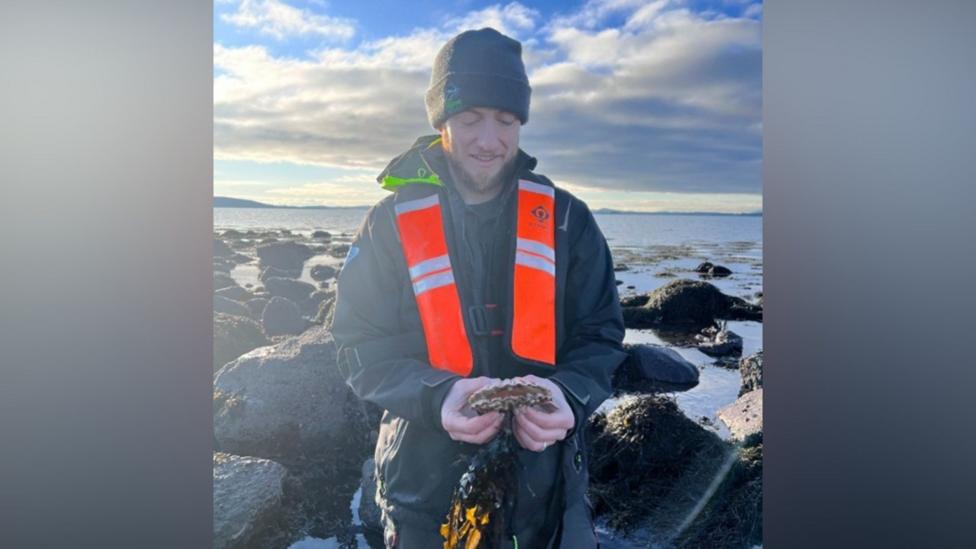
"Where there are changes in climate, that's not going to be a good thing,"
he said.
"Warmer waters is not going to be a nice thing longer-term for us, but the good news is that Strangford Lough being a protected area, it's also a good spot for protection against climate change.
So hopefully places like Strangford Lough will become a good refuge for marine life from those future kind of issues."


