

Addressing Flooding Challenges at St John’s School
St John’s Church of England primary school in Barnet, north London, faced severe flooding issues in its playground, rendering the area frequently unusable for outdoor play. The school’s head teacher, Maccie Dobbie, explained the severity of the problem:
“It would get so bad that the children couldn’t be dismissed from the playground. We had to dismiss them from different parts of the school or, literally, parents were stepping into puddles to lift their children out of the classroom.”
Situated in a basin with clay foundations, the school’s grey tarmac playground would accumulate rainwater that remained stagnant, often preventing children from enjoying proper outdoor breaks.
Initiating a Climate Action Plan
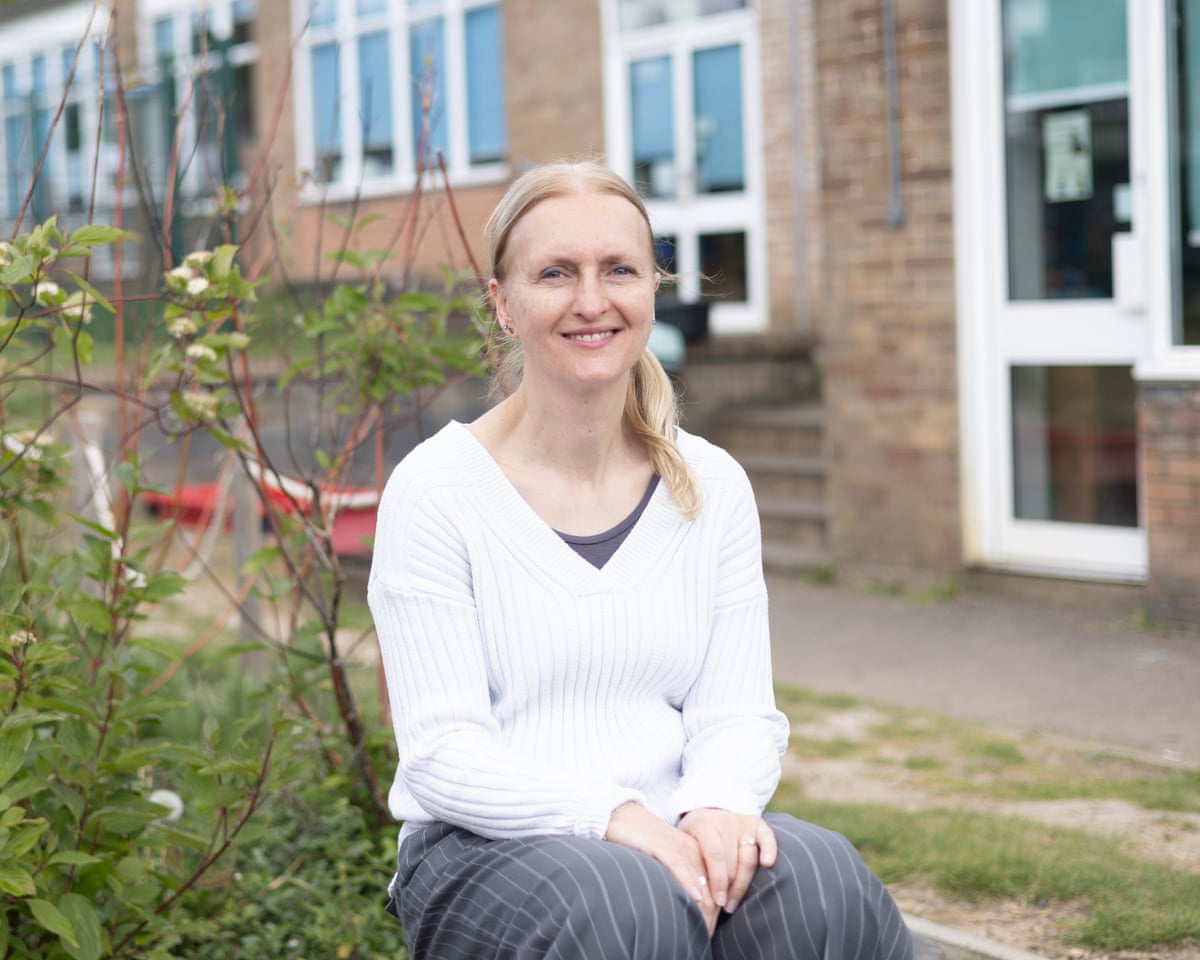
The situation began to improve when Sarah Taggart, a parent governor, led the development of St John’s climate action plan. Recognizing the school’s location in a high flood-risk area, Taggart secured funding from the Department for Education for a comprehensive project that involved removing some of the tarmac.
“This school is in a high flood-risk area, so we were able to get [Department for Education] funding for a bigger project and take up some of the tarmac,”
Taggart collaborated with Trees for Cities, a charity dedicated to creating green urban spaces that help playgrounds adapt to the climate crisis.
Designing a Functional and Engaging Playground
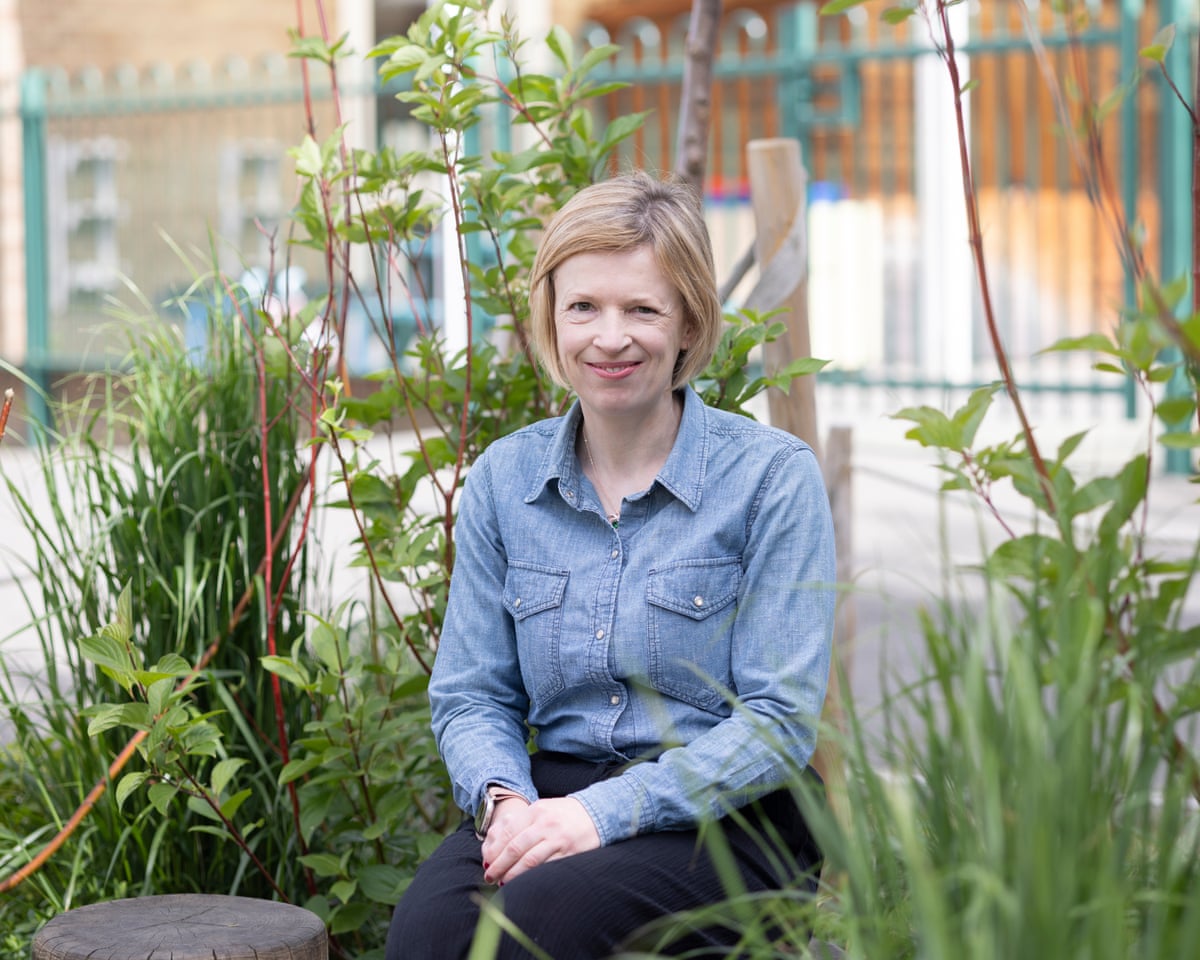
Alfie Davies, a landscape architect at Trees for Cities who led the design and consultation process at St John’s, emphasized the importance of functionality in the redesign.
“You’re taking space away from the kids, but kids are kids, it’s got to be functional. They have to be able to use it or otherwise they won’t be interested or won’t want to look after it.”
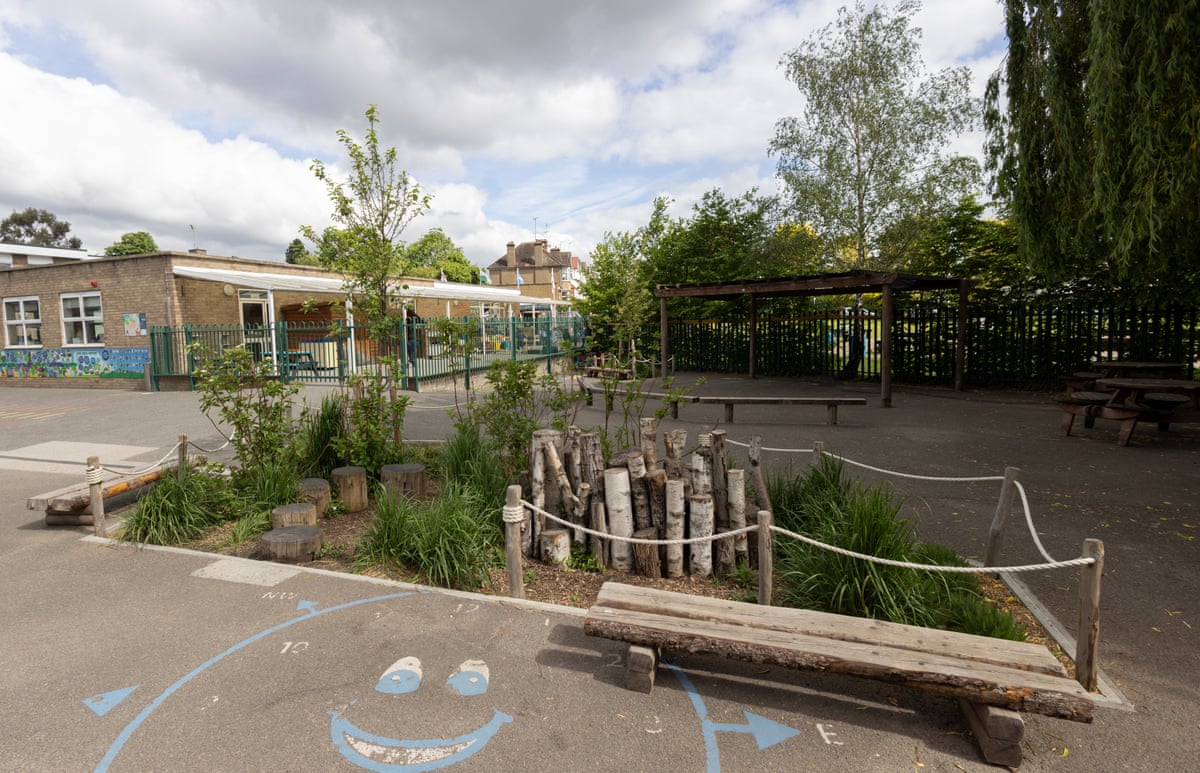
To maintain playability, Davies installed stepping logs that traverse new rain gardens. These gardens feature soil beds planted with ornamental grasses, shrubs, and perennial flowers, serving as sustainable drainage systems that manage excess water.
“It’s transformed our area outside,”said Dobbie.
“There is still some excess water when it rains heavily, but it clears up in 10 minutes.”
Climate Adaptation and Biodiversity
The project was designed to respond not only to the site’s topography but also to the broader challenges posed by climate change. Davies highlighted the ecological considerations incorporated into the design:
“We put a bird cherry tree in the rain garden beds, a native species, really great for pollinators. They naturally tolerate the boggy ground but are quite drought resistant too.”
Davies also noted that addressing urban heat island effects, which intensify summer heatwaves, is a critical aspect of their work.
In 2024, the United Nations published a report on extreme heat that emphasized the need to protect children from heat stress. Similarly, Paris has implemented its "Cool Cities" initiative, which integrates structures such as canopies and pergolas into play areas to provide essential shade for children, whose bodies regulate heat differently than adults. In 2020, the Standards Council of Canada released guidelines urging planners to prioritize climate-responsive design.
Educational Engagement with Nature
Trees for Cities considers educating children about nature a fundamental strategy for addressing environmental challenges. They conduct a year-long engagement program with schools after playground renovations, offering workshops that connect science lessons to the new plant life in the outdoor space.
“They [the children] will look at everything from the water cycle, how it supports the plants and infiltration of the soil itself to the actual implementation of why we’ve done things on these sites,”explained Grace Walker, a senior landscape architect at Trees for Cities.
At St John’s, students have participated in watering the rain gardens during warmer months and have gone on tree identification walks in nearby parks.
“Engaging the kids is probably the most valuable thing we do,”said Davies.
“The kids love it. They want to be outside, looking at plants. They might be a bit weirded out looking at worms, at first, but they love it.”
Community Impact and Student Perspectives
For Taggart, whose four children attended St John’s, the project’s lasting impact has been particularly meaningful.
“The year 5s have been doing a project about pollinators and bees this term and it’s great because they can see it happening in their playground,”she said, noting the children’s enthusiasm for the increased greenery and their enjoyment of exploring the new plants.
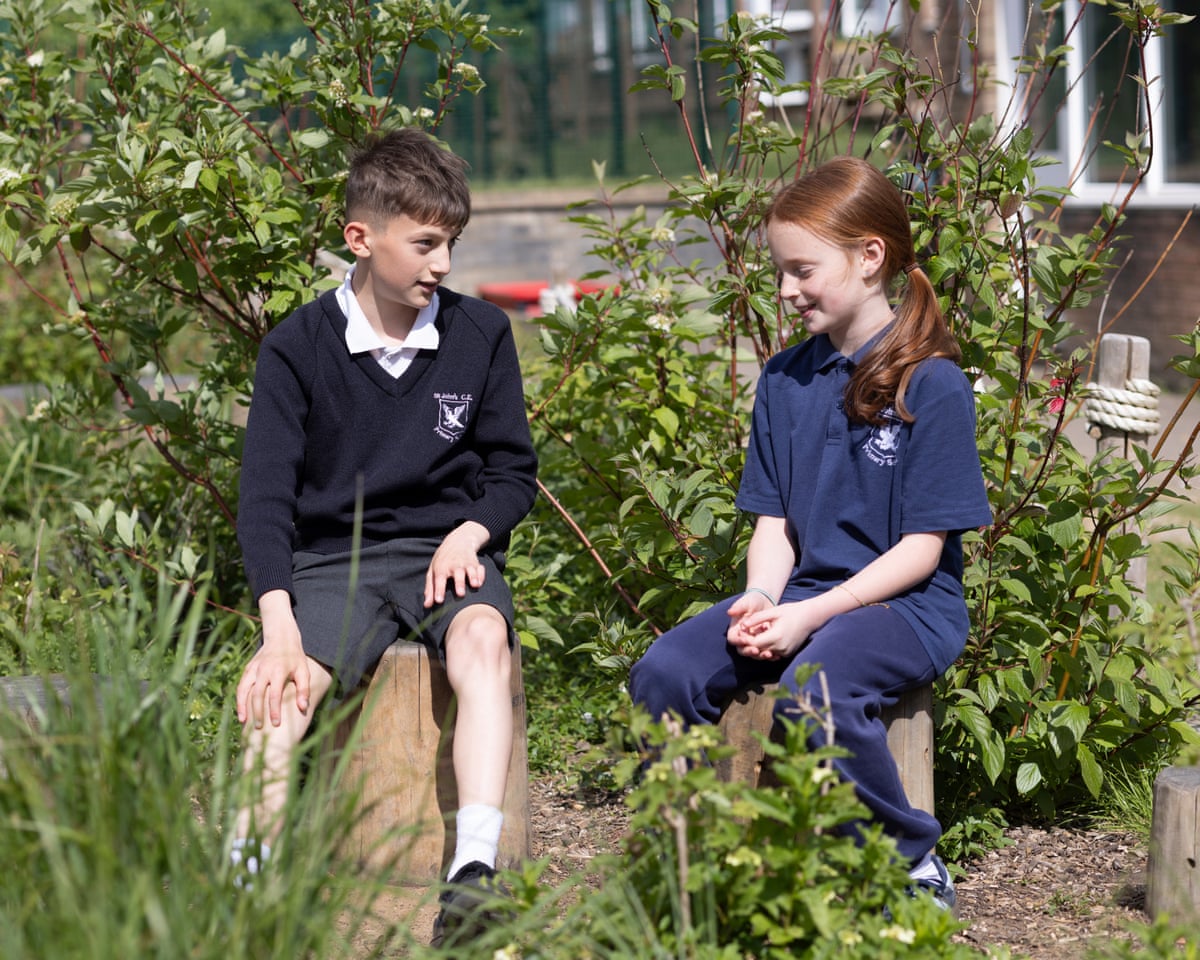
Students have expressed positive feelings about the transformed environment. Ronnie, a pupil at St John’s, remarked:
“It’s put the joy levels up of the school. It’s prettier and calmer; the nature environment, that’s what you feel around it.”
Juliet, another student, reflected on the difference the rain gardens have made to their playtime and learning:
“We used to have wet breaks where we had to sit inside the classroom and just draw, but now because of the rain gardens, you get to have more play. It affected our learning as well because when you’re stuck inside, your brain gets all wrong, but when you go outside it makes you feel better.”


