Colombia Hosts Crucial Global Conference on Fossil Fuel Transition
On Colombia’s Caribbean coast, the grey sandy beaches of Santa Marta reveal the country’s active fossil fuel export industry. Oil tankers are anchored offshore, and locals report that lumps of coal occasionally wash ashore, dislodged from colliers transporting cargo from nearby mines.
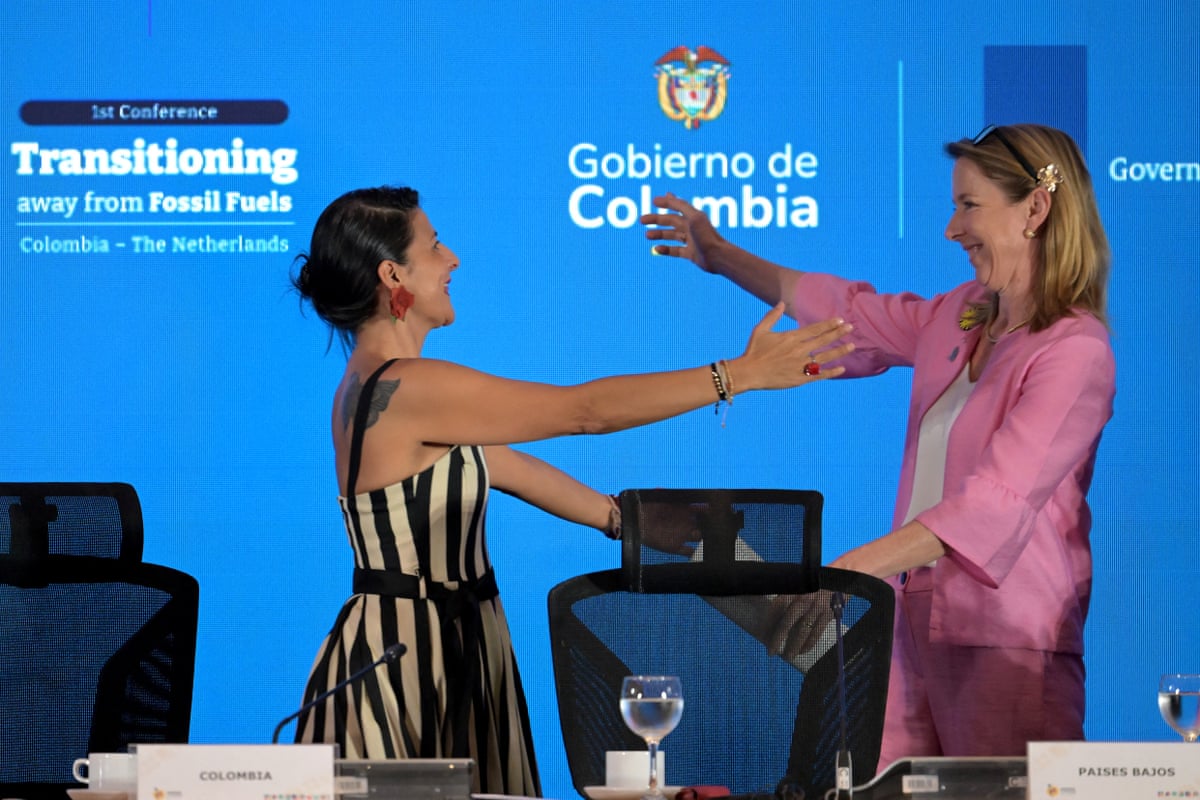
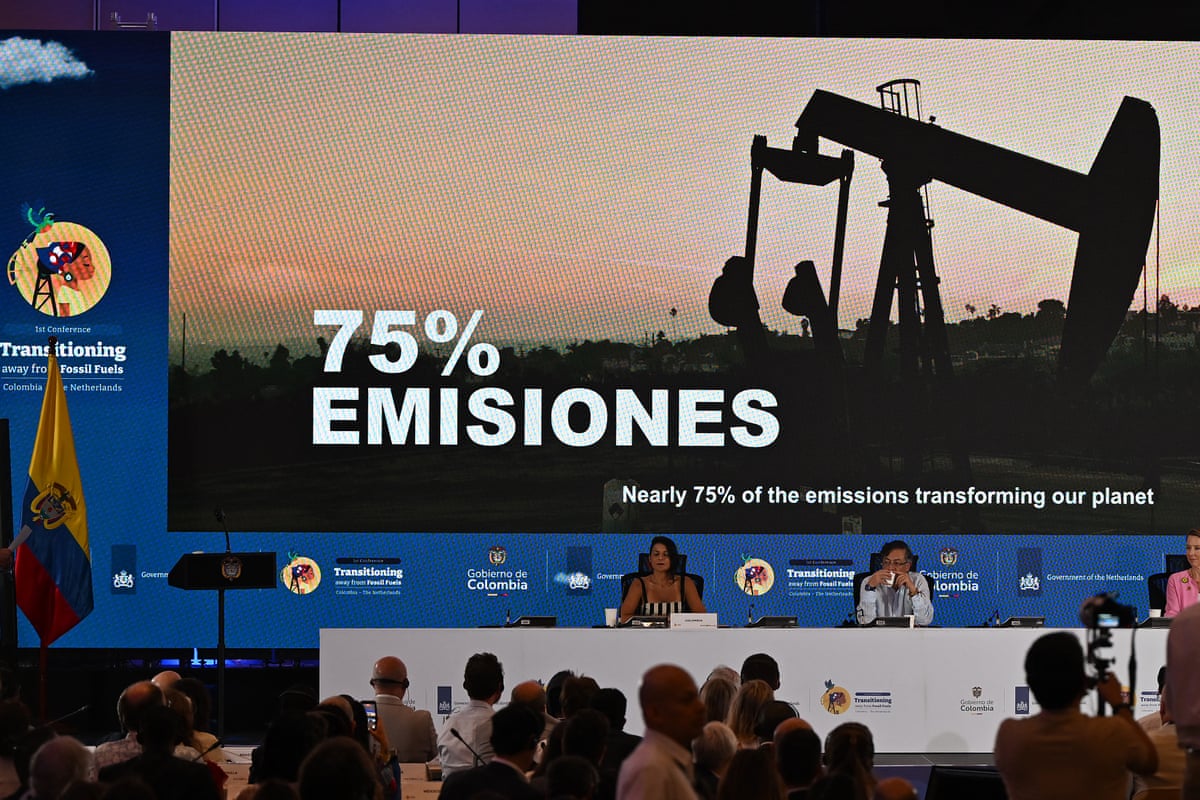
It was in this setting, on Wednesday evening, that the Colombian government initiated a significant move to transition its economy—and encourage the world’s economies—to reduce reliance on coal, gas, and oil, embracing a new era of clean energy. Hosting the first-ever conference dedicated to “transitioning away from fossil fuels,” Colombia joined nearly 60 nations committed to diminishing the influence of petrostates on the global future.
“This is the beginning of a new global climate democracy,”said Irene Vélez Torres, Colombia’s environment minister and chair of the talks, during her closing remarks. She highlighted a
“new method”that unites high-ambition governments, parliamentarians, and civil society groups to accelerate decarbonisation efforts.
A Pivotal Moment Amid Rising Energy and Food Costs
The initiative arrives at a critical juncture in the climate struggle. Since the US-Israel attacks on Iran, oil and gas prices have surged, marking the second such crisis in five years following the price spikes after Russia’s invasion of Ukraine. Globally, households are feeling the strain, farmers are impacted, and governments are increasingly aware that dependence on volatile fossil fuels subjects them to uncontrollable geopolitical forces.
The global economy currently faces a triple challenge: escalating energy costs, rising food prices, and the threat of rampant inflation, which in turn raises interest rates and increases debt servicing costs. While both wealthy and poor nations are affected, the poorest bear the heaviest burdens.
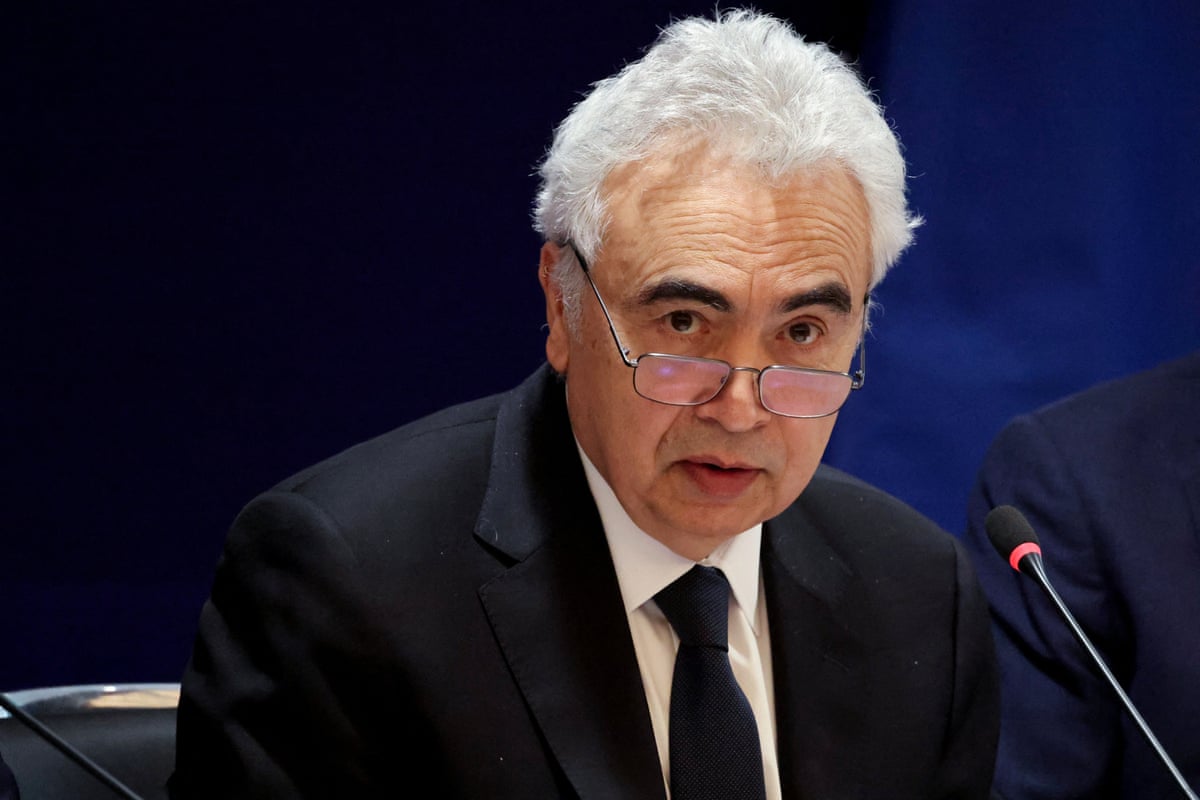
Fatih Birol, the chief economist of the International Energy Agency (IEA) and a leading voice in energy research, compared the current crisis to past oil shocks. He stated that this crisis surpasses the oil shocks of the 1970s in scale and impact.
“This is bigger than all the biggest crises combined, and therefore huge,”Birol remarked.
“I still cannot understand that the world was so blind-sided, that the global economy can be [so vulnerable].”
Renewables as a Viable Alternative to Fossil Fuels
Unlike previous oil shocks, today there is a readily available alternative: affordable, reliable, and abundant renewable energy from wind and solar sources, complemented by modern battery technology to manage intermittency. Electric vehicles and heat pumps facilitate the shift of transport and heating away from fossil fuels towards more efficient electricity.
Birol predicts that this crisis will permanently alter the global energy industry, causing consumer countries to lose trust in fossil fuels.
“Their perception of risk and reliability will change,”he said.
“Governments will review their energy strategies. There will be a significant boost to renewables and nuclear power and a further shift towards a more electrified future. And this will cut into the main markets for oil.”
He added that these changes will have lasting effects.
“The vase is broken, the damage is done – it will be very difficult to put the pieces back together. This will have permanent consequences for the global energy market for years to come.”
UN Climate Chief Highlights Fossil Fuel Industry’s Role in Renewables Boom
Simon Stiell, the United Nations climate chief, noted the irony that the dominance of the oil industry in global economies has finally awakened governments to the risks involved.
“The fossil fuel cost crisis now has its foot on the throat of the global economy,”he said.
“Those who have fought to keep the world hooked on fossil fuels are inadvertently supercharging the global renewables boom.”
Renewables accounted for 33.8% of global electricity generation last year, surpassing coal’s 33% for the first time, according to the thinktank Ember. Consumer interest in solar panels and batteries has surged worldwide since the Iran conflict began.
“The economic logic of renewables [is] impossible to ignore,”Stiell stated. Military advisers have also emphasized that renewables provide a superior path to national security compared to fossil fuels. Stiell observed:
“Governments are pushing renewables plans into overdrive: to restore national security, economic stability, competitiveness, policy autonomy and basic sovereignty.”

Challenges from Petrostates and Political Influences
Despite the momentum, petrostates remain influential. The United States, the world’s largest gas producer, is increasingly asserting military power to advance policies set during the Trump administration aimed at energy dominance. Russia, the second-largest gas supplier, continues its war against Ukraine. Fossil fuel interests also financially support far-right political candidates in the Americas and Europe.
The Santa Marta vision of a “new global climate democracy” seeks to empower people against these entrenched forces. Polls consistently show that a majority of people worldwide desire stronger governmental action on climate change, yet their voices are often overshadowed by corporate lobbying or blocked by petrostate vetoes at international forums.
In contrast, Santa Marta’s opening day featured a “people’s summit” and parliamentary gatherings, with representatives participating in high-level sessions during the final two days. These sessions were characterized by constructive dialogue without vetoes or contentious negotiations over minor details, focusing instead on accelerating the fossil fuel phaseout. Many participants described the event as historic, though few expected it to be more than a strong beginning.


Perspectives on the Santa Marta Process and Industry Resistance
Claudio Angelo of Brazil’s Observatorio do Clima thinktank commented on the conference’s implications:
“I don’t think the Santa Marta process represents any immediate threat to the fossil fuel industry. This is more about countries organising to draw up a plan. Even within the ‘doers’, the fossil industry landscape is diverse: national oil companies in Latin America, private oil majors in Europe and parts of Africa. These folks will fight for lenient transition calendars until they’re either outcompeted by Chinese electricity or forced by governments to diversify.”
Although transitioning to renewables will be more cost-effective in the long term, upfront investments are necessary. Fossil fuel producing nations will require financial support to develop new industries that can replace lost revenues from oil, gas, and coal exports.
Financing the Transition and Political Risks
The Santa Marta conference was not designed to secure new financial commitments. Rich countries have pledged $300 billion annually by 2035 at the upcoming COP29 conference in 2029, but no improvements are expected now that the United States has withdrawn its funding.
Alternative financing options exist, such as reallocating portions of the $1.5 trillion currently spent each year on fossil fuel subsidies globally. Additionally, mechanisms like windfall taxes on companies that have profited excessively from the climate crisis remain viable. David Hillman, director of the Make Polluters Pay coalition, stated:
“Fossil fuel giants are figuratively swimming in money. Their excessive unearned profits need to fund the transition to renewables to hasten the end of our fossil fuel dependence.”
Almost all 59 nations participating in Santa Marta are democracies, which presents both strengths and vulnerabilities. Colombia itself faces a presidential election at the end of May, where the ruling party’s candidate, Iván Cepeda, confronts a strong challenge from far-right populist Abelardo de la Espriella, who advocates for increased fracking and oil production. A victory for de la Espriella could undermine Colombia’s role as a key player in the global energy transition.
Other countries also face challenges. The Netherlands, co-host of Santa Marta, announced new drilling plans in the North Sea shortly before the conference. The United Kingdom is considering similar expansions, and nations such as Brazil and Tanzania have fossil fuel development plans. These policies will need reversal to realize the envisioned “new global climate democracy.”
Next Steps and the Role of National Roadmaps
The next conference, scheduled for early next year on the Pacific island of Tuvalu, co-hosted with Ireland, aims to advance the development of national roadmaps for phasing out fossil fuels. Organizers intend for these plans to integrate with broader UN climate negotiations and encourage additional countries to join the transition movement.
Roadmaps serve as tools to attract investment and provide guidance to industries, ensuring the transition to a low-carbon economy is equitable for workers and vulnerable populations. Mary Robinson, former president of Ireland, emphasized:
“We need three transitions: out of fossil fuels, into renewable energy for all, and into a world that cares for nature. All must be grounded in justice.”

Santa Marta: Potential Ground Zero for Fossil Fuel Phaseout
Santa Marta, historically a coal-fueled town in a country reliant on coal and oil, may eventually be recognized as the starting point for the global decline of fossil fuels. Fernanda Carvalho, head of policy for climate and energy at WWF International, remarked:
“It is here that the seeds of a new, implementation-focused initiative have been planted.
In times of an exhaustion of multilateral processes and a gap in delivering the system change we need, what is emerging offers a different approach. This could be a real bottom-up process that centres the voices of communities most affected by fossil fuel extraction and consumption.”
Despite the cautious optimism expressed by many participants, the path ahead remains challenging.