

A Vision for Planetary Survival
Humanity can improve living standards, reduce inequality, and limit global warming to under 2°C, according to a comprehensive new report by the World Inequality Lab (WIL). The report offers an extensive strategy to address the interconnected crises of climate change, political extremism, and economic tensions threatening global stability.
The report proposes ambitious policies such as significant wealth taxes on billionaires, substantial reductions in working hours, dietary shifts, and reallocating investments from resource-intensive sectors like industry and mining toward education and healthcare.
Implementing these measures could result in 89% of the global population doubling their incomes by 2100 while keeping global temperature rise below 2°C above preindustrial levels.
Challenging Prevailing Narratives
The authors present their vision as a constructive alternative to pessimistic forecasts from far-right techno-extractivists, nationalists, and wealthy elites who predict continued fossil fuel reliance, climate disruption, and widening inequality.
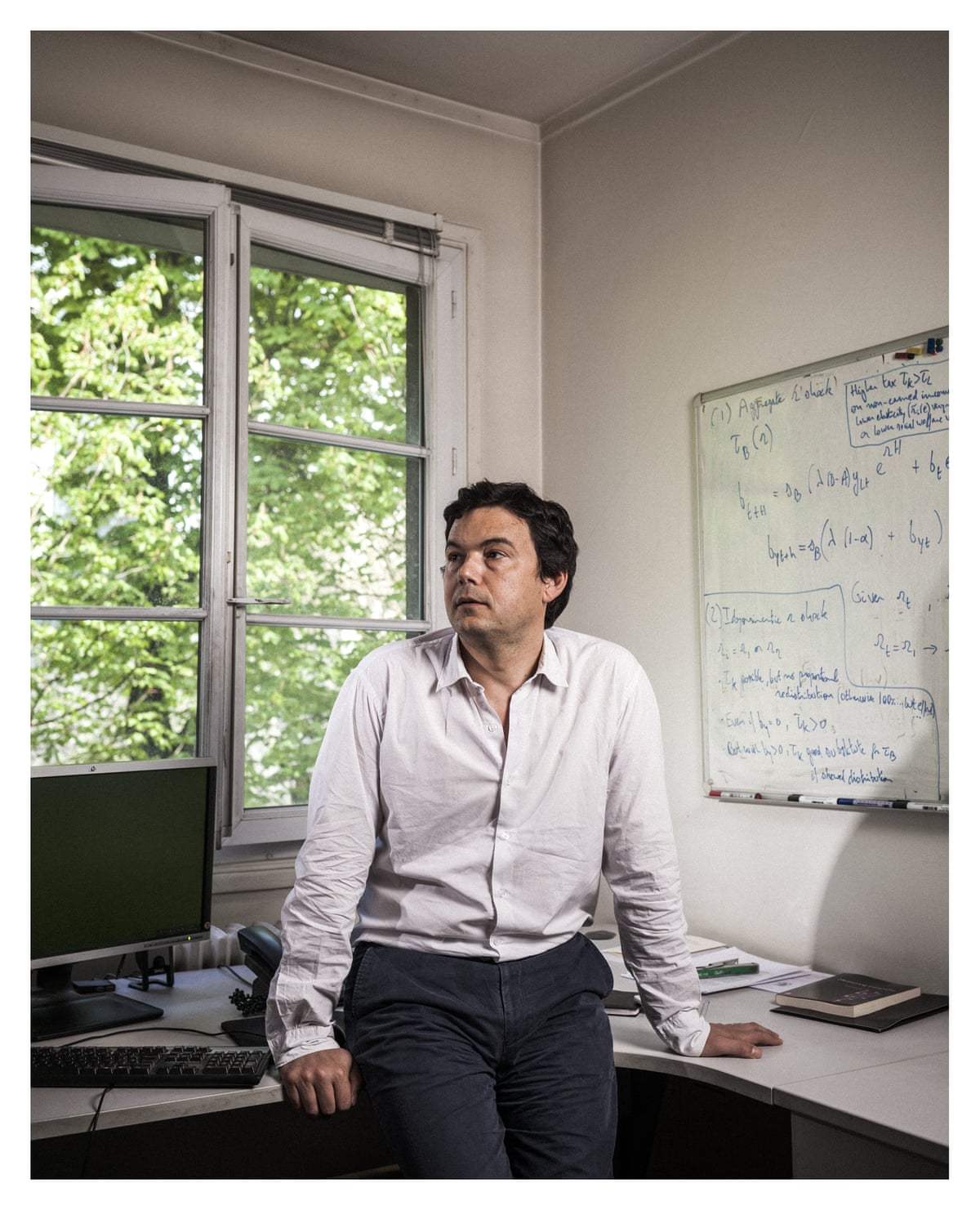
“There’s a huge cultural, intellectual, political battle that is going on. And we all have a role to play,” said Thomas Piketty, co-director of the WIL and professor at the Paris School of Economics.
“The ideology, which we see with Trump and all the little Trumps that we have all across Europe and all across the world is simply not going to deliver. At the end of the day we’ll have to come to this kind of cooperative redistribution of resources and power because the alternative will simply lead to disastrous outcomes both on the environment, on the climate, but also on social grounds.”
Addressing the Polycrisis with a Holistic Approach
Published on Thursday, the report seeks to overcome limitations of mainstream climate strategies, including the materialistic focus of traditional leftist parties, the uncertain effectiveness of economic degrowth advocated by many environmentalists, and the lack of social impact assessments in United Nations frameworks.
It integrates inequality research, climate science, and political coalition-building proposals aimed at reforming the global financial system.
This "plan for equality and prosperity within planetary boundaries" was developed by 45 authors utilizing data compiled by over 200 researchers worldwide.
The Principle of Sufficiency
Central to the report is the concept of sufficiency—the idea that people can lead prosperous, healthy lives without relentless consumption or accumulation of material goods that harm the environment.
To realize this, the authors propose three main steps: reducing average working hours from 2,100 to 1,000 annually (roughly a two-and-a-half-day workweek); encouraging reduced red meat consumption, a major driver of deforestation and ecological damage; and shifting economic focus toward low-consumption sectors by more than doubling education spending to €8,400 per person and healthcare spending to €14,400.
“One extra euro of GDP in education and health has three to four times less material footprint and energy consumption than one extra euro of GDP in the manufacturing sector. So that’s why the sectoral shifts are hugely important,” Piketty explained.
Reducing Inequality and Promoting Prosperity
Reducing inequality is a core objective. The plan projects an average per capita gross national income of €5,000 per month globally by 2100, with most gains concentrated in the global south. The wealthiest individuals would face high taxation due to their disproportionate responsibility for the climate crisis.

The share of global wealth held by billionaires—who constitute only 0.001% of the population—would decrease from 6% to 0.05%, while the bottom 50% would see their wealth share rise from 2% to 30%.
Climate Risk Mitigation
The report emphasizes minimizing climate risks by drastically cutting emissions. It models three mid-century decarbonization scenarios from the International Energy Agency, projecting them to 2100. The most ambitious scenario involves redirecting capital from the wealthiest individuals into renewable energy technologies such as wind and solar to achieve full decarbonization and electrification by 2050.
Additional emissions reductions would result from shorter working hours, dietary changes, and economic shifts.
This approach is expected to limit global temperature increases to 1.8°C by century’s end, significantly lower than the 4°C to 4.5°C rise predicted under slow decarbonization and high material demand scenarios, and better than the 1.9°C projected under broad economic degrowth.

Implementing the Vision
Key practical steps include establishing a global justice fund to finance the energy transition and increase education and healthcare spending to 38% of world GDP, up from 13% currently. This effort would be supported by a world sovereign fund aimed at rebalancing global public and private wealth to levels last seen in 1970.
“A habitable, equal 21st century is materially possible,” the report concludes. “What stands in the way is not technical impossibility but political choice and the hard but crucial work of building a coalition behind it.”
Cornelia Mohren, co-author and environmental coordinator at WIL, acknowledged the report’s visionary and potentially utopian nature but emphasized its importance in demonstrating alternative paths.
“It is good to know we can combine an equal world with staying within carbon budgets,” she said. “That is a very helpful result. It makes me feel hopeful. We saw what’s possible and we also see how hard it is with this political reality, which can be depressing.”
Historical Context and Political Challenges
Piketty noted that recent history supports the report’s feasibility. Countries like Sweden and Norway, once highly unequal, have reduced disparities through government policies and investment shifts toward education and health. Additionally, European working hours have halved since the 19th century, aligning with the report’s targets.
He stressed the importance of addressing inequality and planetary habitability simultaneously, warning that ignoring this dual focus risks repeating mistakes like those that sparked France’s yellow vest protests against a carbon tax disproportionately affecting working and middle classes.
“If you don’t put this at the centre of your analysis and if you talk about green policies, environment, in the abstract, this is simply not going to work,” Piketty added.
Upcoming Presentation and Expert Opinions
The report will be unveiled and discussed at the World Inequality Conference from 4-6 June in Paris, featuring speakers such as Ha-Joon Chang, Jean Drèze, Jayati Ghosh, Mariana Mazzucato, Branko Milanović, Lea Ypi, and Gabriel Zucman.
Jason Hickel, professor at the Autonomous University of Barcelona and visiting senior fellow at the London School of Economics, commented:
“It’s an important and timely intervention. All of this is technically feasible to achieve – we can have good lives for all within planetary boundaries – but it will require organised political struggle to make it happen.”


