

Liberty’s Unique Approach to Retail
On a damp Thursday in central London, shoppers have sought refuge from the rain by exploring a Bridgerton-themed experience at the prestigious department store Liberty, which has dedicated its fourth floor to the popular period drama.
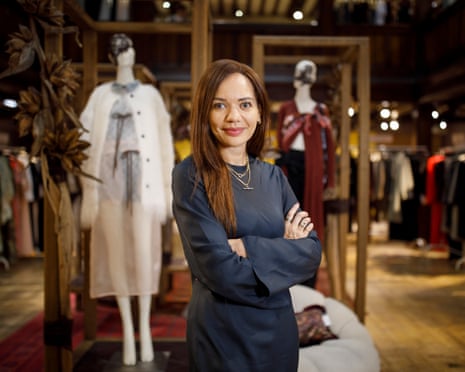
“When customers come to Liberty they want the discovery of new brands or something a bit different,”says Lydia King, Liberty’s new retail managing director.
King, who assumed her role last month, recently returned from New York where she was negotiating with potential new labels ahead of the main fashion week shows.
“Liberty is catering for a ‘design focused’ shopper who comes with ‘the mindset that they might find something wonderful rather than looking for a logo-ed product. Not being able to find it elsewhere – that point of difference – is the most important thing.”
“This is even more so the case during a cost of living crisis, when every purchase is considered and when a shopper ‘buys something, it has to be amazing’.”
Bridgerton Collection and Maximalist Trend
The Bridgerton collection is presented against a backdrop of wood panelling, a four-poster bed, and what resembles the desk of Penelope, a main character played by Nicola Coughlan. This coincides with the fourth season of the Netflix hit. The range includes Regency-inspired prints on scarves, dresses, and duvet covers.
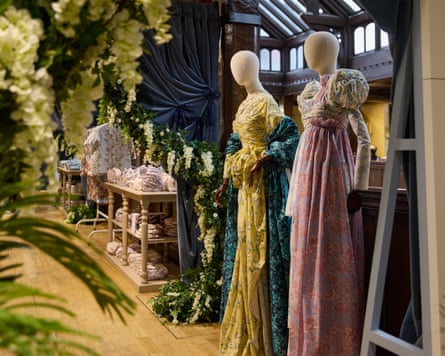
This collection aligns with the maximalist trend for richly coloured and patterned décor, which Liberty credits with driving a 10% increase in sales at its retail division last year, reaching approximately £142 million, alongside a double-digit rise in profits. Sales of jewellery and clothing also increased.
This growth contrasts with the challenges faced by rival luxury department stores such as Selfridges, Harvey Nichols, and Harrods, which have reported difficulties.
Challenges in the Department Store Sector
Across the UK, numerous department stores have closed in recent years, including the entire Debenhams and Beales chains, due to intense competition from online retailers and brands selling directly to consumers.
In the 2000s, Liberty itself struggled for survival. It was publicly listed but suffered losses and sold property, including its flagship store, to raise funds.
In 2010, Liberty was acquired by a private equity group for £32 million, with Italian financier Marco Capello leading a restructuring that stabilized the company.
The Covid-19 pandemic disrupted plans for a stock market float, but BlueGem sold its controlling stake to private equity group Glendower in 2019 in a deal that was not disclosed.
Liberty’s Strategy and Growth
King attributes Liberty’s recent success to its range of own-label products, including fabrics, fragrances, and clothing, as well as a loyal local customer base that visits regularly seeking creative and exclusive items.

“Our business is more robust than others,”King states.
“Over the last six years the business has grown enormously and locals are the biggest part of that.”
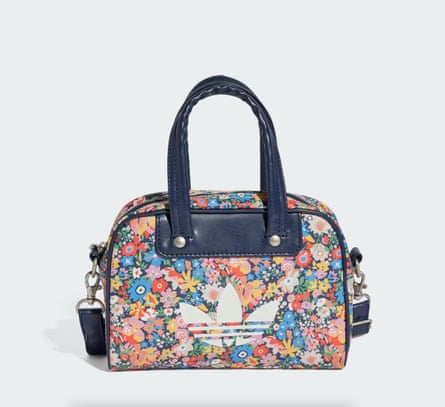
The company has secured exclusive brands such as Peachy Den in fashion and broadened its appeal through partnerships with diverse brands including Adidas, which developed a range of sports shoes featuring Liberty prints, alongside the Bridgerton collection. Designs are collaboratively developed between Liberty’s in-house design team and partner brands near its London store.
King notes that Liberty’s sales have remained stable despite changes to VAT tax breaks for tourists implemented after Brexit and challenging conditions on nearby Oxford Street.
A significant increase in online sales, particularly in jewellery, fashion, fragrance, and fabrics, has contributed to overall growth.
King acknowledges that Liberty has benefited from the current popularity of richly patterned fabrics, with florals prominent on recent catwalks and a resurgence of opulent styles.
Heritage and Store Layout
The Tudor revival building, which opened at its current location in 1924 after the brand was founded by Arthur Lasenby Liberty in 1875 with a £2,000 loan from his future father-in-law, has evolved into an international brand selling fabrics, perfume, and leather goods worldwide.
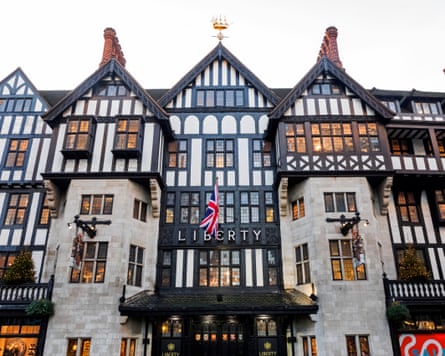
King explains that the store’s distinctive design, featuring a grand atrium spanning several floors constructed from timbers of two 19th-century Royal Navy vessels – HMS Impregnable and HMS Hindostan – results in many areas resembling corridors.
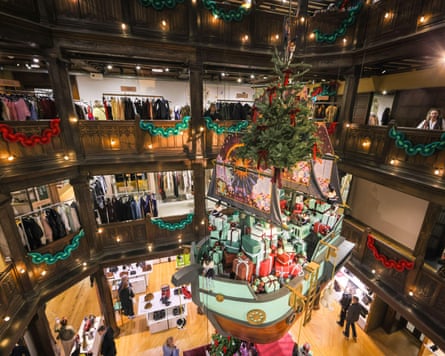
In this constrained space,
“every brand and every product has to count,”she says. The listed building’s limitations prevent it from adding numerous bars and cafés like some competitors to attract visitors.
Exclusive collaborations with brands such as Jellycats’ Bartholomew Bear and Topshop, which chose Liberty for its high street return last year, have generated queues of enthusiastic customers.
These brands appeal to younger shoppers who often visit to purchase beauty products from nearby Carnaby Street, which hosts sought-after brands including Charlotte Tilbury and Brandy Melville.
Maintaining Traditional Departments and Future Plans
Liberty has retained departments many rivals have eliminated, notably haberdashery, which, along with its fabrics, attracts the UK’s growing community of crafters influenced by social media.
This year, Liberty plans to expand its jewellery department and enhance its own-label offerings, which now include the rapidly growing LBTY fragrance, silk dresses, wallpaper, and cushions, alongside scarves and fabrics. The in-store department for fabrics is expanding with new designs introduced more frequently, including collaborations with artists such as Grayson Perry.
“We feel optimistic. We’ve got a lot in the pipeline,”King says.
“We are just guarding Liberty for the next generation.”


