Bad Bunny’s Surprise Concert and Cultural Impact
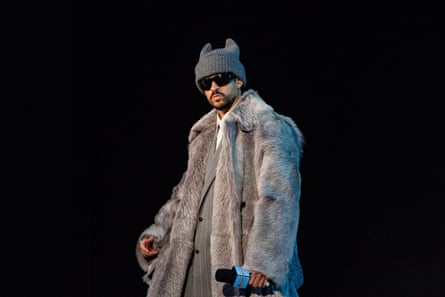
A few days after Christmas 2022, the Puerto Rican reggaeton star Bad Bunny appeared unexpectedly at a Gulf Oil gas station in San Juan. Performing to a large crowd that sang along, he delivered a surprise concert with friend and collaborator Arcángel. The event combined hype, a celebratory homecoming after his tour, and a pointed social critique. He closed the set with "El Apagón" ("The Power Outage"), a club-inspired track addressing local displacement and the ongoing energy crisis that has afflicted Puerto Rico, a US "commonwealth" (effectively a colony), since Hurricane Maria in 2017.
Bad Bunny performed from a rooftop on Calle Loíza in Santurce, a street in a formerly working-class Black neighborhood now dotted with Airbnbs. However, the energy of the show transcends the location. Despite never having visited Calle Loíza or speaking Spanish, the gas station concert remains a favorite to rewatch online for its electric, organic, and genuinely popular atmosphere. In terms of reach, critical acclaim, and longevity, Bad Bunny rivals artists such as Taylor Swift, Kendrick Lamar, Beyoncé, and Drake, though it is rare to see those peers as unguarded and public as he was on that rooftop.
Global Stardom and Breaking Barriers
This unique blend of charisma, identity, and compelling beats has elevated Bad Bunny, born Benito Antonio Martínez Ocasio, to global superstardom, breaking language barriers in the continental US to an unprecedented degree. His genre-defying music, entirely in Caribbean Spanish, resonates from New York street corners to suburban kitchens across the US. His rise has been marked by a series of increasingly large stages: a record-setting US arena tour in 2022 including multiple shows at Yankee Stadium; headlining Coachella in 2023, where he opened atop a replica of the Gulf gas station; winning the Latin Grammy just last week for his album Debí Tirar Más Fotos ("I Should Have Taken More Photos"); and now preparing to perform at the biggest stage of his career—the Super Bowl halftime show.
Significance of a Spanish-Language Artist at the Super Bowl
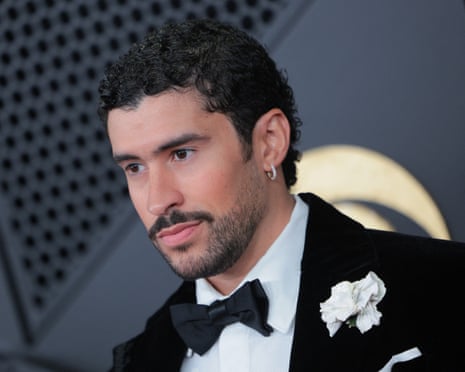
The presence of a Spanish-language artist at one of the few remaining monocultural venues in the polarized US feels both inevitable and improbable. It is inevitable because Bad Bunny has been the most streamed artist globally for four of the past five years and commands broad appeal in the US, home to approximately 55 million Spanish speakers—the second-largest Spanish-speaking population worldwide after Mexico. Perry Johnson, a cultural historian studying the Super Bowl halftime show, noted,
"From the business standpoint, it almost wouldn’t make sense for it to be anyone other than Bad Bunny, especially in a moment when the NFL is trying to reach both global audiences and younger audiences."
However, it is also improbable given the current political climate, where the US administration has aggressively demonized Hispanic immigrants and politicized the Spanish language, making the choice of a Spanish-speaking performer a risky move for a brand-conscious organization like the NFL.
Political Backlash and Alternative Events
Bad Bunny, an American citizen as are all Puerto Ricans, took measures during his DTMF tour to protect Spanish-speaking fans from Immigration and Customs Enforcement (ICE). Following the announcement of his Super Bowl performance, members of the US government responded with hostility. Homeland security adviser Corey Lewandowski stated,
"It’s so shameful that they’ve decided to pick somebody who just seems to hate America so much, to represent them at the half-time game."
Homeland security secretary Kristi Noem promised that ICE would be "fully operational." In protest, Turning Point USA, a right-wing organization founded by conservative activist Charlie Kirk, planned an alternative "All-American Halftime Show" featuring Donald Trump Jr., Kid Rock, and a performance by JD Vance.
Bad Bunny’s Promised Celebration Amid Political Symbolism
Bad Bunny has promised a "party where the world will dance," according to the jubilant response from his fans. Regardless of the musical quality—which is indeed highly danceable—the symbolism of a Puerto Rican artist performing Spanish-language music on the largest stage in US pop culture has already overshadowed the show itself. Yarimar Bonilla, director of the Center for Puerto Rican Studies at Hunter College, commented,
"The show has become more about politics than about music."
Petra Rivera-Rideau, co-author of P FKN R: How Bad Bunny Became the Global Voice of Puerto Rican Resistance, added,
"His very presence on the stage is a statement. The fact is that we’re currently in a moment where Spanish is seen as a mark of being foreign, of not belonging, where people are getting profiled for being Spanish speakers – that ups the ante and importance. It can’t really be overstated."
Super Bowl as a Cultural Battleground
Whether intentional or not, Bad Bunny has become a focal point in America’s ongoing culture wars, which are playing out once again at the quintessentially American entertainment event, the Super Bowl. As Johnson explains,
"Ideas around patriotism, citizenship and Americanness get played out"
American football carries connotations of respectability, race, and traditional values. Since the first Super Bowl in Los Angeles in 1967, the halftime show has served as a platform for debates about what represents "America."
The halftime show has historically courted controversy, especially regarding race and gender. Notable examples include the backlash following Janet Jackson’s 2004 wardrobe malfunction, spikes in Federal Communications Commission (FCC) complaints, and cultural clashes between conservative white audiences and the NFL’s business interests in hip-hop and diverse audiences. Since Jay-Z’s Roc Nation took over the halftime show production in 2019, no white headliners have appeared, and viewership has increased. Beyoncé’s 2016 performance with Coldplay faced criticism for her costumes during "Formation," as satirized in an SNL skit. Shakira and Jennifer Lopez, two Latina women over 40, faced backlash in 2020 for performing in English. Similarly, last year Kendrick Lamar’s politically charged performance addressing mass incarceration and anti-Black racism drew significant criticism.
Language, Identity, and Political Tensions
A Spanish-language performer, even one as popular as Bad Bunny, intensifies these tensions, especially amid an administration that has targeted predominantly Spanish-speaking undocumented immigrants. Rivera-Rideau observed,
"Objection on grounds of ‘foreignness’ or ‘un-Americanness’ – even and especially for Latino US citizens – happens whenever you have a Latin artist on a stage that’s considered very patriotic."
Historical precedents include Puerto Rican-born Harlem musician José Feliciano’s 1968 Latin guitar-infused English national anthem at the World Series, which nearly ended his career due to backlash. In a full-circle moment, Bad Bunny invited Feliciano to perform with him at Coachella. When Marc Anthony, a New Yorker of Puerto Rican descent, sang "God Bless America" at the 2013 MLB All-Star game in English, he faced racist comments on social media, including,

"Shouldn’t an AMERICAN be singing God Bless America? #getoutofmycountry."
Turning Point USA’s Alternative Show and English-Only Sentiment
The Turning Point USA halftime show, described as a "family-friendly, values-driven" event for viewers seeking "uplifting, patriotic entertainment," features a pop-country lineup committed to performing "anything in English." This stance echoes the "English Only" movement of the 20th and 21st centuries, which has been associated with anti-immigrant and anti-Latino sentiment.
Frances Negrón-Muntaner, a Puerto Rican filmmaker, scholar, and author, contextualized the backlash as part of a longstanding narrative,
"That positions Latinos as foreign, as unassimilable, as people who somehow do not and cannot contribute to American life – even though, factually, that’s not true at all."
Bad Bunny’s Engagement with Puerto Rico’s Colonial Status
From early in his career, Bad Bunny has addressed Puerto Rico’s ambiguous political status as a US territory since 1898. The terminology is deliberately confusing; as a defining Supreme Court case stated, the archipelago paradoxically "belongs to the United States, but is not a part of the United States." He has expressed opposition to US statehood for Puerto Rico. On his DTMF album, he references,
"What happened to Hawaii,"
which became a state in 1959 and has since become a tourist destination that displaced native populations. Last summer, his landmark residency at San Juan’s Coliseo de Puerto Rico partnered with local hotels to discourage Airbnb rentals, prioritized local affordability, and restricted the first nine shows to island residents only.
Broad Appeal Despite Specificity
Despite the hyper-specificity of Bad Bunny’s music and persona—including references, unique frustrations, and slang described by Bonilla as "full of so many skipped consonants, Spanglish, neologisms and argot that it borders on Creole"—his appeal remains broad. The themes he explores, such as success, partying, women, mass tourism, gentrification, the pressure to leave, and the desire to return home, resonate across the US and beyond. Negrón-Muntaner explained,
"His lyrics go to the essence of something. For example, the DTMF standout ‘Nueva York’ takes its name and themes from the Boricuan pronunciation of New York, but even if you’re Mexican or Colombian or Venezuelan or Peruvian or wherever in Latin America, you know what Nueva York is. It’s like your version of New York – the immigrant version of New York."
Conservative Backlash and NFL’s Global Strategy
US conservatives, who take a hard line on immigration and often lump all Spanish speakers into a monolithic "other," have conflated Bad Bunny’s Puerto Rican identity with the broader, often amorphous category of "Latino." The NFL, meanwhile, is leveraging Bad Bunny’s popularity to expand its reach internationally and engage its large Latino audience domestically. Negrón-Muntaner noted,
"Just as Hollywood sees its future in Asia, the NFL recognizes that they need to compete at a global scale. And if you want to do that, then you want the biggest global star available."
Bad Bunny’s Statement at the Grammys and Resulting Outrage
Typically reserved about political positions, Bad Bunny addressed these issues at the Grammys. Accepting the award for best música urbana album, he said in English,
"ICE out! We’re not savage, we’re not animals, we’re not aliens. We are humans and we are Americans."
Negrón-Muntaner interpreted this as,
"Latinos who are here and trying to build a life, or who have been born and raised here now for generations, should also be considered Americans, for purposes of rights and responsibilities."
His remarks sparked renewed performative outrage from the MAGA-aligned media. One commentator wrote,
"I feel like we might want to send ICE down to his compound. He’s worth a hundred million dollars, reportedly."
Johnson explained that this backlash reflects,
"Traditional ideas rooted in white supremacy and English speaking,"
though the NFL recognizes the value of capturing audiences who might not otherwise tune in without Bad Bunny. Bonilla added,
"For MAGA, the fact that the top artist in the world is Spanish-speaking, is American with an asterisk, is not their definition of America, stokes their fears of what America is becoming, and the irrelevance of other forms of American-ness on the global stage."
Dual Perspectives on Bad Bunny’s Influence
There is a dual aspect to Bad Bunny’s role as a symbol of anti-Trump resistance. Bonilla observed,
"I see so many people on TikTok brushing up on their Spanish, learning the lyrics to the songs, and self-described gringos saying like, ‘OK, I’m going to learn.’ And there is something really beautiful in that. But at the same time, I feel like the specificity of him as a colonial citizen, as someone who has been fighting not for greater rights within the US, but the right to forge our own path, has gotten lost in the messaging."
Culture, Identity, and the Future
Migration, cultural blending, and shifting power dynamics are phenomena that both MAGA supporters and Bad Bunny respond to in different ways. These dynamics reflect the detachment of culture from geography, leaving many people feeling simultaneously disconnected and hyper-connected. The MAGA movement’s vision emphasizes identity protectionism and continues its culture war against anything perceived as threatening or different. However, regardless of the outcome of Sunday’s performance, Bad Bunny, an artist who has mastered interconnection and defied expectations, has already achieved a significant victory. He promised on Thursday, days before the show,
"It’s going to be fun. It’s going to be easy."
Backlash notwithstanding, the celebration will continue.