

Introduction to Chris Packham’s New Series
Chris Packham’s distinctive ability to speak candidly has long been his hallmark, and his new BBC series aims to challenge conventional views on life itself. The presenter discusses topics ranging from mass extinction to the cognitive lives of spiders, as well as public reactions to his enthusiasm for geology.
Meeting Packham is an uplifting experience, largely due to his infectious passion for nature, complemented on this occasion by his bright canary yellow polo shirt and his distinctive, upright hair. His latest five-part series, Evolution, narrates the story of the Last Universal Common Ancestor (Luca), a single-celled organism from approximately 4.2 billion years ago that connects all living beings, from humans to elephants and cats.
“There is still a physical connection between me and you, and a cell that existed billions of years ago,”
“I find that absolutely brilliant.”
The series intends to overturn many of our inherited assumptions about evolution. Packham notes,
“We tend to stop at GCSE and are left with a legacy of thinking that evolution is laboriously slow, we are its be all and end all, and its story is over.”
He acknowledges that evolution can be slow, with billions of years where life consisted solely of single cells in the ocean, but emphasizes the importance of evolutionary turning points when rapid change occurred.
Evolution uses specific animals to illustrate various biological processes: breathing through the elephant, reproduction through the ostrich, feeding through the bat, cognition through the dolphin, and locomotion through the horse. Early in the series, Packham observes a tree hyrax, a close genetic relative of the elephant, and comments on its charm.
“I don’t like to use the C word,” Packham says, “but they are incredibly cute.”
Packham’s Storytelling and Preferences
Packham’s storytelling style is notable for his preference for less traditionally appealing creatures. When choosing between a cute animal and a slimy one, he openly favors the latter. He explains,
“I’m not averse to cute, but I prefer dogs to puppies.”
He clarifies this seemingly contradictory statement:
“I don’t dislike puppies! I just don’t get the big eye, big ear thing. For me, that’s a developmental stage, leading to where it’s meant to get.”
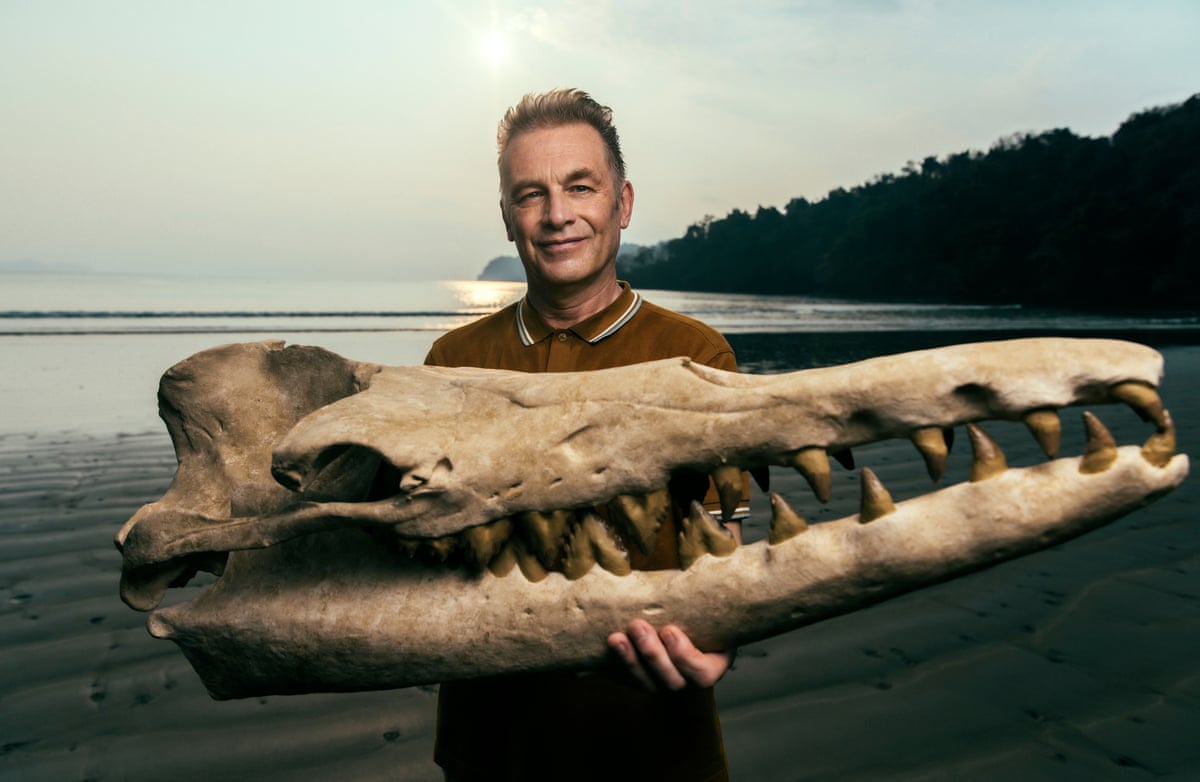
In the series, Packham introduces an AI-generated image of the extinct palaeomastodon, a small, hippo-sized ancestor situated evolutionarily between the hyrax and the elephant. His use of technology to illustrate evolutionary history reflects a pragmatic approach.
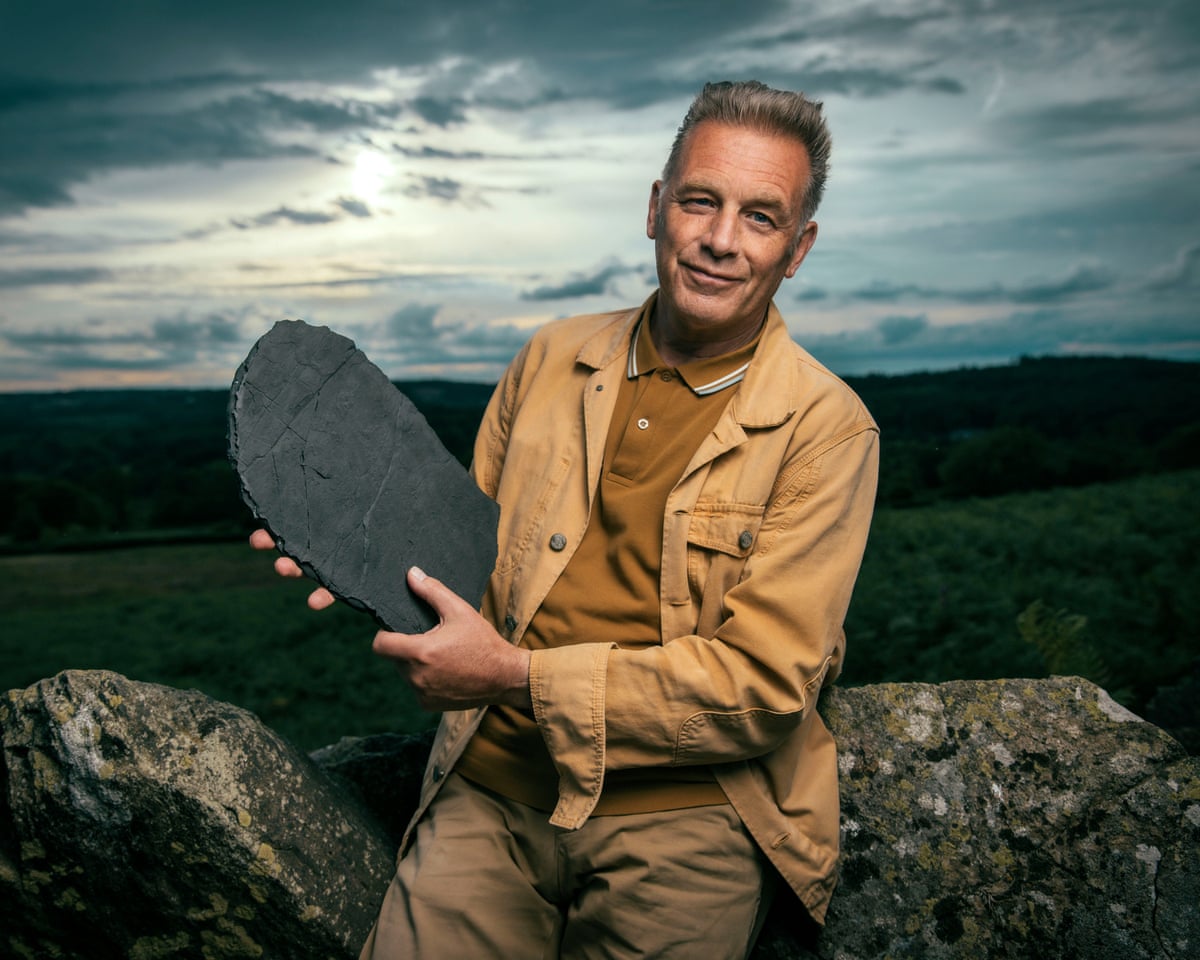
“I can get very romantically excited about a fossil, and some of them are exquisitely beautiful, but I think that for the audience, there’s a limit to how many times I can hold up a piece of rock and say ‘truly remarkable’.”
He is not opposed to technological progress, recognizing that human evolution includes cultural developments such as the combustion engine and artificial intelligence, which will significantly influence our species.
Encouraging Curiosity and Understanding Evolution
Packham advocates for maintaining a childlike curiosity, encouraging people to ask fundamental questions about nature rather than becoming complacent.
“We get lazy, we stop seeing things with wonder, and it reduces our capacity to ask the fundamental questions. How did an elephant get a trunk? Why has it got a trunk? Why haven’t I got a trunk?”
The series explores feeding through the example of the bat, which is the hungriest animal relative to its body weight, consuming its own weight in insects daily. It begins with the earliest feeding mechanism, where a single chamber served for both ingestion and egestion, a highly inefficient system.
Packham references the echinoid, a disc-shaped creature whose mouth and anus were initially adjacent but gradually separated over geological time, providing a timeline for fossil records.

He explains the evolutionary significance of the development of a separate anus and mouth:
“As soon as you’ve got a mouth and an anus, you want your sensory organs near your mouth, and if you want your sensory organs to be optimally operating, you want the brain as close as possible to those, so basically you get a head. We didn’t evolve heads until we’d evolved an arse. I quite like that.”
Packham’s Broadcasting Evolution and Advocacy
Packham’s career as a broadcaster has evolved from a desire to immerse himself in nature’s grandeur to communicating its complexities to a broad audience. His straightforward approach has increasingly embraced radical perspectives, especially regarding environmental issues such as the climate crisis and the protection of species like hen harriers.
The underlying theme from his earlier work on Springwatch to Evolution is the intelligence of all creatures, often underestimated by humans.
“Swallows choose white feathers to put in their nests because a type of bacteria breaks them down, which produces a substance which impacts negatively on microbes in the nest, and they have a higher hatching and fledging rate. I mean, it’s just astonishing that those little birds flitting around making those nests are actively choosing white feathers over coloured feathers.”
The series does not seek to diminish humanity’s role but naturally challenges anthropocentric views when considering biological facts, such as the risks associated with human reproduction compared to egg-laying in other species.
“We’ve always put ourselves on the pedestal of being the brightest. But we’ve learned so much recently. Even some reef fish have theory of mind: they can recognise themselves as individuals, and therefore they know others as individuals. Think of the mirror test – being able to recognise yourself in a mirror. We knew that elephants could do it, that chimpanzees could do it and dolphins. But now we’re beginning to see that other animals can. Spiders can dream. So obviously they have a subconscious, and they’re activating that subconscious based upon the input of their conscious mind.”
Climate Emergency and Conservation Efforts
At the end of 2023, a National Emergency Briefing featured ten experts addressing 1,200 MPs and business leaders on the impacts of climate breakdown on health, food security, national security, and the UK economy. The resulting film, hosted by Packham and filmed in a style reminiscent of Gogglebox, included responses from public figures such as Jennifer Saunders. Although the film has been screened in person, it is not available online.
The briefing highlighted sobering statistics, including that one in six species in the UK is at risk of extinction, and explored ecosystem collapse in practical terms, such as its implications for agriculture. The film’s pacing reflects the urgency of the crisis, akin to a disaster movie.
Packham’s advocacy for nature is persistent and hopeful.
“Ninety-nine per cent of all the things that have ever lived on Earth are extinct – it’s a very important part of evolution. If they were all still here, there wouldn’t be space for us. Evolution is ongoing, a rollercoaster, sometimes fast, sometimes slow. Whatever we throw at the world, life’s tenacity is profound, and no matter how badly we think we might be able to damage this planet, we will not exterminate life. It will re-evolve to be every bit as diverse and as beautiful as it was before we started mixing it up. It’s humbling, but it’s reassuring.”
However, he does not absolve humanity of responsibility.
“What we’re doing is not a mass extinction event, it’s a mass extermination event. We are consciously aware of the fact that we are destroying life. Given our creativity, our imagination, our intelligence and so forth, do we want that extermination on our conscience? I don’t think that we do.”
He rejects the notion that humans are merely a scourge on Earth.
“I hear environmentalists say if we were all wiped out by a pandemic, life would be so beautiful. It’s such an unrealistic and improbable and slightly degrading thing to say. Yes, we’ve had an impact on the planet, but we’ve done remarkable things. We are a remarkable organism. We’ve invented things and practices which are damaging, but we have to consider that as much a part of the evolutionary process as everything else.”
Closing Reflections and Series Premiere
The series concludes with a soliloquy penned by Packham calling for “an evolution of human hope,” a conceptual shift in how humanity perceives itself to foster more harmonious coexistence with the planet.
For Packham personally, moments of perspective come from nature itself, such as sitting beneath a 2,000-year-old yew tree near his home, which reminds him of his own smallness in the grand scheme of life.
“Chris Packham is not an important organism. And maybe there’s a semblance of that in this series. It says that it’s not all about us, it’s about life. Humans are just a part of it and, collectively, it’s extraordinarily beautiful.”
Evolution premieres on 13 July at 9pm on BBC Two.


