

Bluey’s Minisodes: A Bridge to the Upcoming Film
The latest batch of ‘minisodes’ serves as filler content until the release of the upcoming Bluey film. This raises questions about the future of a show once regarded as one of television’s most ambitious children’s programs.
If you are a fan, you will be aware that the series is currently in a state of uncertain limbo. The last full episode of Bluey aired in spring 2024, while the Bluey movie is scheduled for release in summer 2027. This leaves a considerable gap of three years, three months, and 16 days without new full-length episodes.
However, Bluey is a franchise that requires ongoing content to maintain its market presence. There are numerous Bluey-related products including books, records, toys, games, Lego sets, magazines, shoes, drinkware, gnomes, bedding, bandages, pyjama sets, and even 550-watt Bluey Mini Waffle Makers. Maintaining consumer interest in these products is challenging without new core content, which explains the introduction of a new set of minisodes.
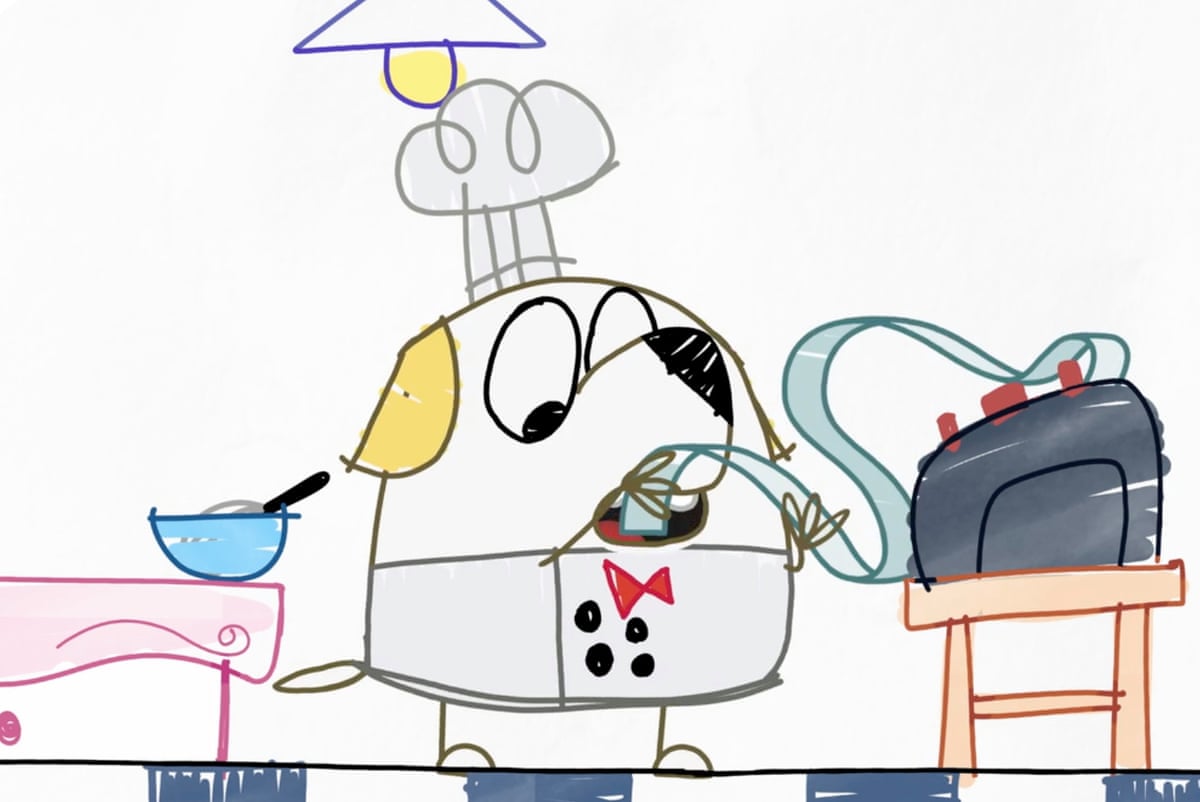
It is helpful to view these minisodes as a form of Bluey methadone. They are significantly shorter than standard episodes—the longest minisodes run about three minutes, with some lasting only one or two minutes. These minisodes resemble sketch comedy versions of the show, featuring simple, unusual premises. This is the second series of minisodes released since the full series went on hiatus, and like the previous set, they are generally acceptable.
The standout episode in this new batch is Cinderella, which depicts Bandit attempting to recall the story of Cinderella at bedtime, resulting in him inventing various unusual details. Another notable episode is Honk, where Stripe engages in a game with his children that concludes with an unexpected moment of violence. The appeal of these episodes lies in their authentic Bluey feel, to the extent that they resemble scenes that might have been cut from existing episodes due to time constraints.
At their best, the minisodes allow the show to explore a level of eccentricity that the main series might not accommodate. For example, the episode Tea Party succeeds by delving into a detailed and specific discussion of tea etiquette. Nonetheless, the minisodes are also quite disposable, with a significant amount of filler content.
Out of the 10 episodes released, four consist solely of characters singing nursery rhymes, and another features characters dancing silently to music from previous episodes. These are more difficult to justify as they essentially amount to Bluey imitating Cocomelon, which contrasts with Bluey’s original appeal as a show that offers something different from such content.
Bluey’s Ambitious Legacy
At its peak, Bluey was among the most ambitious shows on television. For instance, the episode Handstand features two cartoon dogs tracing the entirety of civilization from prehistory to a post-human utopia within seven minutes. Another episode, Sleepytime, conveys profound themes about children preparing for the loss of a parent, surpassing many literary works in emotional depth. When Bluey extended its format with the 28-minute special The Sign, the episode was kaleidoscopic in nature—both sweet and intricately structured—culminating in an emotionally powerful conclusion.
Each episode of Bluey felt unique, with distinct moods, emotional tones, and musical scores composed by Joff Bush. The episodes had an expansive quality that minisodes—especially those limited to a character singing Ten Green Bottles without further development—cannot replicate.
The Future of Bluey and Its Creator
This period is critical for Bluey’s future. The film scheduled for next year may represent the final project written by creator Joe Brumm. The show’s warmth, cross-generational appeal, and worldview have all stemmed from his vision. As one observer noted,
"I saw how Brumm was able to take my mediocre, surface-level idea and transform it into a touching, confounding, time-jumping masterpiece. He is a unique talent."
The key question is how Bluey will evolve without Brumm’s involvement. There is a possibility that the show could continue in a manner that closely mimics his approach, making any changes noticeable only to dedicated fans, similar to how Seinfeld managed the departure of Larry David. Conversely, the show could shift towards a style resembling the current minisodes—featuring familiar characters but lacking vitality—which would be detrimental.
As interim content to maintain merchandise sales until new episodes are ready, the Bluey minisodes are adequate. However, if these minisodes indicate the show’s future direction, concerns about Bluey’s trajectory are warranted.
To the manor born … the Butlers minisode. Photograph: Disney +


