Josh Wardle’s New Puzzle Game Targets Cryptic Crossword Fans
In 2021, Josh Wardle gained widespread recognition almost instantly with his digital game Wordle. The game transformed a simple word-guessing challenge into a global daily ritual: players have six attempts to guess a single word, sharing their results as a grid of colored squares across social media platforms.
Wordle quickly became a cultural phenomenon and was acquired by The New York Times within months for a seven-figure sum.
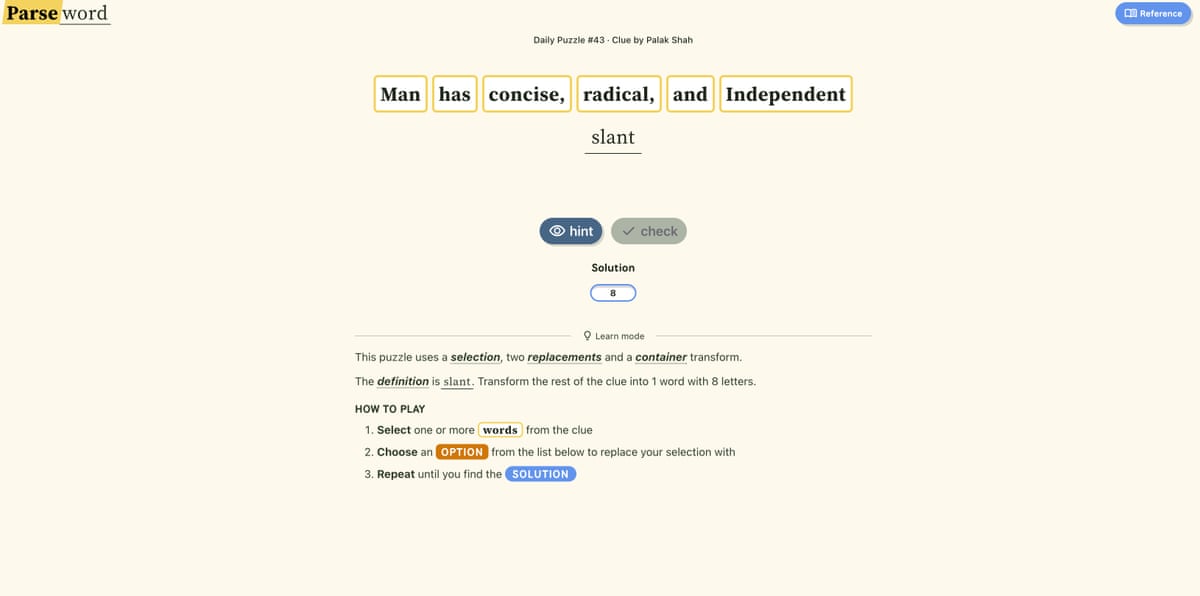
Four years later, Wardle has introduced a new game, Parseword, which offers a digital adaptation of the cryptic crossword. This puzzle format relies on complex wordplay techniques such as synonyms, reversals, homophones, letter deletions, and hidden fragments. While cryptic crosswords have a devoted following, they remain challenging and often confusing to the broader public.
Wardle explained his motivation for creating a digital version of cryptic crosswords:
“Cryptic crosswords have been around for a long time but they require an immense amount of work upfront before a new player can even begin to solve them.”
He added that this complexity is unfortunate, as he believes the format is an “incredibly beautiful puzzle” beneath its intricate surface. Wardle hopes his game will serve as a gradual introduction to cryptic crosswords for a wider audience.
Whether Parseword’s approach to lowering the entry barrier will generate viral popularity comparable to Wordle remains uncertain. The gaming website Engadget described Parseword as still being “a real chin-scratcher.”

Christian Donlan, features editor at Eurogamer.net, expressed skepticism about the game’s potential for viral success due to its challenging nature.
“George Fan, the creator of Plants vs Zombies, says the largest number of words you can expect a player to read when it comes to instructions is eight. Eight words!”
“Parseword not only has to explain the rich rules of Cryptics but also how it’s reworking them.”
Donlan emphasized that the key challenge is whether the game can teach its rules in a way that feels intuitive rather than overly instructional.
Another potential hurdle, according to Donlan, is the cultural divide between American and British puzzle traditions. The United States has historically been resistant to cryptic crosswords, and Parseword may be attempting to shift that perception.
“I guess Parseword is trying to change that – so the really interesting question is what America makes of it,”
Chris Maslanka, a puzzle writer and broadcaster as well as college enigmatist at St Catherine’s College, Oxford, agreed that the main question is whether a global audience will embrace this new challenge.
“What makes a new game go viral is how convenient and natural it is in a digital environment,”
“Whether Parseword is a viral sensation depends on whether it further facilitates old features or adds new tweaks that makes it more infectious than the amazingly durable and well-tested crossword.”
Wardle himself remains pragmatic about the possibility of Parseword replicating Wordle’s success.
“In terms of virality, if my goal had been to make a game that competed with Wordle on that front, I wouldn’t have made Parseword,”
“However, that was never my goal – and, to be fair, it wasn’t my goal with Wordle either,”
“I simply think Cryptics are an amazing puzzle format and I’d love it if more people had the chance to experience them.”
If Wordle demonstrated that a simple puzzle could captivate millions, Parseword raises a different question: is the internet audience ready for a more demanding puzzle experience?