

Introduction to Dim Sum and Personal Connection
Heaven, for me, is a round table in a cherished Cardiff restaurant, with delicate dim sum served in bamboo steamers. Whenever asked about my ideal last meal, I invariably choose dim sum. It may seem like a loophole, avoiding the need to pick a single dish, but it reflects my deep affection for the variety and uniqueness of dim sum experiences. Each meal is distinct, much like snowflakes, with no two being identical.
Dim sum encompasses a broad spectrum of dishes, allowing one to sample many flavors without committing to just one. It defies traditional meal categories such as starters, mains, or desserts, existing instead as a unique culinary genre that is both comprehensive and borderless. For newcomers, the experience can be overwhelming and lively, engaging all the senses in an exhilarating way.
Family Traditions and Cultural Significance
My upbringing was steeped in this style of dining, with Sundays spent sharing dim sum alongside family, extended relatives, family friends, and close acquaintances who felt like kin. It often seemed as though the entire Welsh Chinese community gathered at one of Cardiff’s oldest Chinese restaurants, which served as a communal hub. Many in the Hui clan celebrated weddings there, making it a symbolic venue and a rite of passage. We would nibble on various dishes while adults conversed, children doodled on paper tablecloths, and everyone sipped refillable pots of pu’erh tea leisurely over hours. While Westerners have Sunday roasts, our tradition was dim sum.
The Ritual of Dining at the Round Table
Each week, we returned to the same round table, assembling around a collection of bamboo steamers stacked one atop another until they filled every available space. Lifting the lids released soft clouds of steam, unveiling intricate, small dishes inside. The stacks grew taller, sometimes obscuring the person seated opposite. We rearranged plates and baskets, playing a tactile game of Tetris to accommodate more food.
When indulging in dim sum, I become a fervent participant, eagerly consuming dishes such as crispy ham sui gok meat croquettes, XO stir-fried turnip cake with a charred exterior and soft center, and succulent braised chicken feet infused with rich sauce. I have come to believe that heaven is not a distant realm but arrives at the round table before me, presented in delicate portions within steamer baskets.
Signature Dishes and Sensory Experiences
The moment a har gau lid is lifted, steam fogs glasses as the translucent, pleated skin reveals a juicy prawn inside. Peeling back a lotus leaf from the lo mai gai reveals fragrant sticky rice packed with shiitake mushrooms, lap cheong sausage, and chicken. Tearing into a char siu bao exposes sweet barbecue pork spilling out like a volcano. Larger plates follow, featuring glossy Cantonese roast meats such as duck, siu yuk, and soy chicken served over rice, alongside crispy stir-fried seafood noodles shared among diners before disappearing quickly.
I pour tea for my father, who taps two fingers on the table in thanks without interrupting conversation—a gesture said to originate from the Qianlong emperor, who used it to acknowledge servants while traveling incognito, a tradition still observed today. My brother reaches for the last dumpling as the lazy Susan groans under the weight of dishes, struggling to rotate while my other brother contests control to be nearer the siu mai.

Dim Sum as Cultural Education
Dim sum may have been my parents’ strategy to encourage my brothers and me to attend Chinese school on Sundays. I spent two hours weekly learning to read, write, and speak Chinese characters related to dim sum, but the culinary experience itself was the best education. It taught me how to eat mindfully, savor flavors, respect dining formalities, and appreciate my culture, heritage, history, and elders. More importantly, it expanded my understanding of textures, aromas, and contrasts in food beyond any other meal.
Origins and Meaning of Dim Sum
The term “dim sum” consists of two Chinese characters: 点心, which translates to “touch the heart.” Dim sum originated during the Tang dynasty (618–907 AD) in southern China’s tea houses along the Silk Road, where small dishes accompanied tea for travelers. In Guangdong, it evolved into yum cha, meaning “drink tea,” which eventually incorporated food. The pairing of delicate dishes with tea and extended conversation laid the foundation for dim sum culture.
Personal Symbolism and Tattoos
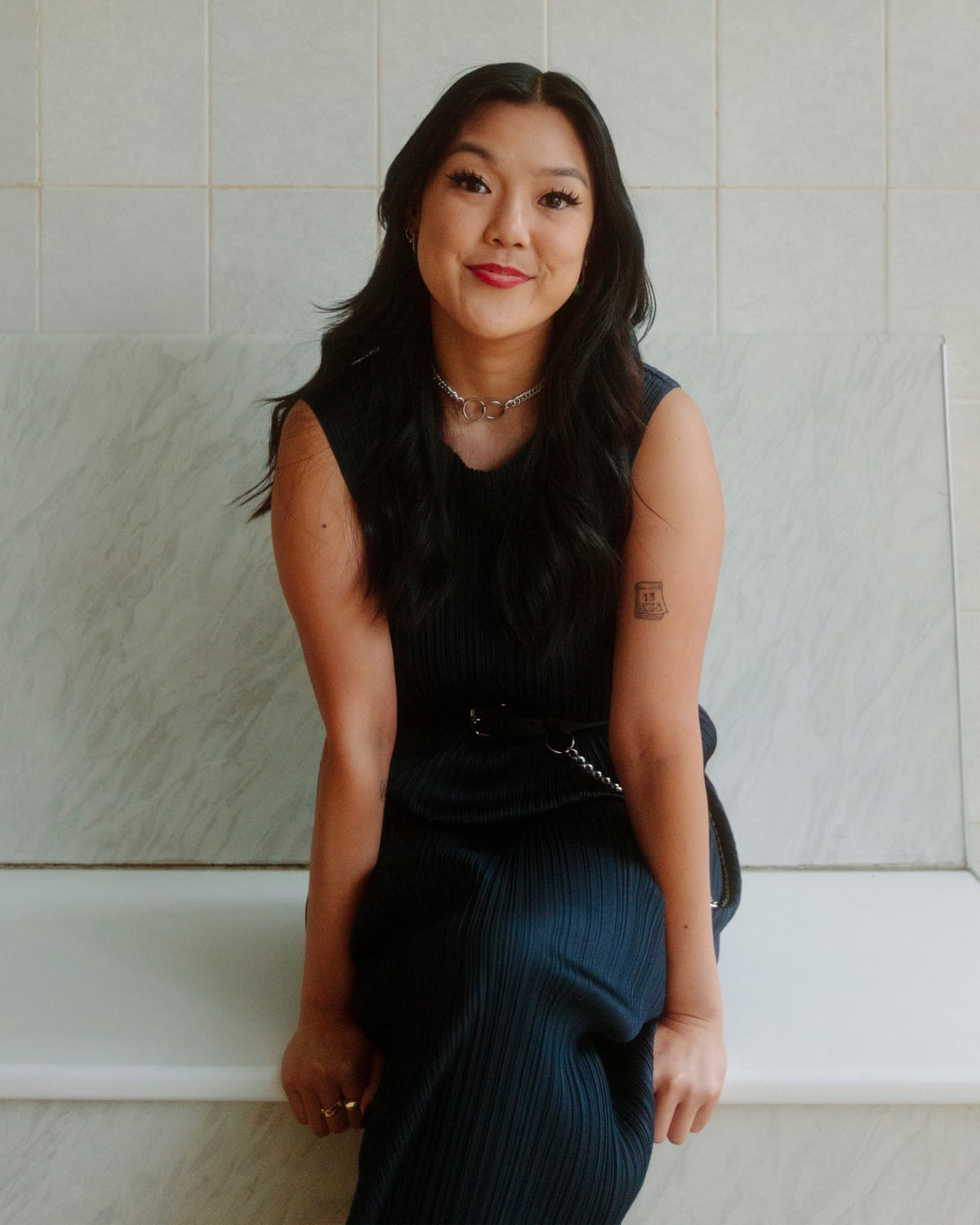
Dim sum has touched my heart profoundly, inspiring me to permanently mark my arms with tattoos of my favorite dishes. One tattoo depicts chopsticks holding cheung fun, symbolizing my craving for its slippery, chewy texture that encourages slow, mindful chewing. Another tattoo features a bamboo basket holding three har gau, reminding me of childhood moments when I would squeeze prawn filling into my brother’s bowl to enjoy the translucent skin myself. My aunt would admonish me, saying,
“What are you doing? That’s the best bit!”
Appreciation of Texture in Chinese Cuisine
I have a particular fondness for texture, akin to al dente but with more elasticity and bounce, known in Chinese as “rebound teeth” (daan ngaa). This aspect of food is culturally significant and often surprises Westerners, who may not focus on texture beyond taste. Learning to appreciate texture has broadened my culinary enjoyment, especially of Chinese cuisine.
The Art of Ordering Dim Sum
Ordering dim sum requires balance: a mix of fried and steamed items, filling dishes like noodles or rice, and a plate of greens for health. It is preferable when someone else manages the order, allowing diners to relax and enjoy the experience. Traditional ordering involved ticking off dishes on a paper slip or selecting from metal trolleys pushed between tables, with staff calling out offerings such as spare ribs in black bean sauce, taro puffs, and egg tarts. Each choice earned a small stamp of approval, with the goal of sampling as much as possible to complete the card. Although trolleys are now less common, replaced by pre-ordered menus and QR codes for efficiency, I miss the theatrical element of the trolley’s arrival, steam rising as a seasoned dim sum server lifted lids to reveal the dishes.
Family Reunions and Community Spaces
After years of navigating between my birthplace in south Wales and my parents’ homeland of Hong Kong, dim sum remains the unifying element for my extended family. Whether at our preferred Happy Gathering, New World Dim Sum in Cardiff (located above a casino), or at Wing Wo or Cheun Kee Seafood in Hong Kong, Sunday dim sum outings hold a special place in my heart. These occasions are not merely nostalgic or reflections of simpler times but represent a necessary release and weekly escape. They provide an opportunity to gather in the city, connect with other Chinese people, and create a third space within a predominantly white area that feels uniquely ours.
Dim Sum as Family and Cultural Ritual
Dim sum embodies my father and uncle’s friendly disputes over the bill, each insisting on paying before quietly settling the receipt during a bathroom break. It is my family extending a meal beyond its natural length, allowing time to slip away. It represents “a small touch of the heart,” with each basket arriving masterfully prepared and shared around the table. Above all, it is the unspoken promise to return the following Sunday and repeat the cherished ritual.
Angela Hui is a Welsh writer and the author of (2022).


