

Young Learners Celebrate Cornish Language Revival
Seven-year-old Albie, a student at Trewirgie infants’ school in Redruth, expressed enthusiasm for learning Kernewek, the Cornish language, without hesitation.
“We used to talk this way in the old days,”he said.
“And I like speaking now. I enjoy the songs we sing, the Cornish books we read, all the words. It’s fun.”
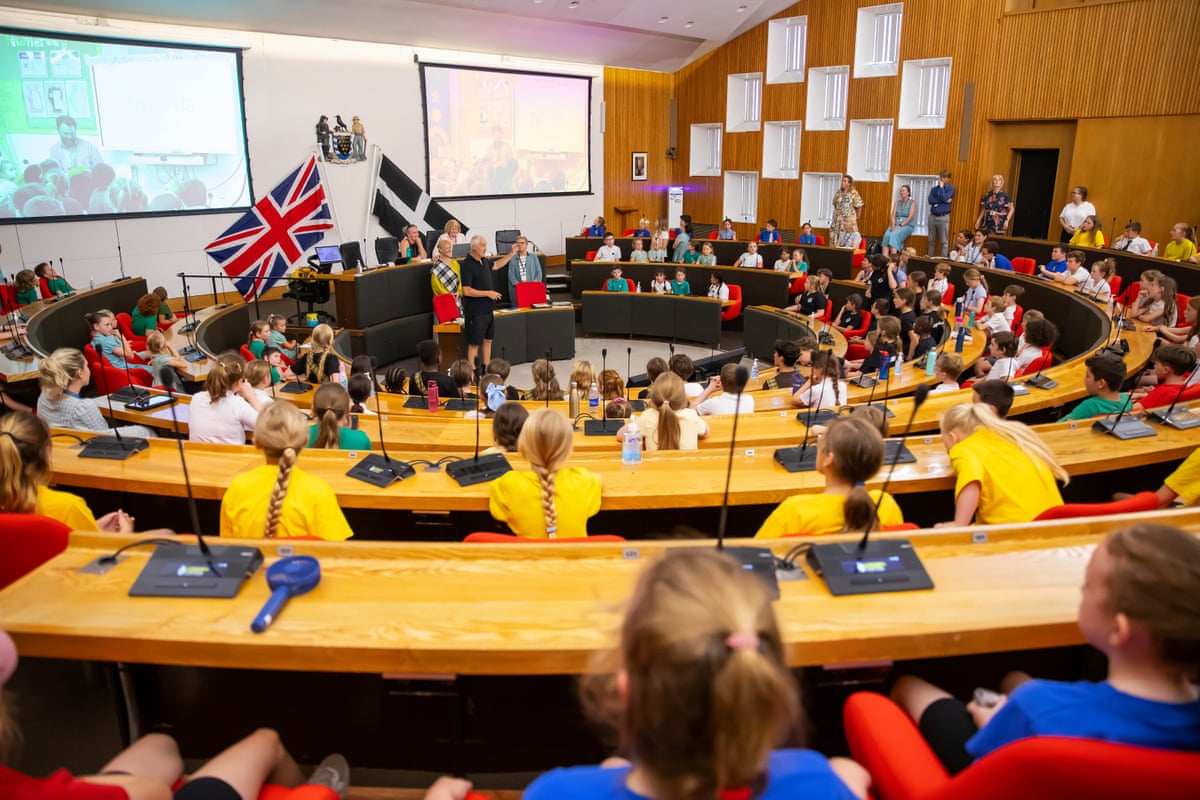
Albie was among nearly 200 children who gathered at Lys Kernow (County Hall) in Truro for the Go Cornish Celebration, an event highlighting young people’s engagement with the Celtic language.
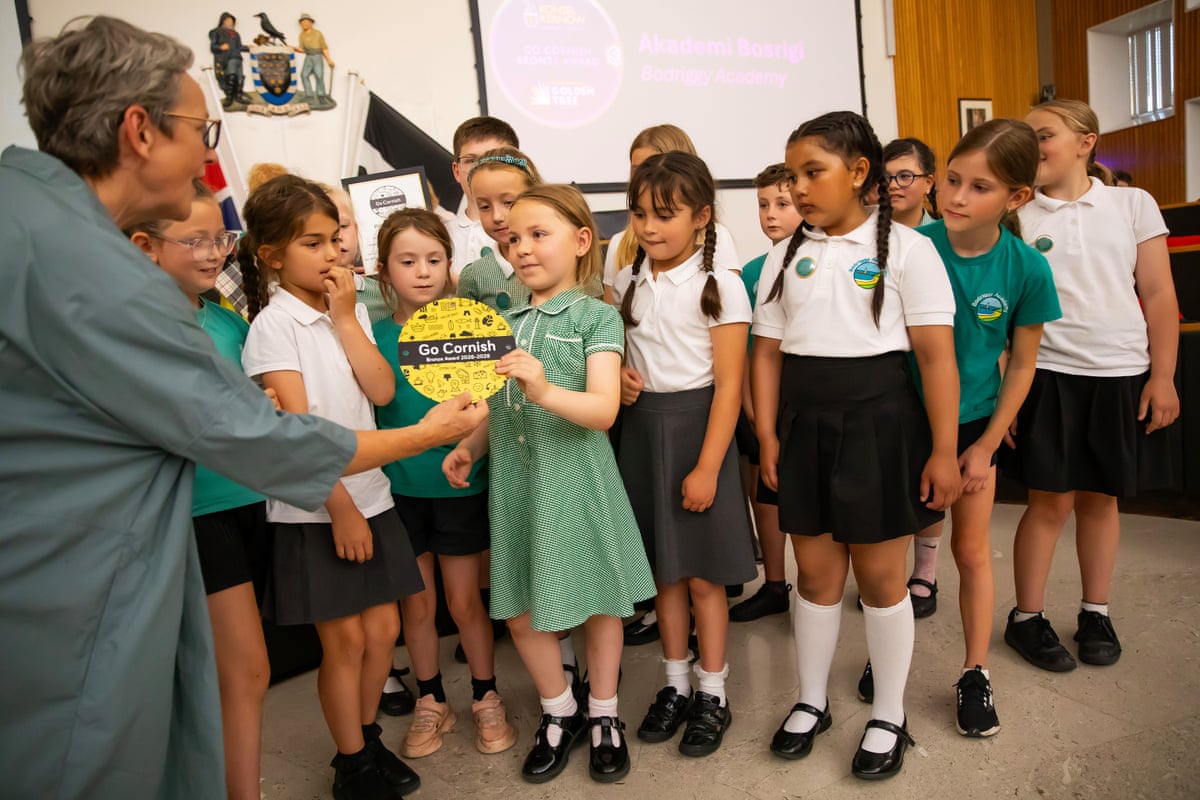
Kirsten Maun, who leads the Cornish language programme at the school, noted the children’s enthusiasm for learning Kernewek.
“Our school had already embraced our Cornish history,”she said.
“For example, our classes are named after local tin mines, but I think learning the language helps the children understand their identity more deeply.
They know they’re Cornish and they think that’s a special thing to them. Plus, they just like learning different words.”She added that the word for butterfly – tykki duw – was especially popular.
“They love that.”
Cornwall Council’s Strategy to Boost Kernewek
The Go Cornish event coincided with Cornwall Council finalising an ambitious strategy to promote Kernewek as a
“thriving, forever language – widely spoken, seen and heard in everyday life in Cornwall.”
The strategy aims to ensure every child in Cornwall leaves primary school with a basic understanding of Cornish, establish the first bilingual school, and increase the visibility of the language in public spaces.
Plans include registering marriages and births in Cornish, implementing bilingual road signs, and developing public service media in the language.
Council leader Leigh Frost expressed optimism while observing the children at Lys Kernow sharing songs, rhymes, and stories in Kernewek.
“You’ve got to have a bit of ambition, haven’t you?”he said.
“We’re looking at what Wales has achieved in the last few decades [the Welsh language, Cymraeg, is a vital and vibrant part of Welsh life]. The Cornish language deserves that same opportunity.”
In January, Kernewek received official recognition under part three of the European Charter for Regional or Minority Languages,
“That puts it on a par with those other Celtic languages in the United Kingdom,”Frost said. However, the language promotion strategy operates on a limited budget of £170,000 annually.

Frost linked the language’s promotion to Cornwall’s campaign to be recognized as the fifth nation of the UK, which he hopes will unlock additional funding.
“Make us a devolved nation of the United Kingdom, give us funding that is worked out in the same way as the other nations and we’ll crack on,”he stated.
History and Revival of Kernewek
According to legend, Kernewek ceased to be a living language in the late 18th century with the death of the fish seller Dolly Pentreath in Mousehole, a Cornish harbourside town. However, the language has experienced a revival during the 20th and 21st centuries, largely driven by dedicated volunteers rather than official institutions.
Cornwall Council describes this as a
“remarkable resurgence,”though the exact number of speakers remains uncertain. The council estimates approximately 500 advanced speakers and 2,000 individuals with basic knowledge of the language.
Kernewek’s Growing Presence in Media and Community
Kernewek is gaining increased visibility. A BBC podcast titled Kernewek Now, hosted by Radio 1 DJ Danni Diston, recently launched. Additionally, Cornish filmmaker Mark Jenkin, known for incorporating Kernewek in his films, is attracting international attention.
Earlier in the month, a mass conducted in Kernewek at Truro Cathedral was described as a
“significant moment”for the language.
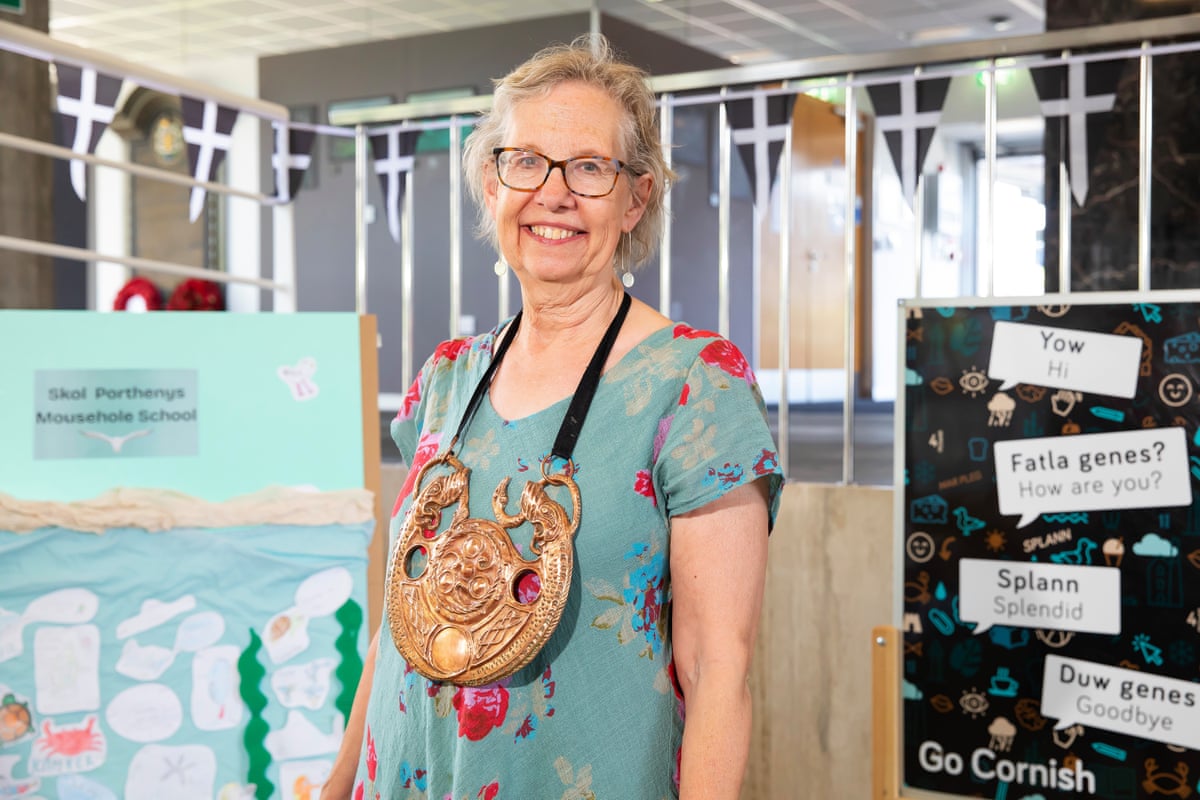
Jenefer Lowe, grand bard of Cornwall and member of the political party Mebyon Kernow, which advocates for greater Cornish autonomy, attended the mass. On the same day, she participated in a meeting partly conducted in Kernewek and used the language socially at a pub.
“I see a lot of Cornish speaking in the community, which I didn’t see 50 years ago,”she noted.
Debate Over Investment and Importance of Kernewek
Despite growing enthusiasm, some express skepticism. At a Cornwall Council community wellbeing, overview and scrutiny committee meeting, Reform UK councillor Sean Smith questioned whether public demand justifies investment in the language amid pressing issues such as housing, adult social care, children’s services, and economic inequality.
However, Jenefer Lowe emphasized the importance of nurturing the language.
“It’s about a sense of place and identity. It connects you to the place you live in. The language underpins everything.”She reflected that 15 years ago she probably knew all the Cornish speakers in Cornwall, but now she does not, which she considers a positive sign.
Educational Initiatives and Community Engagement
Will Coleman, of the Cornish Language Partnership, which leads the Kernewek learning programme in schools, expressed pride as he observed children from across Cornwall sharing artwork inspired by the language.
“I knew that if we could get a gang together they would all bounce off each other and inspire each other. I go to these schools and they just cannot get enough of it. They realise there’s this treasure chest being opened up and they’re being invited to rummage around in it and play with a bunch of stuff.
This kind of event demonstrates clearly that language enriches lives. It brings people together, it’s inclusive, it’s celebratory, it’s forward-looking. What’s not to love?”


