

Inspiration Behind Emergence
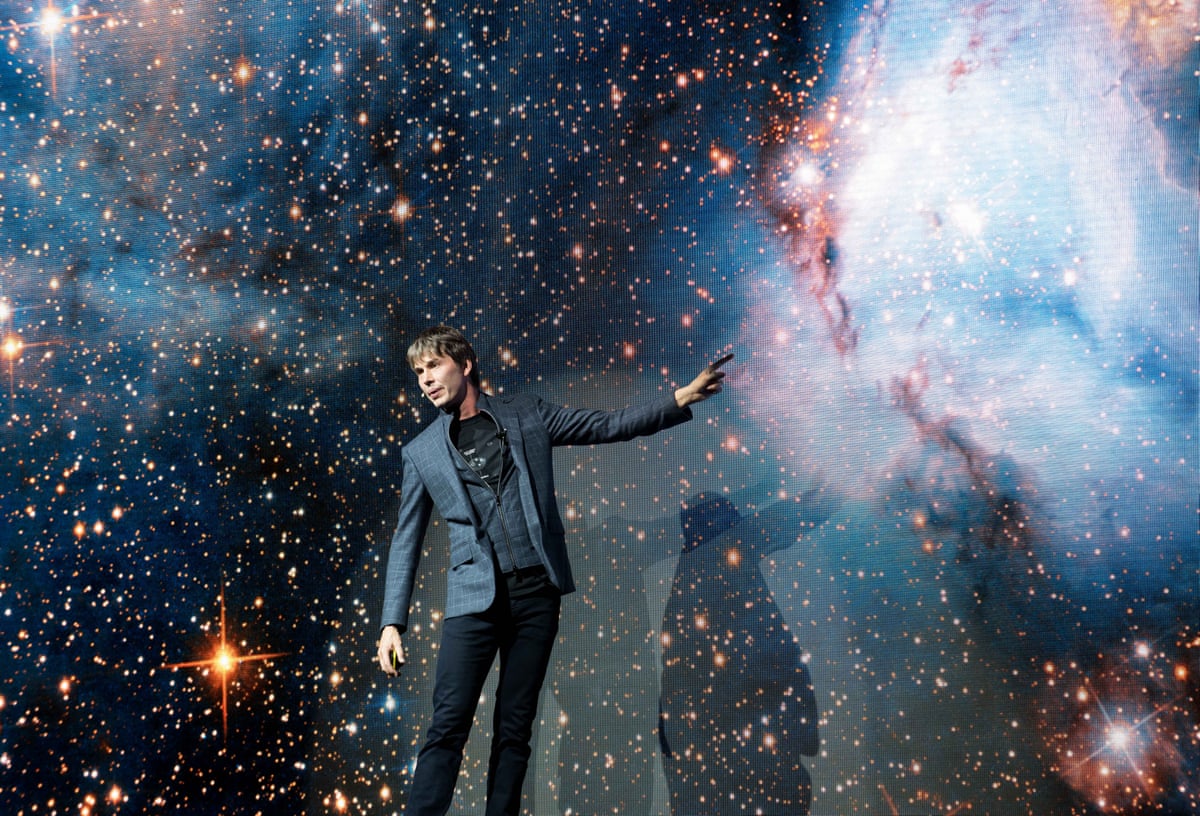
The physicist, BBC presenter, and author Brian Cox discusses the inspiration for his latest live show, Emergence. The show draws from Johannes Kepler’s book The Six-Cornered Snowflake, written around 1610. Kepler composed this book on New Year’s Eve in 1609 while walking across the Charles Bridge in Prague during a snowstorm. He was on his way to his benefactor’s house without a present, so he created a beautiful little book reflecting on snowflakes landing on his arm and questioning why they have six sides.
“This is a really modern question. It’s a tremendously 20th and 21st century way of looking at the world as a scientist – what is the origin of the symmetry that you see? He had no way of knowing it is to do with water molecules and atoms. But one of the most important things about the book is that he says, I don’t know. That’s really radical.”
The show explores what we know, what we don’t know, and what might be unknowable, emphasizing the importance of all three.
Scientific Questions Cox Would Like Answered
Asked which unanswered scientific question he would most like to have answered, Cox highlights the search for extraterrestrial life.
“There are loads. I’d love to know if there’s life beyond Earth, in the solar system or elsewhere. We might have a chance of answering that. We have two spacecraft en route to Jupiter’s moons now. And even the James Webb space telescope now can look at atmospheres of planets around distant stars. And there’s a slim chance that we might detect a signature of life. I’d like to know how far you have to go to see something else alive.”
Is Music Science or Art?
Twenty minutes prior to the interview, Paul McCartney had asked Cox whether music is a science or an art. Cox responds by rejecting strict disciplinary divisions.
“Oh! But you could say, is science a science or an art, as well. The honest answer is I really don’t like these divisions between disciplines. My answer would be, music is both. Science is ultimately a response to the beauty of the world and so is music. All human pursuits are a response to the beauty and mystery of the world.”
Exciting Scientific Developments Ahead
When asked about the most exciting scientific developments expected in the next decade, Cox mentions artificial intelligence and quantum computing.
“Obviously we don’t know where AI is going and how powerful it’s going to become – which is both exciting and potentially a problem. But quantum computing is interesting. I’m not an expert in the field but you ask them: ‘When are we going to access the power of quantum mechanics?’ And some of them say: ‘Not in my lifetime’ and some of them say: ‘In five years.’ It just shows you that these technologies we’re developing are so revolutionary but we don’t quite know where they’re going, which is both a challenge and an opportunity.”
Changing Views on Social Media
Cox reflects on how his opinion of social media has evolved over time.
“I’m constantly changing my mind about social media and whether it’s a good thing or a bad thing. It’s so noisy and so full of misinformation and fake information that it’s just not useful. But I was one of those people in the early days that had quite a utopian feeling about it. It was wonderful because everybody could talk to everybody and have access to all these different points of view and different opinions and it kind of felt healthy.
I think it’s clear that social media has become a negative influence on politics. But I’m constantly changing my mind on whether it is good for the world or not.”
Best Advice Received
Cox shares the best advice he has received, emphasizing the importance of pursuing what one enjoys.

“Do what you most enjoy. My parents did encourage me in that respect. They thought I would go to university – they hadn’t, so they were really keen that I would. And I didn’t want to, I wanted to be in a band! But they supported that because it was the thing I was interested in. If you have children, the thing that matters is that they find something they like doing. I did, – and then I thought, no, I want to do astronomy. So I went and did astronomy, which was not necessarily thought to be a great career path at the time. It is a wonderful career but where I came from, in the north of Manchester, there weren’t many people who were becoming astronomers!”
Controversial Pop Culture Opinion
Cox admits he has lost touch with popular culture and finds it difficult to identify controversial opinions in that realm. He shares his view on the evolution of music.
“That’s a good question, isn’t it? I’m struggling because I’ve lost contact with popular culture somewhat, so I don’t know what’s controversial and what isn’t. What would be a controversial opinion?
Kim Gordon from Sonic Youth told us.
I think that is fairly understandable, personally. Maybe my most controversial opinion is I don’t know anything about pop culture. Actually, I’d say the level of innovation in music has slowed down somewhat. If you look at the evolution of music from the 1950s to the 1980s, you are going from early Elvis and Frank Sinatra to Kraftwerk and Pink Floyd – it is vast. But if you played me something from 2000 or 2010 or 2020, I don’t think there’d be tremendous stylistic differences. I don’t see the evolution.”
Memorable Interaction with a Fan
Cox recounts a notable encounter with Paul McCartney at an Electric Light Orchestra concert.
“I’ll tell you a name-droppy story. I was at an ELO concert and someone came up to me and said: ‘I loved your documentary. I’ve got a question about Saturn’s moon Enceladus and its ice fountains. I’m really sorry, I’m always doing this – I walk up to people who I’ve seen on telly and I think I met them, but I haven’t met you before. Sorry! I’m .’
That was the first time I met Paul McCartney. I’ve met him a few times since. He’s always wonderful. But the first time I met him, because I’m such a big Beatles fan, I was completely overwhelmed. I loved that he introduced himself to me.”
Funeral Song Choice
Cox shares his preference for a funeral song, mentioning his friendship with Eric Idle.
“I’m good friends with Eric Idle and he always jokes that Always Look on the Bright Side of Life has become a funeral song. So I have to avoid that because it’s cliche now. What would I choose? Probably something really silly and happy. Like, Twist and Shout. I’d like something utterly inappropriate while everyone is crying.”
Remarkable Facts About the Universe
Cox reflects on the vastness of the observable universe and humanity’s progress in understanding it.
“The number of galaxies in the observable universe, the bit we can see, is around 2tn galaxies. That is a remarkable fact, because it’s completely impossible to picture. We were still arguing about whether there were galaxies beyond our own in the early 1920s. In 100 years, we’ve gone from arguing about whether there’s only one galaxy, to discovering that the universe is bigger than what we can see – and there are 2tn galaxies in just the bit we can see! Also, we’ve measured the age of the universe, which is astonishing. Not the fact that the universe is 13.8bn years old, but the fact that we actually measured the age of it!”
The live show Emergence will tour around Australia from 5 to 30 May.


