

British Museum Revises Terminology on Middle East Displays
The British Museum has removed the word “Palestine” from certain displays, stating that the term was used inaccurately and is no longer historically neutral.
Maps and information panels in the museum’s ancient Middle East galleries had previously referred to the eastern Mediterranean coast as Palestine, with some individuals described as being “of Palestinian descent.”
Concerns were recently raised by UK Lawyers for Israel (UKLFI), a voluntary group of solicitors, regarding references to “Palestine” in displays covering the ancient Levant and Egypt. The group argued that such references risked “obscuring the history of Israel and the Jewish people.”
In a letter addressed to the museum’s director, Nicholas Cullinan, UKLFI stated:
“Applying a single name – Palestine – retrospectively to the entire region, across thousands of years, erases historical changes and creates a false impression of continuity.
It also has the compounding effect of erasing the Kingdoms of Israel and of Judea, which emerged from around 1000BC, and of reframing the origins of the Israelites and Jewish people as erroneously stemming from Palestine.”
UKLFI further asserted that the terminology used “implies the existence of an ancient and continuous region called Palestine.” The group requested that the museum review its collections and revise terminology so that relevant regions are identified as Canaan, the kingdoms of Israel and Judah, or Judea, depending on the historical period described.

While several displays have been updated, the museum indicated that these changes were implemented last year following feedback and audience research.
The museum acknowledged that although the term “Palestine” was well established in Western and Middle Eastern scholarship as a geographical and “neutral” designation for the southern area of the Levant since the late 19th century, it now recognizes that the term no longer holds a neutral connotation and may be interpreted in relation to political territory.
A spokesperson for the museum explained:
“For the Middle East galleries, for maps showing ancient cultural regions, the term ‘Canaan’ is relevant for the southern Levant in the later second millennium BC.
We use the UN terminology on maps that show modern boundaries, for example Gaza, West Bank, Israel, Jordan, and refer to ‘Palestinian’ as a cultural or ethnographic identifier where appropriate.”
More than 5,000 people have since signed a petition calling for the museum to reverse its decision. The petition claims the move is “not supported by historical evidence and contributes to a wider pattern of erasing Palestinian presence from public memory.”
According to UKLFI, the information panels in the Levant gallery, which cover the period 2000–300 BCE, have already been updated to describe the history of Canaan and the Canaanites, as well as the rise of the kingdoms of Judah and Israel. Additionally, a panel in the Egypt galleries was amended to replace the phrase “Palestinian descent” with “Canaanite descent.”
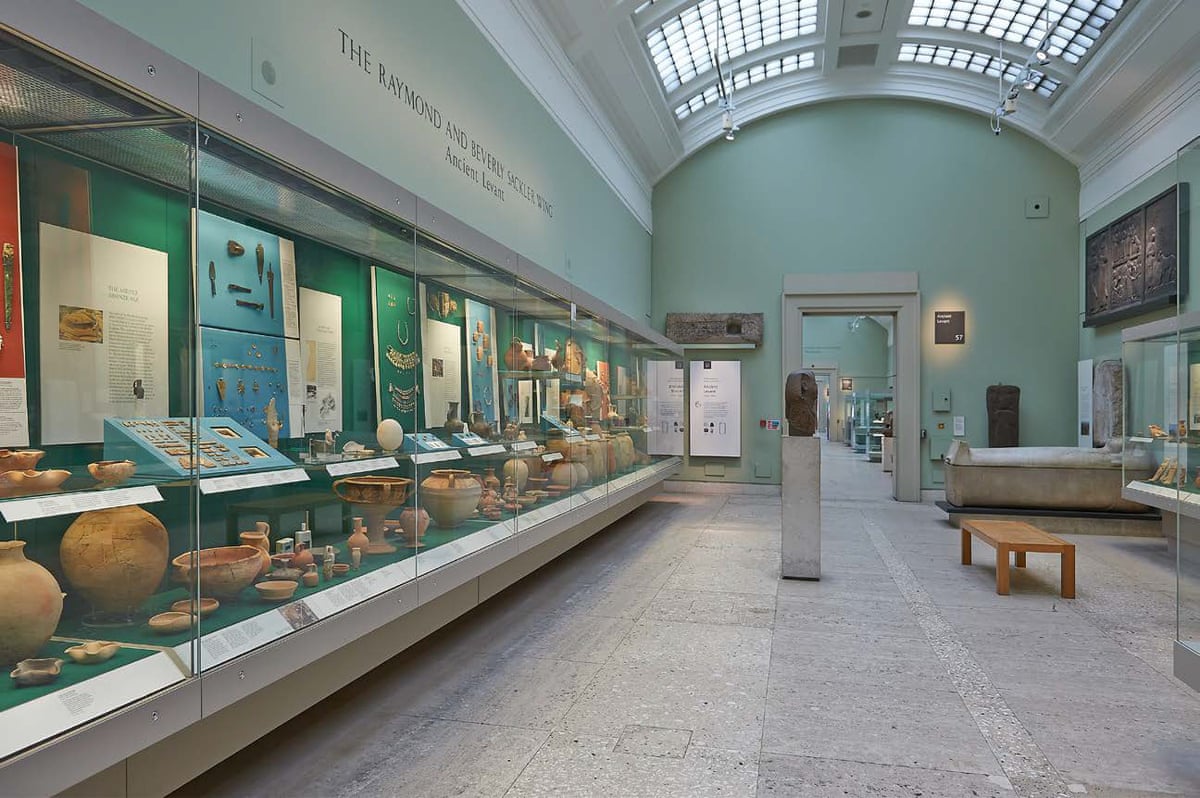
Further changes are anticipated as part of the museum’s long-term reconstruction and redisplay programme, with implementation planned over the coming years.


