

Oil Price Volatility Grips Global Markets
The price of oil seldom features in everyday discussions, yet over the past two weeks, it has dominated headlines due to significant and unusual fluctuations. Currently, oil is trading over 33% higher than before the conflict began, driven by air strikes targeting shipping and energy infrastructure and the effective closure of the Strait of Hormuz, a critical waterway responsible for transporting one-fifth of the world’s oil supply.
Monday witnessed extreme price swings, with the day described by BBC economics editor Faisal Islam as the most volatile in oil trading history. Much of the focus is on Brent crude, a widely recognized international benchmark for oil. Brent crude serves as a reference point in contracts for buying and selling oil, thus exerting considerable influence on global energy prices.
Lindsay James, investment strategist at Quilter, explains that most oil is traded for future delivery, and current price increases reflect concerns about supply shortages in the coming months.
Trump Calls War 'Very Complete'
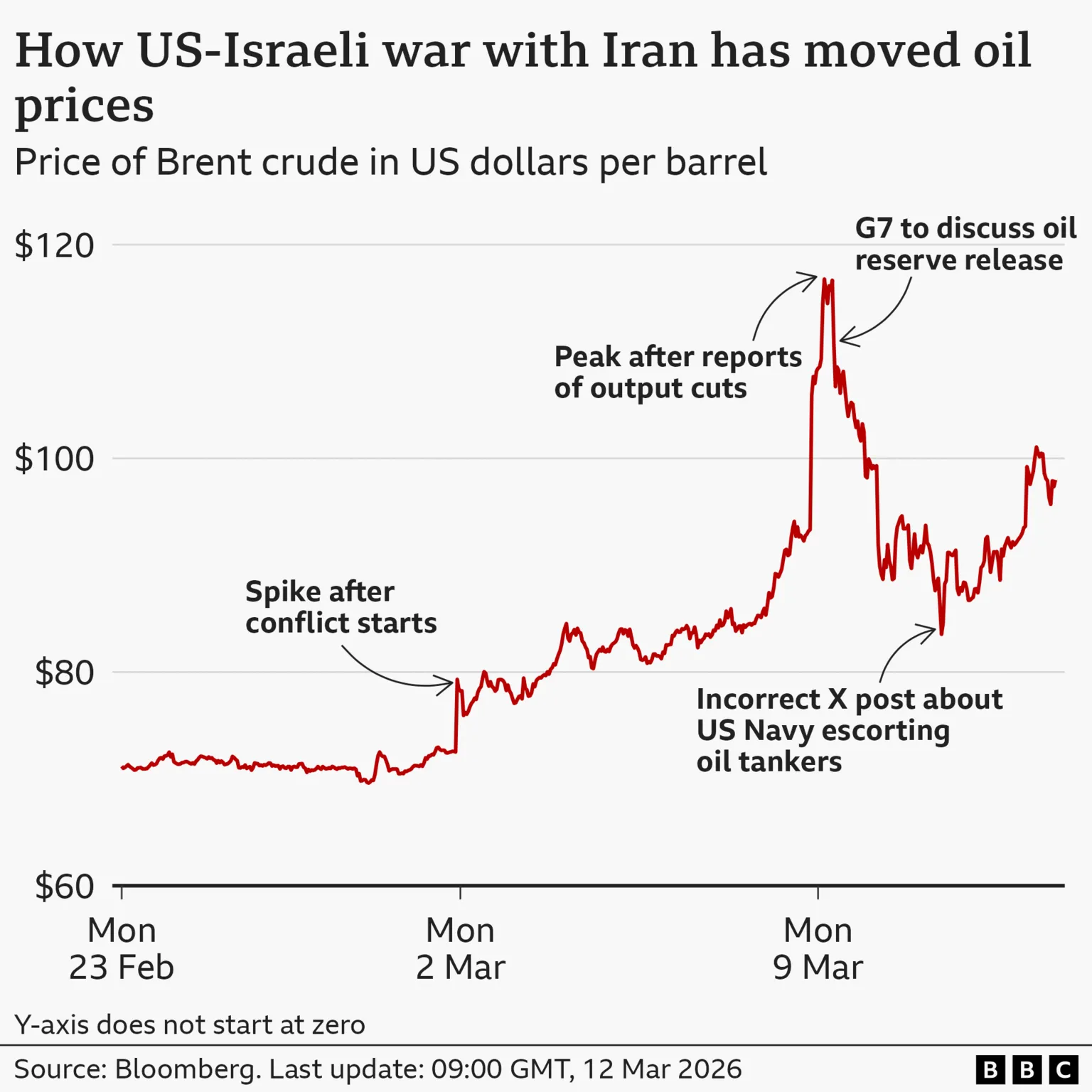
Prior to US and Israeli strikes on Iran, oil was trading at approximately $71 per barrel. Prices surged sharply as the conflict unfolded. Statements from global leaders have significantly impacted price movements. Last week, Qatar’s energy minister, Saad al-Kaabi, warned in the Financial Times that all Gulf oil and gas exporters might cease production within days, pushing oil prices to a two-year high.
When markets reopened after the weekend, prices peaked near $120 per barrel. However, reports emerged suggesting a potential large-scale release of emergency stockpiles coordinated by the International Energy Agency (IEA). US President Donald Trump described the war as "very complete, pretty much," which raised hopes for a swift resolution.
Following these developments, oil prices plummeted, falling nearly $30 from the earlier peak by the end of Monday. Quilter characterized the rapid price change within hours as "extraordinary even by the volatile standards of commodities." Lindsay James described the situation as an "energy shock without modern precedent."
Former BP chief Lord John Browne highlighted the complexity behind the figures, emphasizing logistical challenges such as matching the correct oil type to refineries. He told the BBC's Today Programme:

"This is not just a speculative activity - it's actually a matter of physical supply of oil, and people are bidding to make sure that they don't run out."
US Deletes Post About Successful Tanker Escort
Another significant event occurred when US Energy Secretary Chris Wright posted on X that the US had successfully escorted an oil tanker through the Strait of Hormuz. The benchmark price briefly dropped to $82 per barrel but rebounded to $86 after the post was removed.
The White House later confirmed the social media post was inaccurate; the US Navy had not escorted any tankers through the vital Gulf passage.
Markets 'Priced In' Release of Reserves
On Wednesday, the IEA announced that dozens of countries agreed to release a record volume of oil from emergency reserves. Although prices dipped slightly following the announcement, they soon climbed again after three more cargo vessels were attacked in the Gulf, pushing oil prices back above $100 per barrel.
Bill Farren-Price, senior research fellow at the Oxford Institute for Energy Studies, stated that the release acts as a "sticking plaster on a much bigger problem." He noted that since the decision was anticipated, the market had already factored it in. With no signs of reduced attacks on shipping, prices have rebounded.
"Inevitably the price reaction is going to continue until we see some sort of off-ramp for this conflict and that could be very, very complicated and drawn out,"
Energy analysts told the BBC that due to a shortage of refining capacity, the release of crude oil reserves does not directly translate into increased availability of refined products such as petrol and jet fuel. With approximately 1.2 billion barrels in reserve, releasing hundreds of millions is not a frequent option.
The release primarily aims to boost market confidence by signaling government recognition of the risks and their commitment to addressing them. While it may not reduce oil prices significantly, it could prevent them from rising as sharply as they might otherwise.
So, What Next?
The conflict between the US, Israel, and Iran is less than two weeks old. Its duration and impact remain uncertain. Lord Browne remarked that oil traders "can't see the real direction" due to unknown factors such as how long the Strait of Hormuz will remain effectively closed and whether the IEA’s strategic releases will be implemented.
"I think most people will look at all this and say 'show me what's really happening and I'll tell you what the price is going to be',"
One clear takeaway is that recent price movements have underscored the heavy dependence of global oil trade on transit through a narrow strait in a highly volatile and dangerous region.


