Trade and Ethical Concerns in UK Policy
Trade has long been a complex and sometimes ethically challenging arena. In the early 2000s, Andrew Mountbatten-Windsor was accepted as a “special representative for trade and investment” despite allegations surrounding his conduct, while Peter Mandelson’s skill in engaging influential figures often overshadowed concerns about his integrity.
Securing trade agreements invariably involves compromises, and occasionally, the terms can be questionable.
Britain has a longstanding history as a trading nation, with evidence showing that the Cornish traded tin and copper well before the Roman era.
As global trade routes increasingly come under the influence of emerging powers like China and India, the UK faces a critical choice: continue pursuing its interests through traditional methods or strive to reform and improve its trade practices.
Last year, Keir Starmer demonstrated his stance by appointing Mandelson as the UK’s ambassador to the US, continuing a pattern of prioritizing deal-making over ethical considerations.
Similarly, when Liz Truss appointed former cricketer Ian Botham as a trade envoy to Australia, questions arose regarding his suitability for the role.
More recently, the prime minister declined to appoint a “cross-government minister for economic security,” missing an opportunity to promote more sophisticated, secure, and transparent trade relationships.
Calls for Greater Scrutiny in Trade Deals
Liam Byrne, chair of the business and trade committee and former Treasury minister, has emphasized the need for increased scrutiny of trade agreements, particularly those involving Chinese companies, to prevent future national security risks.
He urges caution regarding the potential for intrusion, coercion, and espionage that can accompany deals with large foreign businesses.
Byrne consistently highlights China in his warnings about trade deals, citing the Chinese Communist Party’s calculated and amoral approach to international relations.
Additionally, some governments and powerful elites have been corrupted by natural resource wealth before adopting democratic institutions or after inheriting them from former colonial powers.
Financial corruption has been exacerbated over the past 30 years by the growth of the drug trade, which requires legitimate agencies to launder illicit funds, thereby spreading corruption globally.
This dynamic means corruption can affect every country, regardless of its democratic history.
Robin Cook’s Vision for Ethical Trade
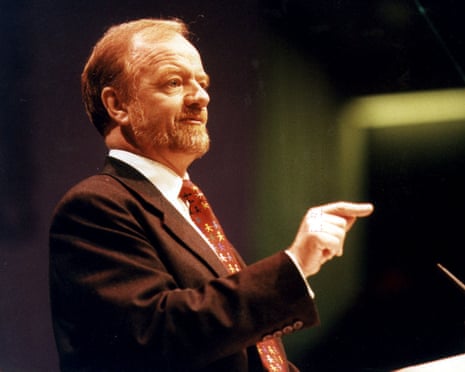
When Robin Cook became foreign secretary in the first Blair government in 1997, he sought to establish Britain as an ethical trading nation amid China’s rise as a major exporter. Just ten days after the election, he declared:
“The Labour government does not accept that political values can be left behind when we check in our passports to travel on diplomatic business. Our foreign policy must have an ethical dimension.”
In the 1980s, under Margaret Thatcher’s government, the UK agreed to supply 120 Tornado aircraft and other military equipment to Saudi Arabia through a deal involving Prince Bandar bin Sultan Al Saud, son of the Saudi defence minister.
Three decades later, investigations revealed that civil servants appeared to have lied about illicit commissions paid to facilitate the deal.
Although Cook served nearly four years as foreign secretary, his ethical foreign policy was short-lived, with pragmatic interests prevailing in cases like the al-Yamamah deal.
Cook was often described as naive for pursuing his ethical agenda, a criticism that contrasts with Byrne’s more pragmatic and focused approach.
Future Challenges in UK Trade Relations
The question remains whether Britain can engage with countries such as India, China, South Africa, and Brazil in a manner that avoids secretive backroom deals.
The Liberal Democrats argue that rejoining the European Union is the solution, though this may not be feasible for at least two decades due to significant obstacles.
Access to the EU single market and customs union is tightly regulated, as demonstrated by Switzerland and Norway, which have accepted being rule takers to maintain market access.
Last month, trade minister Chris Bryant appointed new trade envoys for France, Germany, and Italy to strengthen ties beyond Brussels. Bryant, who in 2011 criticized Mandelson for his close associations with Libyan figures such as Saif Gaddafi and Tarek Kaituni, aims to leverage skilled Labour MPs to enhance trade relations.
While this initiative may help secure marginal trade access, Byrne stresses that the more urgent issue is protecting the UK from the allure of cheap imports, particularly from China, and addressing major deals in defence, healthcare, and infrastructure that could cause future complications.
Addressing China’s Growing Influence
Beijing’s efforts to entice the UK, now outside major trading blocs, are intensifying. China offers inexpensive electric vehicles, telecom equipment, and artificial intelligence products, especially as the EU and US impose stricter trade restrictions.
In response, the UK requires a systematic approach to procurement decisions, emphasizing transparency and security.
There must be an end to secretive agreements and a move away from laissez-faire attitudes toward trade.