

Markets React to Iran's Peace Proposal and Shipping Lane Access
Asian and European markets experienced gains following reports that former US President Donald Trump has sent a message to Iran, raising hopes for a ceasefire in the Middle East. This positive market sentiment was further supported by Iran's announcement allowing "non-hostile" ships to safely transit the Strait of Hormuz, potentially reopening this crucial shipping route.
Oil prices declined by 4% in early Wednesday trading, with Brent crude falling below $100 (£75) per barrel. This drop was influenced by the anticipation that an end to the conflict could alleviate pressures on oil supply.
Stock markets in Asia showed notable increases during morning trading sessions. Japan’s Nikkei index rose by 2.9%, India’s S&P BSE Sensex increased by nearly 2%, and Hong Kong’s Hang Seng index climbed just under 1%.
European markets also reflected this upward trend. London’s FTSE 100 advanced by almost 1%, Germany’s DAX was up 1.6%, and France’s CAC 40 increased by 1.4%.
However, oil prices later edged back up to around $100 per barrel amid mixed signals regarding the progress of negotiations between the US and Iran, following the first direct communication since the onset of the bombing campaign.
Impact of Strait of Hormuz Closure on Global Oil Supply
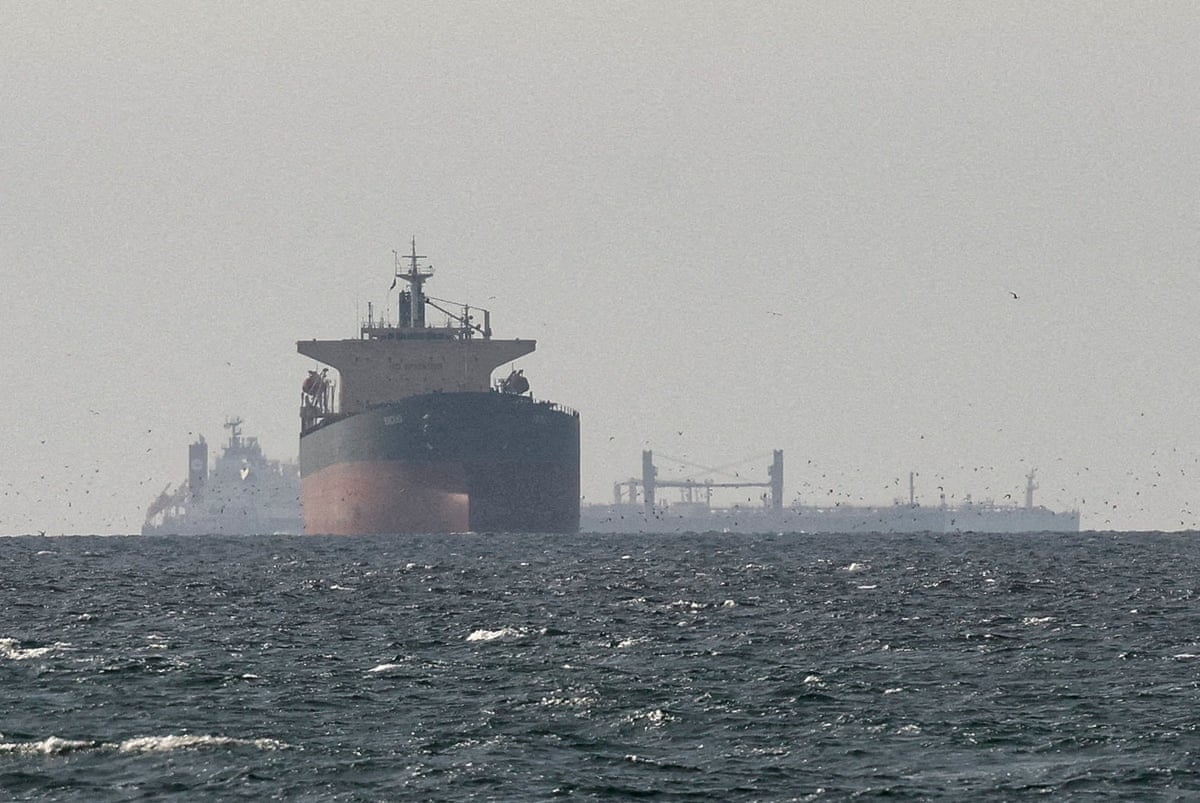
Iran’s effective blockade of the Strait of Hormuz, located at its southern border, has nearly halted global shipments of oil and gas through this channel, which typically handles about 20% of worldwide supplies. The International Energy Agency has described this as the largest disruption to oil supply ever recorded.
More than 30 countries, including the United Arab Emirates, the UK, France, Germany, Canada, and Australia, have issued a joint statement committing to collaborative efforts to protect the waterway.

Iran’s foreign affairs ministry has informed the United Nations Security Council and the International Maritime Organization that vessels deemed "non-hostile"—those not participating in or supporting "acts of aggression against Iran"—are permitted to transit the strait.
Broader Economic and Food Security Concerns
Approximately one-third of the world’s fertilizers are transported through the Strait of Hormuz, prompting warnings from a senior World Trade Organization (WTO) official about the conflict’s threat to global food security due to its impact on food production.
“Fertilisers are the number one issue of concern today. If there is no more fertiliser, there is an impact on quantities but also on prices,”
“The effect compounds the following year: harvests shrink and prices rise.”
These statements were made by Jean-Marie Paugam, the WTO’s deputy director-general, in an interview with Agence France-Presse.
Gold Market Volatility Amid Middle East Conflict
The outbreak of conflict in the Middle East has also influenced the gold market, traditionally considered a safe haven asset during periods of uncertainty. Gold’s historic price surge, which saw it reach record highs in January, appears to have reversed since the conflict began.
After stabilizing in the initial days of the war, gold prices have declined by approximately 13%, settling around $4,460. This decline raises questions about gold’s conventional role as a financial safety net during crises.
Potential Economic Impact of Prolonged Middle East Conflict
Separately, Larry Fink, CEO of BlackRock—the world’s largest asset manager overseeing $14 trillion (£10.4 trillion) in assets—warned that an extended conflict in the Middle East could push oil prices to $150 per barrel, potentially triggering a global recession.
“If Iran ‘remains a threat’ and oil prices remain elevated there would be ‘profound implications’ for the global economy,”
Fink stated in an interview with the BBC, emphasizing the significant economic consequences of sustained instability in the region.


