

Renault UK boss: 'Seismic shift' in electric car interest
Renault’s UK managing director, Adam Wood, has observed a "seismic shift upwards" in consumer interest in electric vehicles (EVs) following the surge in oil prices triggered by the Iran war. Wood highlighted that buyers are increasingly aware of the cost benefits of charging electric cars compared to filling petrol tanks.
The ongoing conflict has kept oil prices elevated, with no clear indication that the US and Iran will reach an agreement to reopen the Strait of Hormuz, a critical export route responsible for about 20% of the world’s oil supply.
Renault reported that this oil price surge is reflected in sales figures. Enquiries about electric vehicles on its website increased by 42%, and EVs accounted for nearly 50% of Renault’s sales in April. Notably, the Renault 5 was the bestselling electric car in Britain during that month.
"Interest in electric vehicles has undergone a seismic shift upwards following the spike in oil prices at the end of February.
In turbulent times, more and more people are realising the benefits of switching to electric. With a wider choice of more efficient, more desirable and more affordable electric cars than ever before, there’s never been a better time to make the switch."
Across Europe, car buying websites have reported an "E-Auto-Boom" attributed to the oil price increase, suggesting that geopolitical tensions, including US-Israeli actions against Iran, may have inadvertently boosted demand for electric vehicles.

UK retail struggles despite warm weather
While the first day of May brought warm weather to eastern England, some sunshine in April was insufficient to boost retail footfall across the UK. According to accountancy firm BDO, April marked the worst month for the high street in a decade, with total like-for-like sales falling by 1.6%, excluding the pandemic lockdown periods.
In-store sales dropped by 1.8%, attributed to weak consumer confidence and rising living costs. This was the eighth consecutive month where sales growth failed to keep pace with inflation.
"It’s hard to overstate just how difficult April has been for retailers. April is traditionally a positive month for the sector, as new spring and summer ranges arrive in store and consumer demand typically strengthens. Against that backdrop, these figures are particularly concerning."
Excluding the COVID‑19 lockdown period, the last time April delivered negative like‑for‑like growth was in 2016 when severe weather disrupted trading nationwide as snow fell across the UK."

Apple shares rise after strong quarterly results
US markets opened following Labor Day, with Apple shares rising 3.5% in pre-market trading, pushing the company’s value above $4 trillion (£2.9 trillion). This followed CEO Tim Cook’s announcement of Apple’s "best March quarter ever," highlighting double-digit growth across all geographic segments and extraordinary demand for the iPhone 17 lineup.
Apple reported revenue of $111.2bn for the second quarter of 2026, surpassing Wall Street expectations of $110bn. Revenue in Greater China reached $20.4bn. Earnings per share also exceeded forecasts, with $2.01 reported against an expected $1.96.
"Cook reported Apple’s ‘best March quarter ever’ and ‘double-digit growth across every geographic segment’. He also noted ‘extraordinary demand for the iPhone17 lineup’."

UK Competition and Markets Authority examines petrol price margins
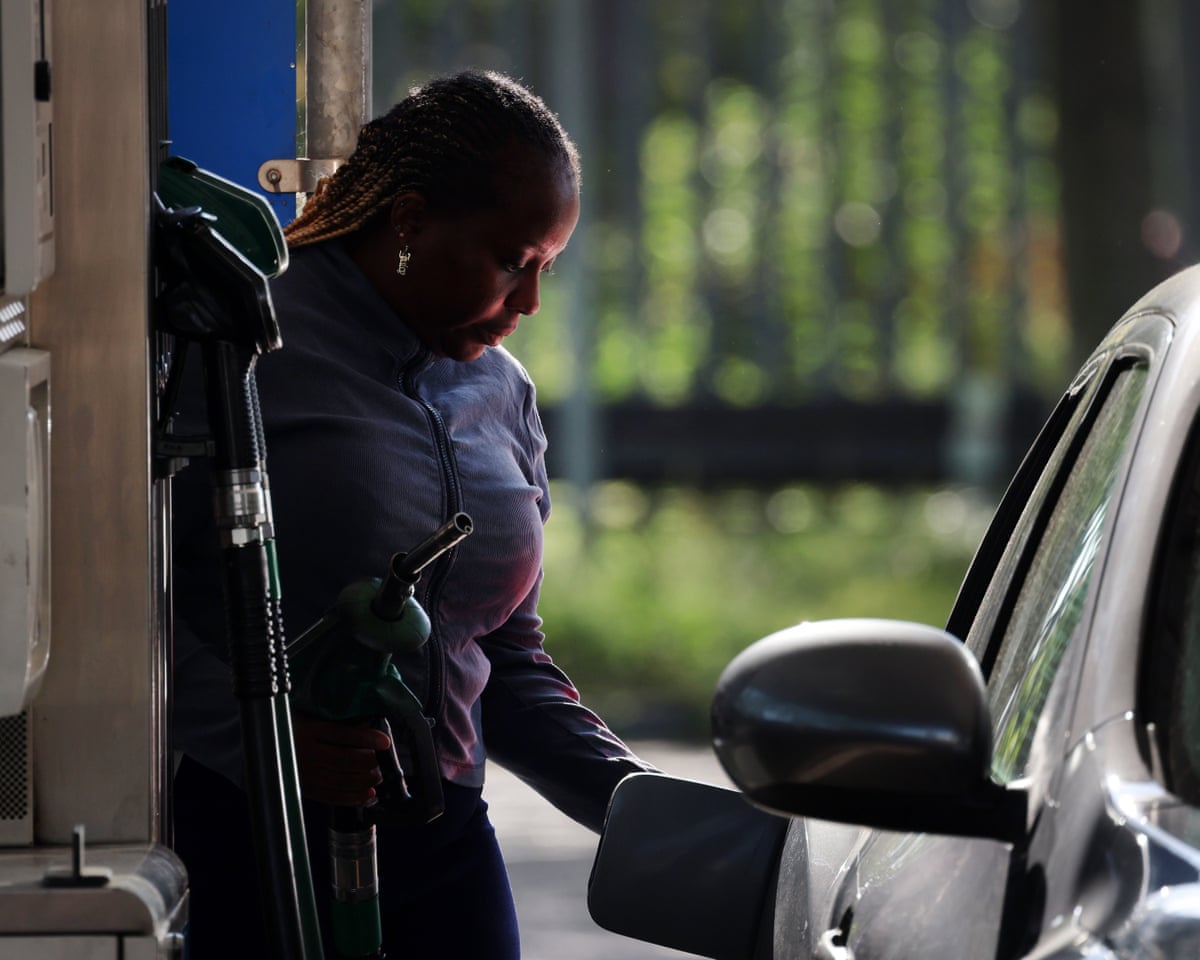
Petrol prices have caused concern among drivers, prompting the UK government to pressure fuel retailers to avoid excessive profit margins. The Competition and Markets Authority (CMA) reported that while a minority of retailers increased their margins since the start of the Iran war, average profit margins remained broadly unchanged between February and March and were consistent with 2025 averages. The primary driver of higher pump prices was increased oil costs.
"On average, retailer fuel margins did not increase. We will remain vigilant to ensure any fall in costs is passed on quickly to motorists."
The government introduced a “Fuel Finder” scheme to help consumers compare pump prices, with enforcement by the CMA commencing immediately. The AA welcomed the initiative, emphasizing the benefit for motorists who previously had limited information on fuel costs at motorway service stations.
"This is a momentous day for pushing the fuel trade to price petrol and diesel at the pump fairly, transparently and competitively. Up until now, most motorists travelling unfamiliar roads would only find out how cheap or expensive fuel at the next forecourt is when they drive past."
Legal challenges to UK motor finance compensation scheme
The UK Financial Conduct Authority (FCA) faces four legal challenges to its £9.1bn compensation scheme for victims of the motor finance scandal. The FCA stated it will defend the scheme robustly, describing it as the fastest and most efficient method for consumers and firms to resolve the issue.
Challenges come from Courmacs Legal, representing claimants who argue the scheme shortchanges victims, and from lenders Volkswagen Financial Services, Mercedes Benz Financial Services, and Crédit Agricole Auto Finance. None of the claims are filed explicitly on behalf of individual consumers.
"We will defend the scheme robustly as lawful and the best way to resolve such a widespread, long running and complex issue. These legal challenges create fresh uncertainty for millions of consumers and for the second largest consumer credit market."
ExxonMobil reports mixed profits amid oil price surge
ExxonMobil reported adjusted earnings per share of $1.16, exceeding the consensus estimate of $1. The company’s production in new oil fields in Guyana reached a record high, meeting global demand for crude amid the Iran war’s disruption of Gulf supplies.
However, Exxon’s statutory profits for the first quarter were $4.2bn, the lowest in five years, down from $7.7bn the previous year. This decline was mainly due to one-off accounting impacts from financial derivatives and a $700m loss from cargoes undeliverable through the Strait of Hormuz.

UK manufacturing costs rise sharply due to Iran war
UK manufacturers have experienced one of the steepest increases in business costs in over 30 years, driven by the economic consequences of the Iran war. The S&P Global purchasing managers’ index (PMI) indicated that input prices, including raw materials, energy, and labour, rose rapidly, second only to the post-pandemic inflation surge in 2022.
Rob Dobson, director at S&P Global Market Intelligence, explained that restrictions on transit through the Strait of Hormuz have caused significant disruptions to supply deliveries, lengthening supplier lead times to the greatest extent in nearly four years. Material shortages have consequently increased purchasing costs.
Business optimism fell to its lowest level in a year during April, as manufacturers expressed concerns about the war’s impact on global economic growth and geopolitical stability.
Despite rising costs, manufacturing activity improved, with the PMI reaching a 47-month high of 53.7 in April, up from 51 in March. This signaled expansion in the sector for the sixth consecutive month. Production and new orders increased, partly due to clients advancing orders in anticipation of price hikes and supply chain delays related to the Middle East conflict.
UK consumer credit and mortgage approvals show resilience
New data from the Bank of England indicates that British consumers continue spending despite economic uncertainties. Net consumer credit borrowing slightly decreased to £1.9bn in March from £2.0bn in February but remained above the six-month average of £1.8bn and economists’ expectations.
Mortgage approvals for house purchases in March rose to 63,530, exceeding the previous month’s 62,700 and the expected 60,000. Net mortgage borrowing increased to £6.2bn from £5.2bn in February.
NatWest forecasts economic impact from Iran war
NatWest has projected a £140m cost related to the Middle East conflict amid slowing growth and rising inflation, despite reporting profits above expectations. The FTSE 100 lender recorded a £283m impairment charge, nearly half attributed to a reassessment of economic forecasts reflecting increased geopolitical risks and weaker equity markets.

The bank anticipates UK GDP growth of 0.4% for the year, half the forecast recently made by the International Monetary Fund.
Oil prices remain high with Iran blockade ongoing
US President Donald Trump affirmed the continuation of the US blockade of the Strait of Hormuz, with no progress toward reopening talks. Brent crude futures traded around $110, with the July 2026 contract up approximately 1% on Friday.
The US-Israeli conflict with Iran has led to a global energy crisis, as Iran’s closure of the strait restricts about a fifth of global oil supplies. Despite economic pressures, no resolution appears imminent.
"Their economy is crashing, the blockade is incredible, the power of the blockade is incredible," Trump said. "Their economy is a disaster. So we’ll see how long they hold out."
Deutsche Bank analyst Jim Reid noted:
"Oil prices have continued to creep higher overnight, with no sign that the US and Iran are moving closer to a deal. Given the month-end, there’s been a contract roll, but if we stick with the July 2026 contract for consistency, Brent crude is up +1.07% this morning to $111.58/bbl. Moreover, Trump showed no sign of backing down […]"
Iran’s Supreme Leader Mojtaba Khamenei declared that Iran would maintain its missile and nuclear capabilities and suggested implementing "new legal frameworks" over the Strait of Hormuz.

NatWest shares fall amid profit outlook concerns
NatWest was the largest FTSE 100 decliner, down 3.7%, after analysts indicated that its underlying profits were slightly weaker than expected. Shore Capital’s Gary Greenwood commented that while income guidance was upgraded, it remained below consensus, potentially disappointing investors.
"While management has upgraded [2026] income guidance to the top end of the £17.2bn to £17.6bn range, this remains below current consensus of £18.0bn and may therefore disappoint, especially given the first quarter miss on this metric."
Richard Hunter, head of markets at interactive investor, noted:
"With high performance comes high expectations, and NatWest has slipped today in terms of outlook rather than delivery. The slightly bearish reaction to the numbers reflects the disappointment, although in context it does little to derail the group’s onward march. The shares have risen by 22% over the last year, as has the wider FTSE100, and by 90% over the last two years."
AstraZeneca shares fall after FDA committee vote
AstraZeneca shares declined 1.9% following a US Food and Drug Administration committee vote against recommending its new breast cancer drug, camizestrant, by six votes to three.
Susan Galbraith, executive vice president of oncology haematology R&D at AstraZeneca, said:
"We are disappointed with the mixed outcome of today’s [committee] meeting. We strongly believe in the results of the SERENA-6 trial, and are encouraged that the committee saw camizestrant as a safe and effective potential new medicine. We remain confident in the clinical benefit the combination can bring to patients by changing therapeutic strategy at the earliest opportunity, and are committed to challenging the status quo in the pursuit of innovation that optimises outcomes for patients."
Diageo shares rise after US lifts whisky tariffs
Diageo, the drinks company known for brands including Guinness and Scotch whiskies, saw its shares rise 2% in early trading, surpassing £15 per share. This followed US President Donald Trump’s announcement that the US would remove all tariffs on Scotch whisky in honour of King Charles and Queen Camilla’s recent visit to the White House.
Trump stated on social media:
"In Honor of the King and Queen of the United Kingdom, who have just left the White House, soon headed back to their wonderful Country, I will be removing the Tariffs and Restrictions on Whiskey having to do with Scotland’s ability to work with the Commonwealth of Kentucky on Whiskey and Bourbon.
The King and Queen got me to do something nobody else was able to do, without hardly even asking!"
Previously, whisky and other UK exports faced 10% tariffs in the US.

Most major European equity markets were closed, making for a quiet trading day. London’s FTSE 100 was expected to dip by 0.3% based on futures prices.
UK house prices rise unexpectedly in April
British homebuyers defied economic uncertainty and the Iran war’s impact to push house prices up by 0.4% in April, contrary to economists’ expectations of a decline. Annual house price growth increased to 3.0% in April from 2.2% in March, with the average price reaching £278,880, according to Nationwide.
Nationwide attributed the price increase to housing market resilience despite declining economic sentiment and the backdrop of the US-Israeli war in Iran, which threatens inflation through higher energy costs.
Robert Gardner, Nationwide’s chief economist, commented:
"Despite the uncertainty caused by developments in the Middle East and the subsequent rise in energy prices, the UK housing market has continued to regain momentum following the slowdown recorded around the turn of the year.
This is somewhat surprising given that indicators of consumer confidence have weakened noticeably. GfK’s headline index has fallen to its lowest level since late‑2023, reflecting households’ more pessimistic views of the economic outlook and their own financial position over the year ahead."
Ashley Webb, senior UK economist at Capital Economics, added:
"The surprisingly strong rise in the Nationwide measure of house prices in April shows that house prices have continued to gain momentum despite the falls in consumer confidence and the rise in mortgage rates since the start of the Iran war. But the growing upside risks to our mortgage rate forecast from the most recent rise in oil prices suggests this strength is unlikely to last."
NatWest Group reports increased profits despite economic challenges
NatWest reported a £1.4bn profit in the first quarter of 2026, despite setting aside an additional £140m to cover potential economic deterioration. The bank expects income for the year to reach the upper end of its forecast range of £17.2bn to £17.6bn.
Paul Thwaite, NatWest’s chief executive, described the quarter as a "strong performance," citing healthy customer activity and growth across all business segments. He also highlighted the bank’s use of AI to improve productivity.
"We have started the year with positive momentum, underpinned by healthy customer activity – growing all of our three businesses, expanding our capabilities to meet more of our customers’ needs and further improving productivity as we use AI at scale across the bank."
The agenda
- 9:30am BST: Consumer credit (March; previous: £1.9bn; consensus: £1.8bn)
- 9:30am BST: Bank of England mortgage approvals (March; previous: 62,580; consensus: 60,000)
- 1:15pm BST: Bank of England – speech by Huw Pill, chief economist


