

Concerns Over Capital Gains Tax Changes and Startup Sector Impact
Independent senator David Pocock has expressed concerns that proposed changes to capital gains tax (CGT) could result in technology investment moving offshore. This warning comes as Prime Minister Anthony Albanese responded with amusement to a meme campaign created by startup founders, thanking them for the "very flattering" AI-generated images portraying him working within their businesses.
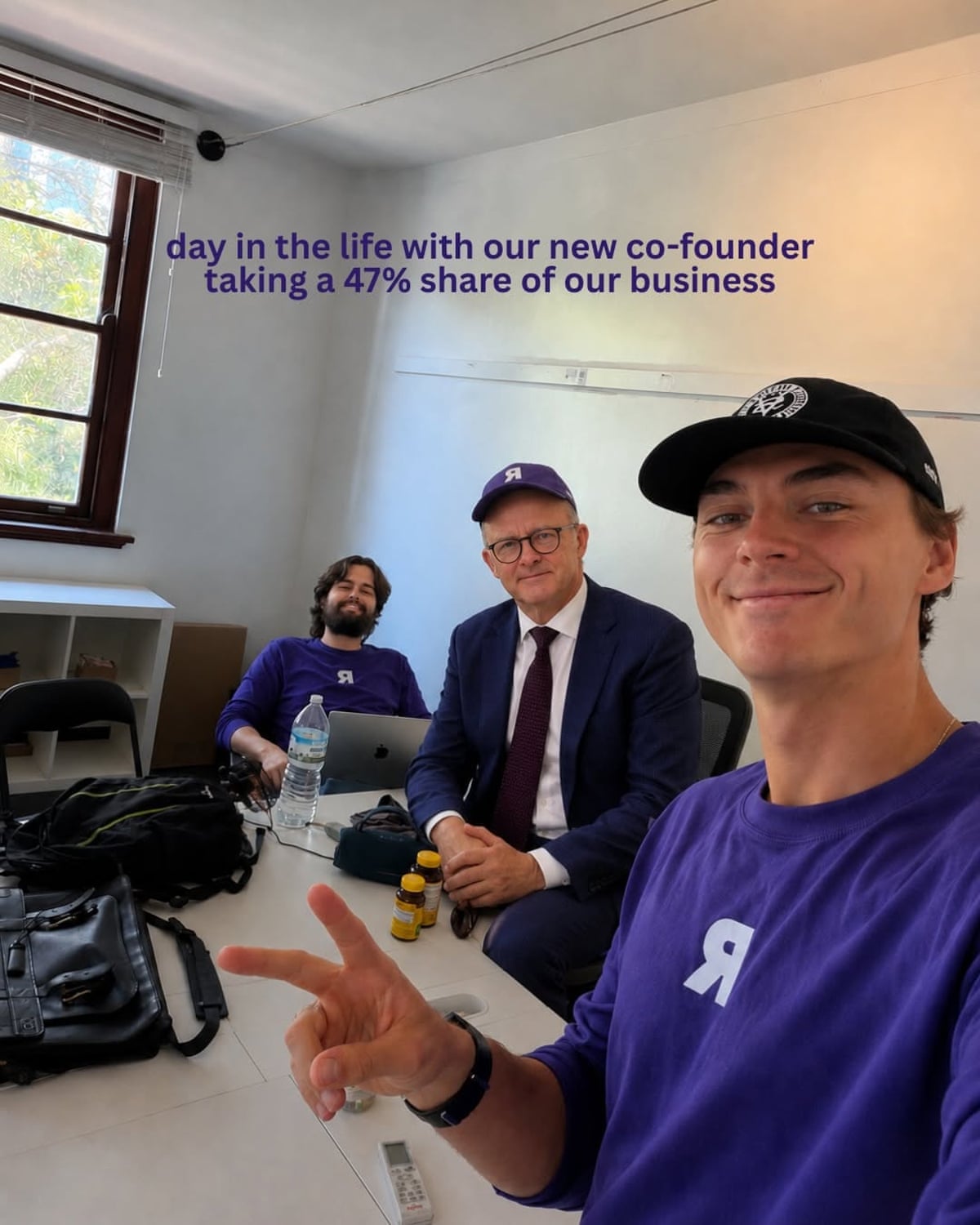
Albanese's reaction followed criticism from independent politicians representing key Australian startup regions, who cautioned that the government's proposed CGT reforms might encourage innovative companies and technology firms to relocate overseas in pursuit of more favorable financial returns.
"The government needs to do the deep consultation required to get this policy right so any changes don’t drive investment offshore. We need to retain maximum sovereign innovative capability and retain economic benefit here in Australia," said ACT senator David Pocock.
The federal budget released last week proposed replacing the current 50% tax discount on capital gains with a system of "cost-base indexation," which taxes profits after adjusting for inflation, and establishing a minimum 30% tax rate. This change would affect profits derived from selling properties, shares, and other assets.
In response, Australia reported that tech startups and business owners have been sharing AI-generated images mocking the proposed CGT changes. Entrepreneurs and representatives from the technology sector have voiced concerns that increased taxes could discourage individuals from working for new businesses or prompt startups to relocate internationally.
Early-stage companies, which often have limited cash flow, typically offer employees equity or stock options as compensation instead of higher salaries. Additionally, founders are motivated by the prospect of significant financial returns upon selling their companies, which encourages risk-taking in new ventures.
Government Consultation and Political Responses
Treasurer Jim Chalmers has indicated that the government is still consulting on the proposed CGT changes and has not ruled out the possibility of exemptions or special provisions for new businesses.
Several members of parliament, including Wentworth MP Allegra Spender, Kooyong MP Monique Ryan, Mackellar MP Sophie Scamps, and senator David Pocock, have supported the government's broader tax reform initiatives, such as changes to negative gearing and CGT. However, they caution that applying the CGT changes to the startup sector without careful consideration could be counterproductive.
"The government should be consulting widely – it is with the tech sector and needs to go further with business owners, fund managers and the broader community," said Spender. She emphasized the need to "get the balance right" in tax reform, which she described as a complex process requiring a balance between prosperity and fairness.
Spender recently held a roundtable discussion with startup founders in her eastern Sydney electorate and intends to communicate their concerns to the government. She suggested that any revenue generated from CGT changes should be returned to Australians through income tax reductions.
"Tax reform is hard. It needs to balance prosperity and fairness and get that balance right."
Ryan, representing an inner Melbourne electorate, proposed that company founders, early employees, and investors receive discounted or concessional CGT rates.
"I’ve heard from constituents with startups, and from younger investors, that these changes could have a chilling effect on investment on new and small businesses – which is where we need to be putting our support," Ryan said.
"If we want Australians building businesses here, we can’t make Australia one of the worst places in the developed world to realise a capital gain."
Pocock described the Australian Capital Territory as "the startup capital" of Australia and has formally written to Treasurer Chalmers urging reconsideration of the proposal. In his letter, he recommended that the government enhance favorable tax treatment for founder equity, employee share programs, and venture capital.
"In the same way the government is using tax settings to stimulate housing supply, they should be used to stimulate investment in startups and the innovation we need as a country to solve challenges and diversify our economy," Pocock told Australia. He warned of potential "unintended consequences" arising from the proposed changes.
Scamps expressed concern that entrepreneurs in her Sydney electorate might relocate overseas due to the proposed CGT changes.
"We cannot afford to send a generation of Australian entrepreneurs overseas because our tax settings are no longer internationally competitive. If founders and investors leave, Australia loses jobs, innovation and future industries," she said.
AI Meme Campaign and Government Response
The government has downplayed the significance of the AI-generated memes mocking the CGT changes, although the trend has gained momentum over the weekend. New AI-generated images depict Prime Minister Albanese in various roles such as a tradesman, hairdresser, and underwear salesman. This meme campaign was initiated by Julian Fayad, CEO of loan comparison platform LoanOptions.ai and a 2022 startup founder, who recently participated in a startup roundtable alongside shadow treasurer Tim Wilson.

Treasurer Chalmers dismissed the campaign's impact, stating, "we’re not changing the 47% marginal rate that’s been referred to in those memes." He also highlighted that "generous" concessions for small businesses would remain in place.
Albanese affirmed that consultations would continue until the relevant legislation is introduced in parliament in the coming weeks, emphasizing the government's commitment to supporting startups and venture capital.
Asked about the memes in a radio interview, Albanese said, "I have seen some of the memes which are there and the memes are very flattering, I must say, some of them. So, thank you to those who’ve made me look rather good."
Industry Perspective and Future Outlook
The Tech Council of Australia expressed confidence that the government understands the challenges faced by entrepreneurs and intends to advocate for favorable final CGT settings.
"The value created by early stage companies is almost entirely new value, built from risk, talent and conviction. Australia’s venture and tax settings need to reflect that," the group said.
"We welcome the opportunity to continue this work and ensure the final settings support the flow of risk capital and skilled talent into early stage Australian companies."


