

Student Rooms and Hotels Transforming City Centres
In many of Scotland's larger city centres, blocks of student accommodation are emerging on gap sites, raising concerns among critics about the potential "hollowing out" of neighbourhoods. Simultaneously, older buildings are being converted into hotels. Both sectors compete yet risk converging into similar offerings, with worries about mono-cultures replacing permanent residents. This situation has created opportunities for innovative disruption in both student and hotel accommodation markets.
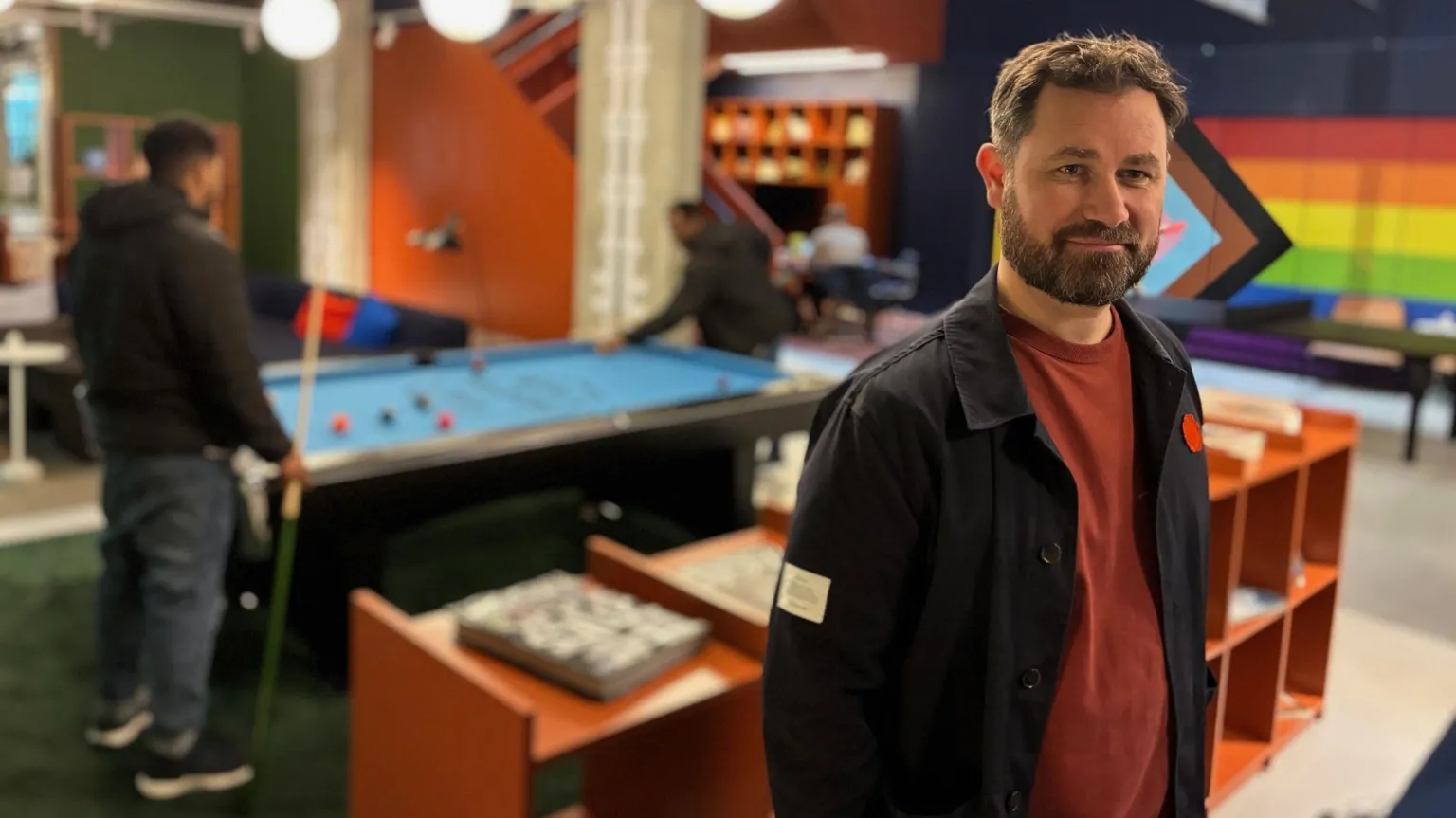
Charlie MacGregor is a key figure in this disruption, providing large-scale student housing while integrating business and leisure travellers, alongside small businesses and individual desk-workers. His approach centers on treating student customers with trust and respect, viewing them as "next generation talent."
MacGregor, 50, is the founder of The Social Hub, a chain of hybrid four-star hotels where vibrant lobbies host a mix of business and leisure travellers, creative sector office workers, and students engaged in both work and leisure activities.
Currently, The Social Hub operates 21 locations with over 10,000 rooms. In 2022, the company attracted new investors, valuing it at more than £2 billion.
Eight Social Hubs are located in the Netherlands, where MacGregor is based, with others situated in cities that have at least one university, tourist appeal, and a dynamic start-up culture. This includes most of western Europe's capital cities.
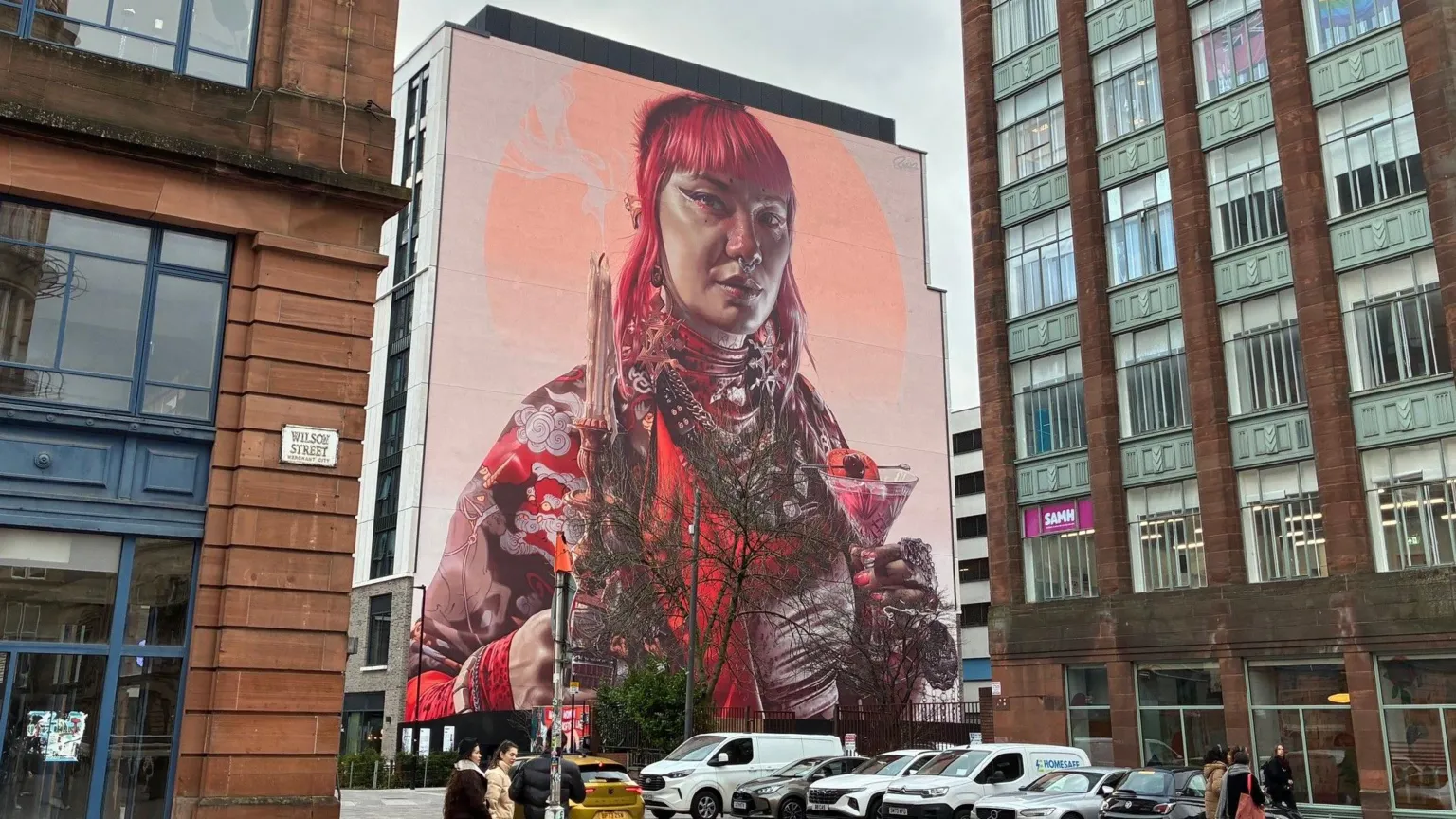
In the UK, the sole Social Hub is in Glasgow's Merchant City, featuring nearly 500 rooms and workspace for almost 300 individuals. Plans are underway for a similar-scale development in Edinburgh's Fountainbridge, currently in the planning stages but facing opposition from groups advocating for a halt to Purpose-Built Student Accommodation (PBSA) to prioritize scarce city space for social housing.
Housing Emergency and Student Accommodation
Concerns exist that students are being prioritized amid the housing emergency acknowledged by Scottish and city governments, characterized by high homelessness rates and a severe shortage of affordable housing.
MacGregor distinguishes The Social Hub from traditional PBSA. More than half of its rooms function as conventional hotel accommodations, with approximately 30% allocated to students. Student rooms are clustered within the building to enable self-catering and to minimize disturbances to business travellers.
When launching Social Hubs—originally known as The Student Hotel—in the Netherlands, MacGregor was cautioned about the risks of mixing client groups. Investors and planners feared hotel guests would not tolerate student presence. In Amsterdam, a requirement was made for separate entrances for students and hotel guests; however, only one entrance has been used since opening.
The lobby features study spaces, some designed for quiet, but predominantly a lively environment with conversation, pool, table tennis, and a combined café, pub, and restaurant.
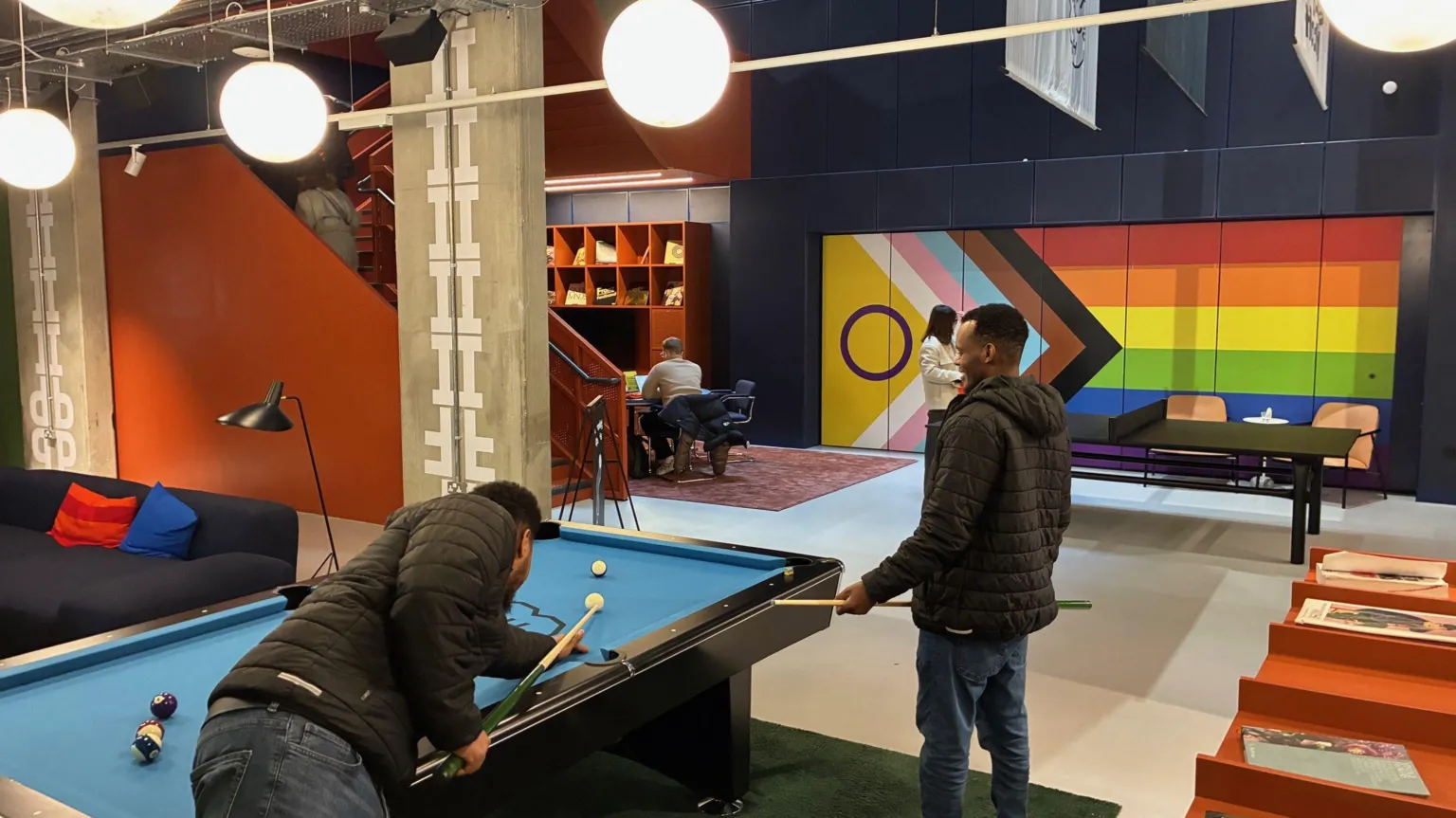
MacGregor initially introduced space for parents visiting students and subsequently observed bookings from business travellers who appreciated the lobby's vibrant atmosphere.
Although MacGregor did not experience student life himself 30 years ago, he has found that students do not engage in disruptive behaviour such as all-night partying or triggering fire alarms when treated with respect and trust.
"It helps if you recognise that there are perhaps 30 different types of student, and if you go after the higher-spending and slightly older variety. That is where his prices are pitched. From £900 a month, it's roughly half as much again as a conventional student tenement flat."
"The old view of a student is that they'll destroy the place," he says. "But that's because they're only with students. Two hundred students by themselves are going to behave like students.
"When I started this, people were genuinely scared there would be chaos in our lobbies, But when you start mixing them with some adults and hotel customers, you see that everybody balances each other out.
"The hotel guests start to relax and start to have fun because there's a community vibe in our lobbies.
"What we have on our ground floor is more a reflection of our society, and therefore it's safer, more fun and better for everybody."
Following this, The Social Hub began renting business space, offering desks for sole desk-workers and areas for small businesses. The social environment fosters interaction between students and business occupants through drinks, debates, and gym activities, facilitating mentoring, internships, research projects, and recruitment.

Business Model and Economic Impact
Using a new "green book valuation" method assessing economic and social impact, The Social Hub reportedly contributes over £10 million annually to the Glasgow economy, exceeding the impact of a conventional hotel of comparable size by more than five times.
The business model is designed for flexibility, allowing fluctuations in one client segment to be balanced by changes in another. The clientele includes a mix of short- and long-term customers.
For example, a downturn in tourism may increase demand for student accommodation, and vice versa. Office spaces are adaptable for alternative uses. The Glasgow Social Hub includes a 200-seat theatre utilized for events such as the city's Comedy Festival, student parties, and sports activities.
Since opening less than two years ago, demand for gym facilities has grown, prompting expansion plans.
This adaptable approach proved effective during the financial crisis earlier in MacGregor's career. Although some properties had to be relinquished due to loan recalls, MacGregor was well-positioned to meet the subsequent rise in student accommodation demand.
Similarly, during the Covid-19 pandemic, some students remained in his accommodations while others returned to universities after a brief hiatus. As the hotel market reopened, The Social Hub's facilities were already operational.
Charlie MacGregor's Background
MacGregor's journey began in Edinburgh, where he attended a private boarding school and struggled with undiagnosed dyslexia. Despite enjoying school, he failed exams and left at 16 to pursue careers in car sales and construction. Later, he moved to London and followed his father into student accommodation investment.
After his dyslexia was diagnosed, MacGregor embraced it as a "superpower," a perspective he shares with two of his four children who also have the condition.
"Dyslexia I see as an advantage," he says. "It didn't help me pass exams. But it's a skillset I have that others don't have. It helps me think out the box, to be more creative about how I think of answers, find solutions or do presentations.
"It's not a disability or a hindrance. Given the right space and tools, what I tell my kids is that they have a superpower."
Innovating the Accommodation Model
Upon relocating to the Netherlands, MacGregor observed a significant student accommodation crisis. He identified a lack of diverse community environments and aimed to integrate parents into the student experience, treating students as emerging professionals.
He sought to incorporate co-working spaces, businesses, and local residents. MacGregor criticizes traditional hotels as closed-door facilities detached from their neighbourhoods, whereas The Social Hub maintains positive relationships with neighbours.
The community appeal extends to a café and bar with pricing designed to attract local patrons. Each Social Hub is developing clubs of approximately 500 members who gain access to facilities, events, and complimentary Sunday coffee.
Even non-members participate in activities such as ping-pong, engaging in competitive ladders with student residents, and joining running clubs on Thursday lunchtimes.
MacGregor's entrepreneurial approach extends beyond accommodation. He established a charity to assist refugees, beginning on Greek beaches a decade ago, applying Social Hub principles by involving refugees in contributing their skills.
He expresses frustration with how housing shortages are addressed across Europe and the UK, noting the heavy reliance on the private sector to provide solutions amid increasing costs and regulatory restrictions imposed by governments.
"At some point, you break the model with too many restrictions. There's too much expected of the private sector. It's like asking you to rent out your spare bedroom at half its value. Not many people are going to do that."


