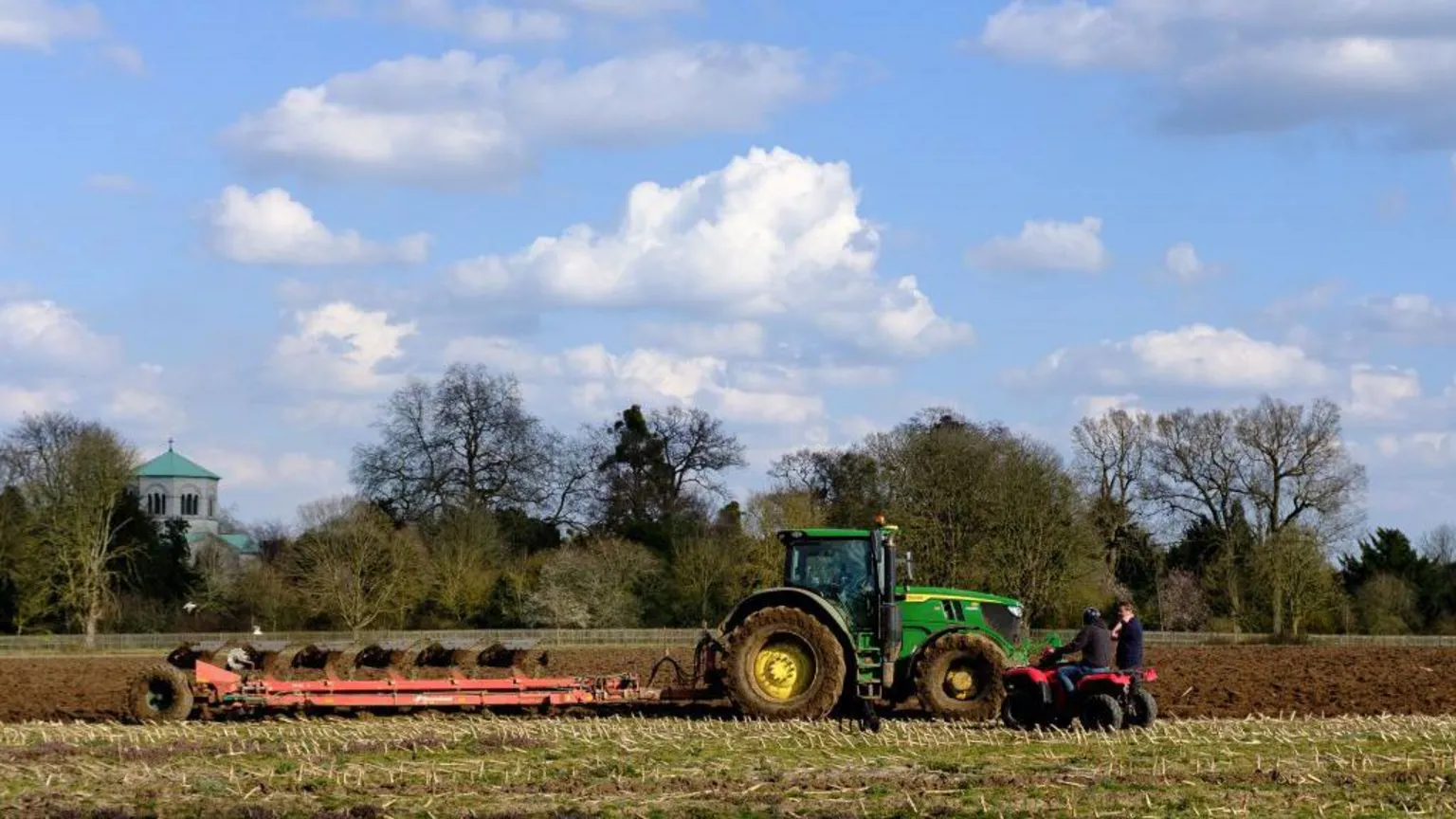
First energy bills, then petrol prices
Now the cost of food could be the next price increase resulting from the war in the Middle East.
Nitrogen-based fertilisers are a critical component of modern agriculture – globally, farms would produce approximately half the amount of food they do without them.
About one third of all global fertiliser shipments typically pass through the Strait of Hormuz – at least, they did until recently.
How is fertiliser affected?
Since the US and Israel attacked Iran on 28 February, Iran has effectively blocked the Strait of Hormuz.
This shipping lane also handles about one-fifth of the world’s oil and liquefied natural gas.
John McLenaghan of the Ulster Farmers' Union is among those managing the consequences.
"Fertiliser prices have been skyrocketing; we can't even get prices quoted. It's not just price actually, it's about availability.
"You just can't get it, it's as simple as that."
Although his fertiliser delivery arrived as scheduled, there is no certainty he will receive all he requires for this planting season.
"This is a time we need to be applying it and we just can't get it. It has come at the worst possible time.
"Farmers have had fertiliser on order and they're not getting their full order. They're going to order more and they are not getting it."
Crops have specific nutrient demands
Spring is the period when newly sown crops most require fertiliser; if all delayed supplies arrive in a month’s time, it will be too late to be effective.
Alexis Maxwell, a senior analyst at Bloomberg specialising in fertiliser and agriculture markets, explained that growing crops is "a bit like growing children".
"They have very specific nutrient demands in a very short window – we are in that window in the northern hemisphere now."
Maxwell noted that price spikes in commodities such as urea and ammonia, essential for fertiliser production, illustrate the magnitude of the challenge.
If fertiliser costs increase sufficiently, farmers may decide they cannot recoup the expense through higher food prices, potentially leading to reduced production.

"We are just shy of the all-time record for costliness of nitrogen fertiliser, set in 2005. So, it's very expensive and some farmers will go without, some farmers will have to pay quite a bit."

Food inflation
Either scenario is likely to have negative implications for consumers.
Whether due to increased costs for farmers from fertiliser or from decreased production, consumers are expected to face higher food prices in the coming years.
Farmers are also confronting elevated costs for other inputs as a result of the conflict, such as red diesel.
Maxwell believes the impact has already occurred.
It will increase the cost of food production and also raise the expenses associated with transporting food from farms to consumers.
Unfortunately, these combined factors indicate further food inflation ahead.
"This is something I anticipate to continue into next year, even if the war ends while we're having this conversation."
What if the war continues?
"This is all for producing food. There is an inevitability as those costs to produce it go up and the amount you can produce goes down. You have a supply-demand situation which will pull the price up."
If the conflict persists, Maxwell fears an even more severe shock to food prices than that experienced at the onset of the war in Ukraine.
When Russia invaded Ukraine, a similar supply shortage and "a significant increase in price" occurred.
"This time it's actually worse because at that time we had an alternative source of the product,"he said.
"Whether it's bread, whether it's vegetables, whether it's your strawberries or your avocados, it doesn't really matter.
All of them rely on fertilisers to grow and they're going to be affected by the situation we now have."