1. Petrol and diesel prices start to increase
The outbreak of the Iran conflict has led to immediate increases in fuel prices due to disruptions in oil and gas production and transportation across the region. However, the longer-term effects remain uncertain.
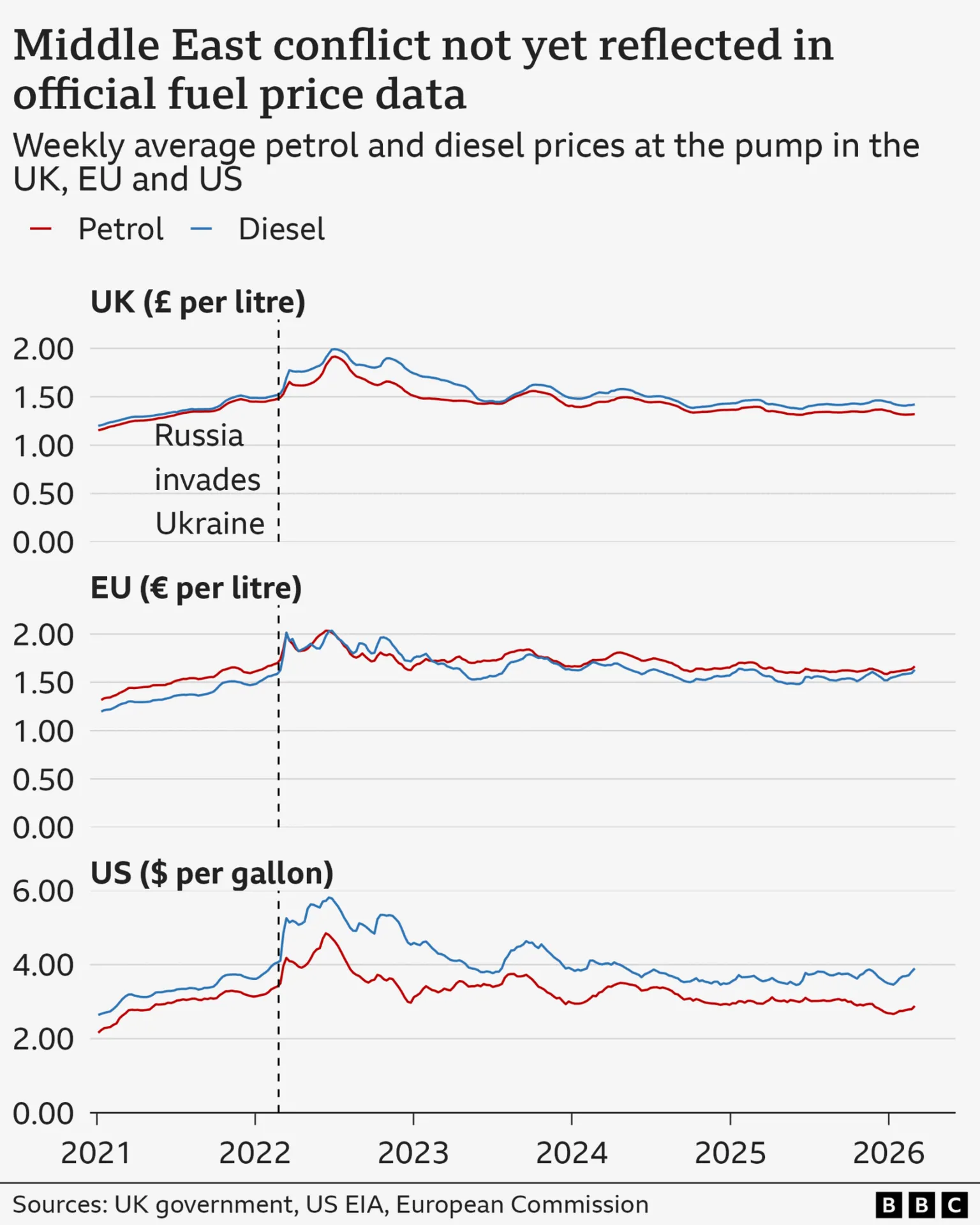
As of Monday in the UK, official weekly figures show petrol averaged 132.14p per litre at the pump, while diesel averaged 142.15p per litre. The RAC, which monitors daily prices, reported a rise between Saturday and Thursday of 3p per litre for petrol and 5p per litre for diesel.
In the US, average petrol prices on Tuesday increased by approximately 23 cents (17p) per gallon compared to the previous week, with diesel prices rising by about 41 cents per gallon in the same period.
These initial price increases are notably lower than those observed in 2022 following Russia's full-scale invasion of Ukraine. For context, in the week before that invasion, unleaded petrol in the UK averaged 147.77p per litre, rising by more than 43p per litre by early July 2022. In the US, petrol and diesel prices peaked at over $5 a gallon in June 2022.
2. UK gas prices almost double in less than a week
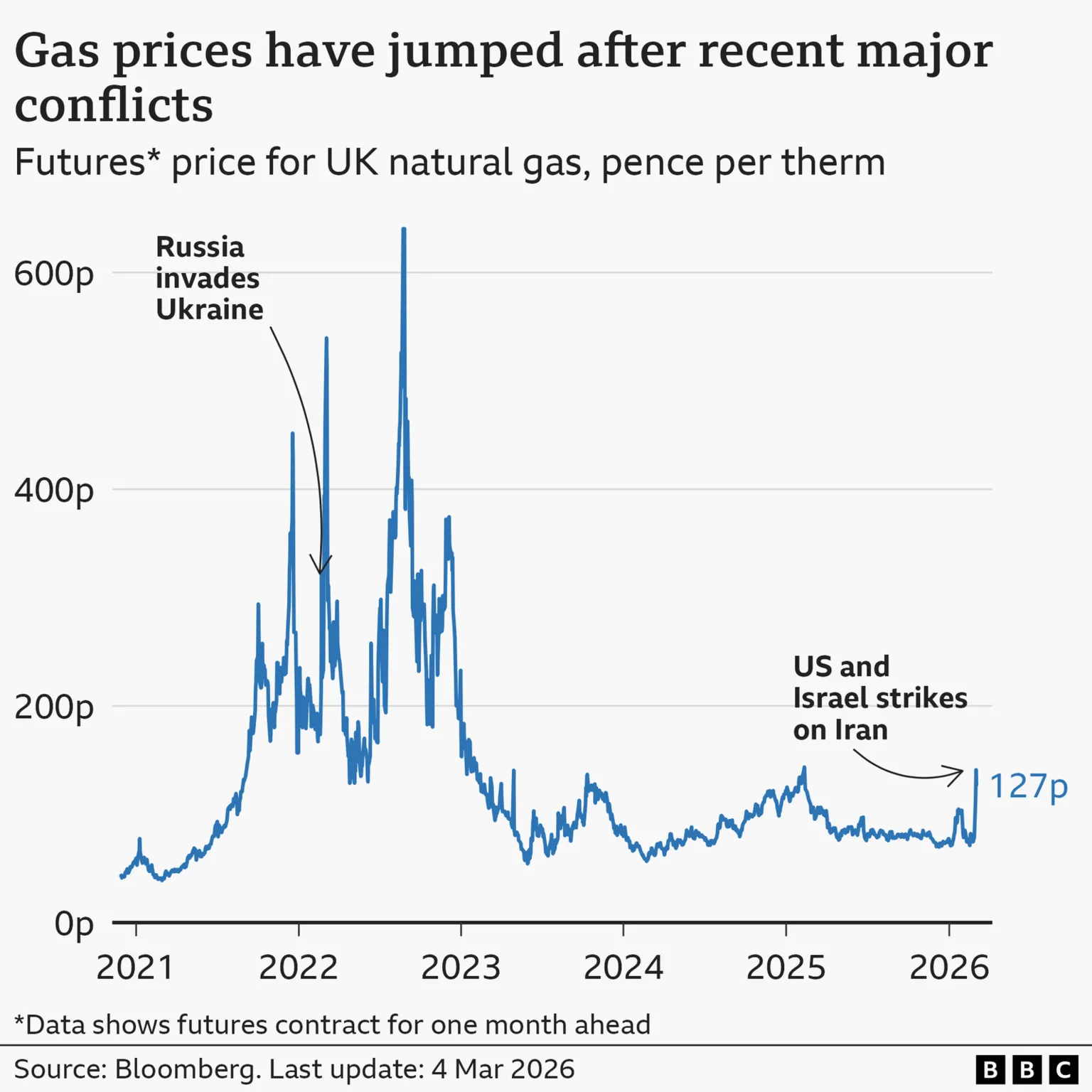
UK gas prices have surged, nearly doubling since Saturday. The benchmark UK gas price exceeded 165p per therm on Tuesday, a level last seen a year after the Ukraine war began. It closed at 138p per therm, over 20% higher than Monday’s price, before declining to 127p on Wednesday.
There are concerns that the current crisis could have impacts similar to those following Russia’s invasion of Ukraine, but the UK gas price remains significantly below the 2022 peak of over 600p per therm.
That historic spike led the UK government to introduce an energy bills support scheme, providing £400 off energy bills to millions of households during the 2022-23 winter.
Currently, UK consumers are shielded from immediate global gas price fluctuations by the energy price cap, which remains at its current level until July. However, sustained high gas prices could result in an increased price cap for the summer months.
3. Impact of shipping prices could hit consumers later
Maritime traffic through the vital Strait of Hormuz has nearly ceased after Iran threatened to "set fire" to ships, leaving approximately 200 tankers stranded. Insurance premiums for vessels flagged as American, British, or Israeli have risen substantially due to the heightened risk of attack.
Data from the London Stock Exchange Group indicates that the cost to charter a supertanker transporting oil from the Middle East to China reached a record high of over $400,000 (£298,300) per day on Monday, nearly double the cost from the previous week.
Sanne Manders, president of logistics technology platform Flexport, stated that rising fuel costs will likely prompt carriers to increase rates globally, not just in the Middle East, as transportation expenses grow.
Given that the majority of global traded goods are transported by sea, the International Monetary Fund (IMF) identifies shipping costs as a significant driver of inflation. While increases in shipping costs can affect import prices at ports within months, the impact on retail prices accumulates more gradually, typically peaking after 12 months, according to IMF analysis from 2022.
The IMF also noted this week that it is "too early" to fully assess the economic consequences of the Iran conflict both regionally and globally, as these depend on the conflict’s scale and duration.
4. Fertiliser prices up by a fifth
Fertilisers are essential for food production, supplying crops with necessary nutrients. The Middle East is a major producer of key fertiliser components.
The Strait of Hormuz is a critical shipping route for fertilisers and natural gas, which is used in fertiliser production. The halt in traffic there has raised concerns about potential shortages and price increases.
Additionally, QatarEnergy, one of the world’s largest gas exporters and a producer of urea used in fertilisers, has ceased production following "military attacks" on its facilities.
US futures prices for urea reached $567 per tonne on Wednesday, marking a 21% increase over the past week, according to Bloomberg.
Experts caution that it is too early to determine whether rising fertiliser prices will translate into higher supermarket prices, and any such effects would not be immediate.
5. Inflation's downward trend less certain
Inflation rates, which measure how quickly prices rise, have been declining in the UK and globally in recent months.
In February, UK inflation dropped to 3%, with the Bank of England (BoE) previously forecasting that inflation could reach its 2% target as early as April before the current conflict.
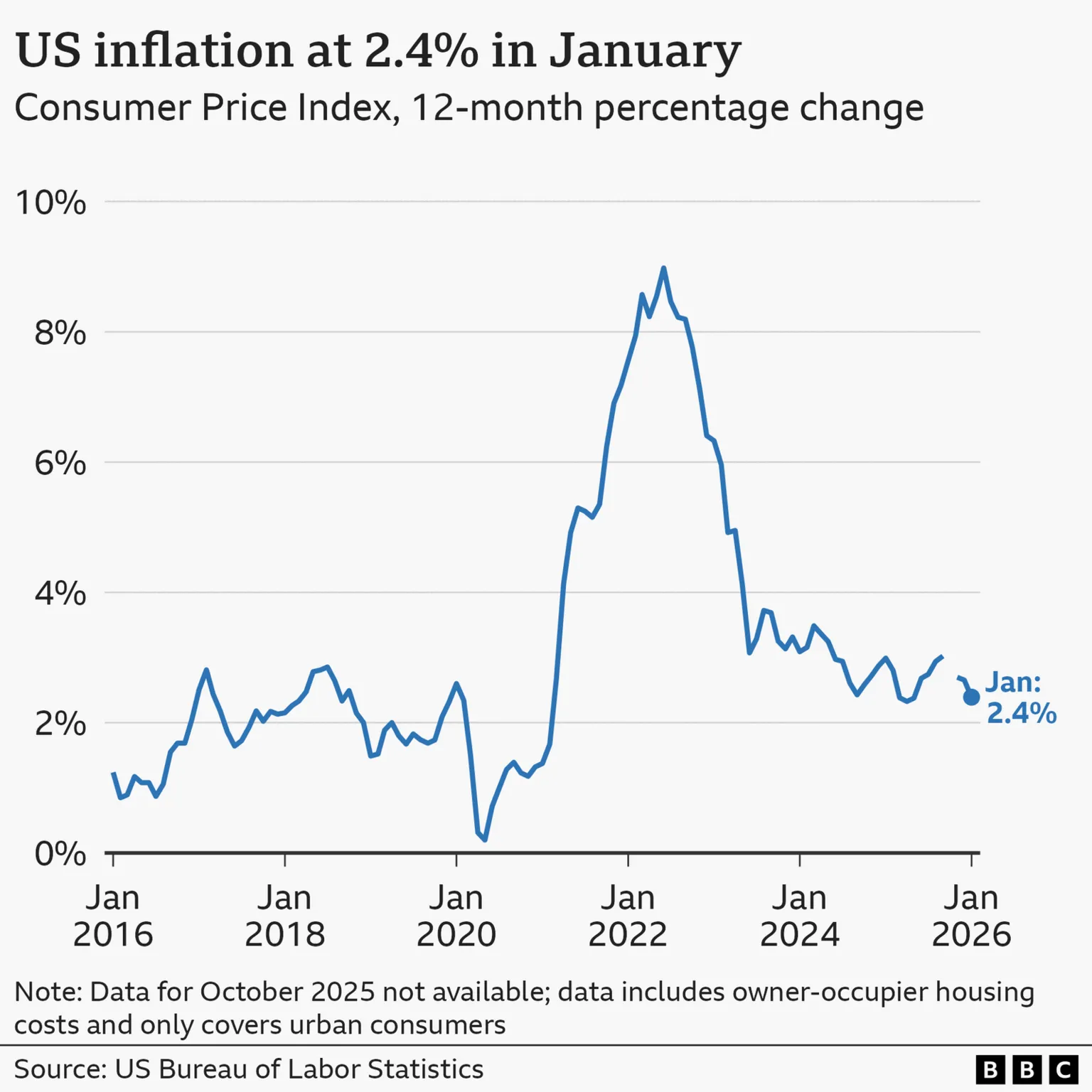
In the US, inflation eased to 2.4% in January, slightly above the Federal Reserve’s 2% target. The Eurozone was expected to see inflation rise from 1.7% in January to 1.9% in February after a period of sustained declines.
There are concerns that the Iran conflict could reverse this downward trend, causing prices to rise more rapidly for consumers.
If inflation accelerates, central banks worldwide may be less inclined to reduce interest rates in the coming months as they aim to control price increases.
Analysts now speculate that there may be fewer interest rate cuts than previously expected in the UK, with some predicting a possible rate increase. This would result in higher mortgage rates for individuals on variable or tracker deals linked to the BoE’s rate, as well as for those seeking new fixed-rate deals.
Conversely, banks might pass on increased rates to savers, potentially offering higher returns.